Table of Contents >> Show >> Hide
- The Story: A Tip Turned Into a Power Trip
- Why the “Tip Game” Felt So Cruel
- What the Date Got Right
- Restaurant Tipping Etiquette: What Should You Do When Service Is Bad?
- Why This Became a Dating Red Flag
- The Bigger Conversation: Tipping Culture Is Messy, But Cruelty Is Optional
- What Diners Can Learn From This Situation
- Experiences Related to the Topic: What Real-Life Dining Moments Teach Us
- Conclusion: The Tip Was Never Just About the Tip
Note: This article is written as a commentary and etiquette analysis based on a publicly shared dating story and general U.S. tipping norms. It is not legal, financial, or relationship counseling advice.
First dates are basically job interviews with appetizers. You are trying to figure out whether the person across the table is kind, funny, honest, and unlikely to describe cryptocurrency as “a lifestyle.” But sometimes the most revealing moment has nothing to do with the conversation. It happens when the server comes over, the drinks arrive, or the bill lands on the table.
That is exactly what made one viral dating story strike such a nerve. A woman went out with a man who decided to “motivate” their waiter by placing tip money on the table at the beginning of the meal. Then he announced that every mistake would cost the server part of that tip. In his mind, this was a clever system to “ensure good service.” In almost everyone else’s mind, it sounded less like a dining strategy and more like a tiny dictatorship with breadsticks.
The date refused to play along. After watching the waiter become visibly nervous and seeing her date remove money throughout the meal, she gave the server a separate tip, paid for her own food, and ended the evening with the kind of clarity that usually takes people three awkward coffee dates to reach. The story spread because it touches several hot-button issues at once: tipping culture, respect for service workers, first date red flags, and the strange belief that holding money over someone’s head is the same thing as having standards.
The Story: A Tip Turned Into a Power Trip
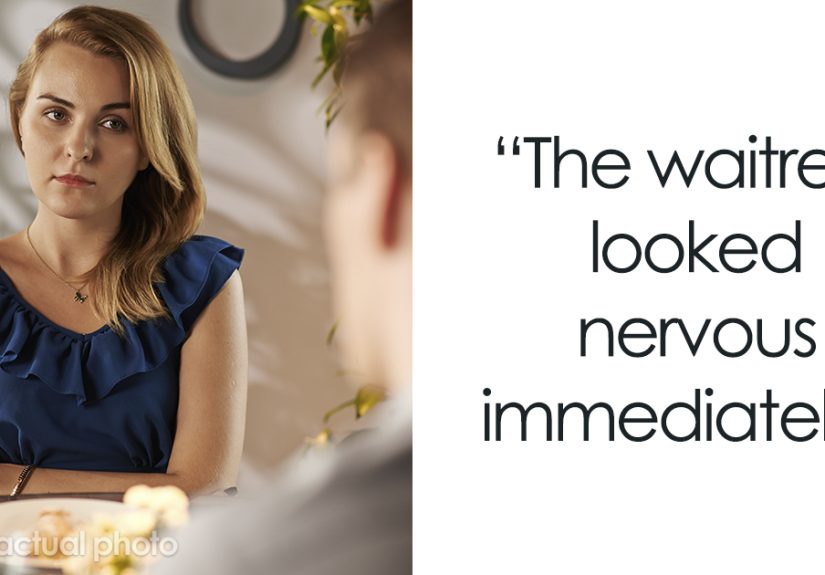
According to the widely shared account, the man began the meal by putting cash on the table and telling the server that it was their tip. The catch? Every time the server made a mistake, he would take some of it away. The server appeared uncomfortable immediately. As the meal went on, the service was not perfect. Drinks were spilled, food came out wrong, and the server seemed inexperienced or overwhelmed.
But instead of handling the situation like a normal adultby asking politely for corrections, showing patience, or speaking to a manager if something serious happenedthe man treated the server’s income like a carnival game. By the end of the meal, he had removed most of the money. His date was embarrassed, bothered, and increasingly sure that this was not just about dinner. It was about character.
When she challenged him, he defended the behavior as a way to guarantee better service. He also reportedly made a dismissive comment about service work not being “respectable.” That was the moment the date stopped being merely bad and became a full-on values mismatch. She tipped the waiter herself, paid her own way, and left. Later, when the man complained that she had rewarded poor service, she explained that he had treated the waiter’s livelihood like a game. Then she blocked him.
The internet, as it loves to do, had opinions. Many readers praised her for refusing to participate in a public humiliation ritual disguised as customer feedback. Others debated whether bad service should affect tips. But the biggest question was not whether the waiter deserved exactly $20, $15, or $0. The real question was this: What does it say about a person when they use a small amount of power to make someone else feel small?
Why the “Tip Game” Felt So Cruel
Tipping in America is already complicated enough without turning it into a psychological obstacle course. Diners are asked to tip at restaurants, coffee counters, rideshare apps, delivery services, salons, and sometimes screens that swivel toward them with the emotional intensity of a courtroom verdict. Many Americans are tired of “tipflation,” digital prompts, and confusion about when tipping is expected.
Still, sit-down restaurants remain one of the clearest tipping situations. In the United States, restaurant servers often rely heavily on gratuities as part of their income. Even though employers must follow minimum wage rules, the tipped-wage system means tips are not just bonus confetti. For many workers, tips help cover rent, groceries, transportation, childcare, and the thousand tiny costs of staying alive in a country where a sandwich can now require a payment plan.
That is why the man’s “game” landed so badly. It was not simply that he reduced the tip. Customers can adjust tips based on service, and reasonable people may disagree about what is fair when a meal goes poorly. The problem was the performance. He announced the money in front of the server, created pressure, and used each mistake as a public penalty. Instead of giving feedback, he created anxiety. Instead of encouraging better service, he made the server more likely to panic.
Tipping Is Not a Remote Control
Some customers treat tipping like a remote control for human behavior: press “extra smile,” lower the volume on mistakes, increase refill speed, and mute all inconvenience. But service work is not a machine. Restaurants are chaotic ecosystems. A server may be new, short-staffed, covering too many tables, waiting on the kitchen, handling a difficult customer, or trying to remember who asked for ranch, lemon, extra napkins, and “the dressing on the side, but not too far on the side.”
Yes, service quality matters. A customer should not have to accept rudeness, neglect, or repeated careless errors without saying anything. But the way we respond matters too. There is a huge difference between saying, “Excuse me, I think this is the wrong order,” and saying, “Behold your shrinking tip, peasant.” One is communication. The other is dinner theater for people who confuse dominance with competence.
Money Can Motivate, But Fear Usually Backfires
The man claimed the system would “ensure good service,” but research on tipping and service quality has long suggested that the connection is weaker than many people assume. Tips may rise somewhat when customers perceive service as better, but tipping is also shaped by social norms, bill size, customer mood, attractiveness bias, racial and gender bias, weather, alcohol, and whether the diner is trying to impress a date. In other words, the tip is not a clean performance review. It is a messy social signal with a credit card receipt attached.
Fear also tends to make people perform worse, especially when they are new or already stressed. If a server spills a drink and then sees the customer theatrically remove money, that server is unlikely to become magically smoother. They may become nervous, rushed, and more error-prone. Anyone who has ever tried to parallel park while someone yells “Don’t hit the curb!” understands the concept.
What the Date Got Right
The woman’s response was not just about generosity. It was about refusing to endorse cruelty. By tipping the server herself, she sent a clear message: “I am not part of this.” That matters. Social pressure often keeps people quiet when a date behaves badly in public. No one wants to make a scene. No one wants to be labeled dramatic. But silence can feel like agreement, especially when someone is mistreating a worker who cannot easily push back.
Her decision also protected her own standards. First dates are not only about chemistry; they are about observation. How does this person react when they have power? How do they handle inconvenience? Do they see workers as people or props? Can they disagree without becoming condescending? Are they capable of empathy when nobody is applauding?
In this case, the answers were not exactly covered in rose petals. The man revealed that he saw service workers as beneath him and believed public pressure was an acceptable tool. That is useful information. Painful, awkward, check-please-now informationbut useful.
Restaurant Tipping Etiquette: What Should You Do When Service Is Bad?
Bad service happens. Maybe the server disappears. Maybe the order is wrong twice. Maybe your soup arrives cold enough to have its own weather system. The question is not whether customers are allowed to feel frustrated. They are. The question is how to handle the frustration without turning into the villain in someone else’s group chat.
1. Separate Server Mistakes From Restaurant Problems
Not every problem is the server’s fault. Long wait? The kitchen may be backed up. Missing item? The expo line may have made a mistake. Cold food? It may have sat too long before the server was told it was ready. Overbooked dining room? That is management. A server is often the messenger, the problem-solver, and the person getting blamed for things they did not personally control.
Before slashing a tip, ask: Was the server rude or careless, or were they trapped inside a restaurant-wide mess? If they were clearly trying, staying polite, and fixing problems as they came up, a decent tip is still appropriate. Grace is not a weakness. It is the seasoning that keeps society edible.
2. Use Words Before Using the Tip
If something is wrong, say so calmly and early. “I’m sorry, but I ordered the salmon, not the chicken.” “Could we get fresh silverware?” “We have been waiting a while; could you check on our food?” These statements are direct without being humiliating. Most servers want to fix problems quickly because their income, reputation, and sanity all improve when the table is happy.
If the issue is serious, ask for a manager. That is not rude when done respectfully. A manager can comp an item, remake a dish, adjust the bill, or address staffing problems. Reducing a tip at the end may express dissatisfaction, but it may not explain what went wrong. Clear feedback is more useful than silent punishment.
3. Tip Fairly, Not Theatrically
There is nothing wrong with tipping more for excellent service. There is also a reasonable argument for tipping less when service is truly poor and clearly within the server’s control. But tipping should not be used to shame, threaten, flirt, control, or perform superiority. Leave the tip discreetly. Handle complaints like a grown-up. Do not make workers audition for basic dignity.
A good guideline for full-service dining is to plan for a standard tip before going out. If the meal is expensive enough that a normal tip feels painful, the restaurant may be outside the evening’s budget. That is not a moral failure; it is math. But choosing a restaurant and then punishing the server because the bill feels high is like buying concert tickets and yelling at the drummer about Ticketmaster fees.
Why This Became a Dating Red Flag
The phrase “watch how they treat the waiter” has become a dating cliché because it keeps proving useful. Anyone can be charming to someone they want to impress. The better test is how they behave toward someone who is serving them, helping them, or unable to respond freely. Kindness is most meaningful when it is not strategically useful.
On a first date, the man’s behavior raised several red flags at once. He lacked empathy for a nervous worker. He used money to control. He dismissed an entire job as not respectable. He ignored his date’s discomfort. Then he criticized her for not agreeing with him. That is a lot of information for one dinner. The appetizer may have been small, but the warning signs came family-style.
Respect Is Not a “Special Occasion” Trait
Some people are polite only when it benefits them. They can be lovely to a boss, charming to a date, and warm to friends, but rude to cashiers, servers, delivery drivers, hotel staff, and anyone else they consider lower status. That is not confidence. It is selective manners, and selective manners are not real manners.
Respect should not depend on job title, income, education, or whether someone can help you later. A person who believes certain workers deserve less dignity is telling you how they rank human value. That ranking system may eventually include you.
How Someone Handles Small Power Can Predict Bigger Problems
A restaurant tip is a small form of power. The customer controls part of the server’s pay, at least for that table. Most people use that power quietly. Some use it generously. A few use it to create a miniature kingdom where they can issue decrees over iced tea refills.
The danger is not the exact dollar amount. It is the enjoyment of control. If someone enjoys making a server nervous, what happens when they are annoyed with a partner? If they respond to mistakes with punishment instead of communication, how will they handle conflict at home? If they think kindness makes a person weak, how will they behave when patience is required?
The Bigger Conversation: Tipping Culture Is Messy, But Cruelty Is Optional
America’s tipping system is complicated, and many diners are understandably frustrated. People are tired of being asked to tip on tablets for transactions that used to involve no tipping at all. Workers are tired of unpredictable income. Restaurants are juggling labor costs, menu prices, service fees, and customer expectations. Everyone is looking at the receipt like it contains a riddle from an ancient civilization.
But frustration with tipping culture should be aimed at systems, not individual servers trying to get through a shift. A customer can support fairer wages, question service charges, avoid restaurants with confusing fees, or budget carefully before dining out. None of that requires humiliating a waiter.
The viral story became popular because the woman drew a line. She did not solve tipping culture. She did not rewrite labor law. She simply refused to let one worker be treated like a toy in someone else’s ego experiment. Sometimes basic decency is not dramatic. Sometimes it looks like handing a server cash, paying your own bill, and walking away from the person who thought the cruelty was clever.
What Diners Can Learn From This Situation
This story offers a practical lesson for anyone eating out, dating, or trying not to become a cautionary tale on the internet. First, decide your tipping standards before emotions get involved. If you are going to a sit-down restaurant, assume tipping is part of the cost. Second, communicate problems respectfully and early. Third, remember that a server is not the entire restaurant compressed into one apron.
Fourth, do not use money to embarrass people. A tip is not a leash. Finally, when you see someone mistreating staff, pay attention. You do not have to deliver a courtroom speech in the middle of the entrée, but you can choose not to participate. You can tip separately. You can speak up. You can end the date. You can decide that “nice to me, cruel to others” is not actually nice.
Experiences Related to the Topic: What Real-Life Dining Moments Teach Us
Almost everyone who has worked in or around restaurants has a story about a customer who believed the price of dinner included ownership of everyone’s emotional state. A server forgets extra sauce, and suddenly the table behaves as if national security has been compromised. A host says the wait is 25 minutes, and someone responds as though the host personally invented time. These moments reveal how quickly ordinary inconvenience can become a character test.
One common experience is watching a new server struggle through a busy shift. They may write everything down, repeat the order, and still mix up a side dish because the kitchen is slammed and three tables are asking for refills at once. A patient table can change that person’s whole night. A cruel table can make them dread every step back to the dining room. Diners often underestimate how much their tone matters. A simple “No worries, thanks for fixing it” can help a nervous worker recover faster than any cash incentive placed on public display.
Another familiar experience is the awkward dinner with someone who treats staff badly. Maybe it is a date who snaps their fingers at the server. Maybe it is a friend who complains loudly about every small delay. Maybe it is a relative who thinks “the customer is always right” means “I can speak to people like a malfunctioning GPS.” Sitting beside that behavior is uncomfortable because it puts you in a moral side quest you did not order. Do you laugh it off? Do you apologize to the server? Do you say something at the table? The answer depends on the situation, but ignoring it rarely feels good afterward.
There are also experiences from the customer side where service really is bad. A server may be dismissive, rude, or completely absent. In those cases, diners do not have to pretend everything is fine. The better path is to stay calm, ask for what is needed, and involve management if necessary. The goal should be correction, not humiliation. A bad experience can be addressed without turning the server into a public target.
The woman in the viral story modeled a useful middle ground. She did not claim the service was flawless. She did not excuse every mistake. Instead, she objected to the method of punishment. That distinction matters. You can believe in accountability and still reject cruelty. You can expect competence and still understand that people have bad nights. You can be disappointed in service and still avoid making someone feel trapped, judged, or degraded.
For people dating, the experience is even more valuable. Restaurants create dozens of tiny moments that reveal values: how someone speaks to the host, whether they say please and thank you, how they handle a wrong order, whether they tip fairly, whether they clean up a little before leaving, and whether they act embarrassed by kindness. These details may seem small, but relationships are built from small behaviors repeated over time. A person who chooses patience when the fries are late may also choose patience when life gets messy. A person who turns a tip into a power game may turn other things into games too.
In the end, dining out is not just about food. It is about participating in a shared social space. Servers are working, customers are relaxing, kitchens are juggling impossible timing, and everyone benefits when basic respect is the house special. The cruel tip game failed because it misunderstood service, motivation, and manners all at once. Good service is best encouraged by clear communication and mutual respectnot by turning a meal into a reality show where the prize money disappears one mistake at a time.
Conclusion: The Tip Was Never Just About the Tip
The man in this story thought he was teaching a waiter a lesson. Instead, he taught his date everything she needed to know about him. His “tip game” was not smart, funny, or efficient. It was a public display of control over someone with less power in the moment. The date’s refusal to play along is what made the story memorable because it reminded readers that manners are not decorative. They are evidence.
Tipping culture in America may be confusing, frustrating, and overdue for serious reform, but basic human decency does not require a flowchart. If service is poor, speak up respectfully. If a problem needs management, ask for help. If you are dating someone who enjoys making workers uncomfortable, consider that the check may not be the only thing worth closing.
At its heart, this story is not about whether one waiter deserved a perfect tip after an imperfect meal. It is about whether customers should use money to make service workers anxious for entertainment or control. The answer is no. Good service matters. So does good character. And on that date, only one of them left a generous tip.