Table of Contents >> Show >> Hide
- Who Was Paul Allen?
- The Microsoft Beginning: A Big Idea With a Hyphen
- Leaving Microsoft, But Not Leaving the Future
- Stratolaunch: The Aircraft That Looked Like Science Fiction Clocked In for Work
- Philanthropy at Scale: Science, Health, Climate, and Community
- The Sports Owner Who Helped Keep Teams Rooted
- Music, Museums, and the Art of Being a Polymath
- How Paul Allen Changed Technology
- Why His Death Resonated So Widely
- Lessons From Paul Allen’s Life
- Experiences and Reflections Related to Paul Allen’s Legacy
- Conclusion
Paul Allen, the quiet idea engine behind Microsoft’s earliest days and the bold dreamer who later helped build one of the largest aircraft ever flown, died on October 15, 2018, in Seattle at age 65. His passing, caused by complications of non-Hodgkin’s lymphoma, closed the life of a man whose fingerprints can be found across personal computing, neuroscience, professional sports, spaceflight, conservation, music, museums, and the Pacific Northwest’s civic identity.
Most billionaires are remembered for one empire. Allen was different. Microsoft was the headline, yes, and what a headline it was. But after leaving day-to-day work at the company, he did not simply disappear into a yacht-shaped sunset. He funded brain science, protected wildlife, bought sports teams, backed private spaceflight, collected historical artifacts, played guitar, and kept asking one deceptively simple question: What if?
That question shaped his career from a school computer room in Seattle to the Mojave Desert, where Stratolaunch’s enormous twin-fuselage aircraft eventually took flight. Allen’s life story is a reminder that the future is often built by people who are curious enough to notice what others dismiss as too strange, too early, or too difficult.
Who Was Paul Allen?
Paul Gardner Allen was born on January 21, 1953, in Seattle, Washington. His parents, Kenneth and Faye Allen, encouraged curiosity early. His father worked with libraries at the University of Washington, and his mother was a teacher, which helps explain why Allen grew up surrounded by books, big questions, and the kind of intellectual freedom that turns a kid with a science club into a future technology pioneer.
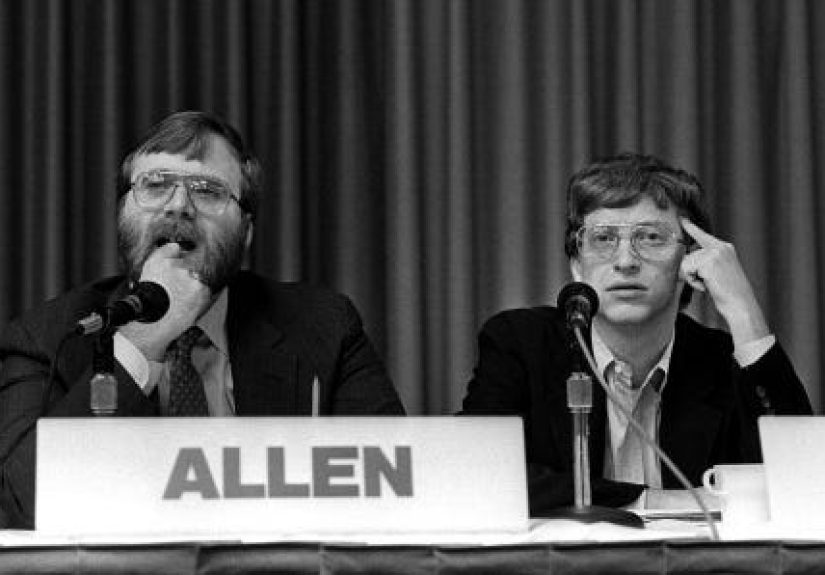
At Lakeside School, Allen met Bill Gates. The pairing would become one of the most consequential partnerships in business history. Gates was intense, competitive, and famously sharp. Allen was more reserved, imaginative, and broad-minded. Together, they found their playground in computers, back when computers were not exactly playground equipment. They were expensive, rare, and about as user-friendly as a locked filing cabinet with blinking lights.
Still, Allen saw what many people did not: computers were going to shrink, spread, and change everyday life. That sounds obvious now, in an era when your phone can order tacos, edit video, and shame you about your screen time before breakfast. In the early 1970s, it was a wild prediction. Allen made it anyway.
The Microsoft Beginning: A Big Idea With a Hyphen
In 1975, Paul Allen and Bill Gates founded Microsoft, originally styled as “Micro-Soft,” a blend of microcomputer and software. Their first major breakthrough came after the appearance of the MITS Altair 8800, an early personal computer kit that inspired them to create a version of the BASIC programming language for the machine.
The Altair did not look like modern computers. It had switches and lights, not a friendly screen asking whether you wanted dark mode. But Allen and Gates recognized that hardware alone was not enough. Computers needed software. They needed instructions, tools, and languages that made them useful. That insight helped launch Microsoft and, in a larger sense, helped push the personal computer revolution forward.
Allen served as Microsoft’s chief technologist during its formative years. While Gates became the public face of the company’s relentless business drive, Allen was central to the original technical vision. His ability to spot emerging technologies before they became obvious was one of his greatest strengths. He could look at a clunky machine, a rough prototype, or a young market and imagine what it might become after enough code, capital, and stubbornness.
Leaving Microsoft, But Not Leaving the Future
Allen left active work at Microsoft in 1983 after being diagnosed with Hodgkin’s lymphoma. He remained connected to the company as a shareholder and board member for years, and Microsoft’s rise made him one of the wealthiest people in the world. But the more interesting part of his life may be what he chose to do after Microsoft.
Many people would have treated that fortune as the final score. Allen treated it more like a tool kit. Through Vulcan Inc., which he founded with his sister Jody Allen, he organized investments, cultural projects, scientific programs, real estate development, and philanthropic efforts. His interests were famously wide-ranging. If curiosity were a browser, Paul Allen had 87 tabs open, and somehow most of them were important.
His post-Microsoft life showed that technological success does not have to end in a single lane. Allen moved across fields with unusual ease: brain research, artificial intelligence, aviation, music, film preservation, climate science, ocean health, professional sports, and urban development. He did not dabble in the casual sense. He often built institutions designed to outlast him.
Stratolaunch: The Aircraft That Looked Like Science Fiction Clocked In for Work
One of Allen’s most visually dramatic ventures was Stratolaunch Systems, founded in 2011. The company’s original mission was to make access to space more flexible by launching rockets from a massive carrier aircraft rather than relying only on traditional ground-based launchpads.
The Stratolaunch aircraft, later nicknamed Roc, was hard to ignore. It featured a twin-fuselage design, six engines, and a wingspan greater than the length of an American football field. It looked like two airplanes had decided to hold hands and pursue a graduate degree in aerospace engineering. But beneath the unusual appearance was a serious concept: a mobile launch platform that could carry rockets to altitude and release them for flight into space.
Allen did not live to see Stratolaunch’s first flight. On April 13, 2019, several months after his death, the aircraft successfully flew from the Mojave Air and Space Port. The flight was a milestone for the team and a powerful postscript to Allen’s appetite for huge, risky, future-facing projects. The aircraft later became associated with hypersonic flight testing, showing how ambitious technology can evolve even when original business plans change.
Philanthropy at Scale: Science, Health, Climate, and Community
Paul Allen’s giving was not limited to writing checks for safe, popular causes. He often supported big scientific infrastructure: the kind of work that can be expensive, unglamorous, and absolutely necessary. In 2003, he and Jody Allen founded the Allen Institute to accelerate bioscience discovery. Its early work included open-access brain maps designed to help researchers around the world study how the brain works.
The “open” part mattered. Allen believed that science could move faster when high-quality data was shared broadly instead of locked away. That philosophy gave researchers tools they might not have been able to build alone. It also reflected a deeply practical idea: if you want discoveries, help scientists spend more time discovering and less time reinventing the same wheel, microscope, or dataset.
Allen’s philanthropy also touched wildlife conservation, ocean health, climate science, arts and culture, epidemic response, education, and sustainable communities. During his lifetime, his giving reached into the billions. He joined the Giving Pledge, committing the majority of his wealth to philanthropy. For Allen, wealth seemed most meaningful when converted into experiments, institutions, and problem-solving capacity.
The Sports Owner Who Helped Keep Teams Rooted
Allen was also a major figure in American sports. He owned the Portland Trail Blazers of the NBA and the Seattle Seahawks of the NFL. His purchase of the Seahawks in the late 1990s helped keep the team in Seattle at a time when relocation was a real concern. For fans, that decision was not just a business move. It protected a civic institution.
Under Allen’s ownership, the Seahawks became one of the NFL’s defining franchises of the 2010s, winning Super Bowl XLVIII. The Trail Blazers, meanwhile, remained a central part of Portland’s identity. Allen was not the loudest owner in the room, which in sports ownership practically qualifies as a superpower. He tended to be private, analytical, and committed to long-term competitiveness.
His sports investments fit a broader pattern. Allen liked projects that created shared experiences: a packed stadium, a museum exhibit, a research platform, a spacecraft concept, a music venue. He was drawn to things that brought people together around wonder, competition, creativity, or discovery.
Music, Museums, and the Art of Being a Polymath
Paul Allen loved music, especially guitar. He was a fan of Jimi Hendrix and helped create what became the Museum of Pop Culture in Seattle, originally known as the Experience Music Project. The building itself, with its unusual curves and colors, looks like someone asked a guitar solo to become architecture. That feels appropriate.
He also supported film preservation, historical collections, and public access to cultural artifacts. His interests could seem eccentric from the outside, but they were connected by a consistent theme: preserving human creativity and expanding the tools available for future creators.
Calling Allen a “Microsoft co-founder” is accurate, but it is also incomplete. It is like calling the ocean “some water.” He was a technologist, investor, philanthropist, sports owner, aerospace backer, conservation supporter, museum founder, and lifelong learner. His life invites a broader definition of success, one measured not only by market value but by the range of questions a person is brave enough to pursue.
How Paul Allen Changed Technology
Allen’s central technology legacy begins with the recognition that software would become the heart of personal computing. Before Microsoft became a global giant, Allen understood that microcomputers needed languages and operating environments that made them useful to ordinary people and businesses.
That insight helped shape the software industry. Today, software defines nearly every modern device: laptops, cars, phones, medical equipment, entertainment systems, financial tools, and even kitchen appliances that insist they need firmware updates. The world Allen helped imagine is now so ordinary that it is easy to forget it once sounded speculative.
His later work in artificial intelligence and brain science also anticipated major twenty-first-century questions. How do we map intelligence? How can machines reason? How can biological systems inspire computational ones? Allen did not answer all of these questions, but he funded people and institutions willing to chase them seriously.
Why His Death Resonated So Widely
When Allen died, tributes came from technology leaders, scientists, sports organizations, civic institutions, and philanthropic communities. Microsoft CEO Satya Nadella praised Allen’s contributions to the company, the industry, and the broader community. Bill Gates remembered him as a close friend and essential partner, emphasizing that Microsoft would not have existed in the same way without Allen’s vision.
The reaction was broad because Allen’s life was broad. He was not tied to a single constituency. Programmers knew him as a software pioneer. Seattle knew him as a civic force. Scientists knew him as a funder of open research. Sports fans knew him as an owner who helped stabilize beloved teams. Aerospace watchers knew him as the patron of a plane so large it seemed to have wandered out of a comic book and into a hangar.
At 65, Allen was still actively thinking about the future. That may be the saddest part of the story: he was not a figure whose work had fully settled into the past. Many of his projects were still unfolding, and some continue to evolve today.
Lessons From Paul Allen’s Life
1. Curiosity Can Be a Strategy
Allen’s curiosity was not random trivia collecting. It was a disciplined way of finding opportunities. He looked for fields where new tools could unlock progress: personal computing, brain mapping, aerospace, conservation technology, and artificial intelligence. Curiosity helped him see around corners.
2. Big Problems Need Shared Tools
The Allen Institute’s open-science approach shows a practical lesson for researchers, entrepreneurs, and communities: if the goal is progress, build platforms other people can use. A great tool can multiply the intelligence of thousands of people.
3. Quiet People Can Still Change the World
Allen was not always the loudest personality in technology. He did not need to be. His legacy proves that influence can come from insight, timing, resources, and persistence. You do not have to dominate every room to leave a permanent mark on the building.
Experiences and Reflections Related to Paul Allen’s Legacy
Thinking about Paul Allen’s life today feels a little like opening a drawer full of old gadgets and realizing each one predicted something bigger. A personal computer, once a hobbyist machine, became the center of work and communication. A brain atlas, once a specialized scientific resource, became part of a larger movement toward open data. A giant aircraft, once mocked by some as excessive, became a working platform for aerospace testing. Allen’s career shows how strange ideas can become practical if someone gives them enough room to breathe.
For anyone working in technology, writing, science, education, or business, Allen’s story offers a useful experience-based lesson: do not judge an idea only by how normal it looks at the beginning. Most transformative ideas look awkward early on. The first personal computers were not sleek productivity machines; they were boxes for enthusiasts. Early software companies did not look like the backbone of the global economy. A twin-fuselage aircraft designed to launch vehicles from the sky sounded unusual because it was unusual. But unusual does not mean unserious.
There is also a lesson in how Allen used wealth. He did not merely collect assets; he created ecosystems. A museum is an ecosystem for culture. A sports team is an ecosystem for fans, workers, athletes, and a city’s emotional calendar. A research institute is an ecosystem for discovery. Stratolaunch was an ecosystem for engineers trying to rethink flight and launch systems. The deeper lesson is that durable impact often comes from building places where other people can do their best work.
Writers and content creators can learn from this too. Allen’s life was not powerful because it fit one neat category. It was powerful because it connected many categories. The best stories often live at intersections: technology and art, science and philanthropy, business and community, imagination and engineering. When writing about figures like Allen, the goal is not just to list achievements. The goal is to understand the pattern beneath them. In his case, the pattern was curiosity turned into infrastructure.
Entrepreneurs can take another practical lesson from Allen’s early Microsoft days: timing matters, but interpretation matters more. Many people saw the Altair 8800. Allen saw the software opportunity inside it. Many investors see trends after they become obvious. Allen’s gift was noticing the missing layer. Hardware needed software. Science needed open data. Space access needed new platforms. Cities needed cultural anchors. Teams needed stable ownership. In each case, he asked what missing piece could make the whole system work better.
There is a human lesson as well. Allen’s life included illness, reinvention, private passions, public responsibilities, and unfinished ambitions. That makes his story more relatable than the usual billionaire highlight reel. He had extraordinary resources, but he also had limited time, changing health, complicated relationships, and difficult decisions. His response was not to narrow his life. He widened it. He kept exploring.
That may be the most useful experience connected to Paul Allen’s legacy: build a life with more than one door. A person can be technical and artistic, analytical and generous, private and influential, playful and serious. Allen’s world had room for code, football, guitars, aircraft, elephants, brain cells, and science fiction. It sounds chaotic until you notice the organizing principle. He believed imagination should be put to work.
In the end, Paul Allen’s death at 65 was a major loss, but his legacy remains unusually alive. Microsoft continues to shape daily work. The Allen Institute continues scientific research. The Seahawks and Trail Blazers remain woven into their communities. Stratolaunch continues to represent the kind of engineering ambition that makes people look up from their phones and say, “Wait, that thing actually flies?” That is not a bad legacy for a quiet kid from Seattle who liked books, computers, rockets, and big questions.
Conclusion
Paul Allen was not just the co-founder of Microsoft or the founder of Stratolaunch. He was a builder of possibilities. His life connected the rise of personal computing with the future of brain science, private aerospace, conservation, sports, and culture. He helped make computers more useful, research more open, and ambitious ideas feel a little less impossible.
His death at 65 marked the end of a remarkable life, but not the end of his influence. Allen’s greatest legacy may be the institutions and ideas he left behind: tools for scientists, teams for communities, platforms for engineers, and a model of curiosity that refused to stay in one box. In a world that often rewards specialization, Paul Allen showed the power of being deeply, productively interested in almost everything.
Note: This article is written as a historical and biographical feature for web publication, based on publicly reported information about Paul Allen’s life, career, philanthropy, and legacy.