Table of Contents >> Show >> Hide
- Why a Resignation Letter Still Matters
- What to Include in a Resignation Letter
- What to Leave Out of Your Resignation Letter
- Sample Resignation Letter for Quitting Your Job
- More Resignation Letter Examples for Different Situations
- How to Write a Resignation Letter That Sounds Professional
- The Best Way to Submit Your Resignation
- Common Resignation Letter Mistakes to Avoid
- Resignation Letter Tips for Leaving on Good Terms
- Real-World Experiences and Lessons From Quitting a Job
- Final Thoughts
- SEO Tags
Quitting a job can feel oddly similar to breaking up with someone who still has your lunch in the office fridge: emotional, awkward, and best handled with maturity. A good resignation letter helps you leave with professionalism, clarity, and your reputation intact. It is not the place for a dramatic monologue, a twelve-point complaint list, or a surprise career memoir. It is a business document, and the best ones are brief, direct, respectful, and useful.
If you are searching for a sample resignation letter for quitting your job, you probably need more than a generic template. You need something that sounds human, covers the essentials, and will not make your manager raise an eyebrow and forward it to HR with a sigh. This guide walks you through what to include, what to avoid, several practical resignation letter samples, and a set of real-world lessons that can help you leave well.
Why a Resignation Letter Still Matters
Even in a world of Slack messages, Zoom calls, and inboxes stuffed with subject lines like “Quick Question,” a resignation letter still matters. It creates a clear written record of your decision, confirms your last working day, and gives your employer the information they need to plan the transition. More importantly, it shows that you know how to exit like a professional.
Think of your resignation letter as the final punctuation mark on your time with a company. You want it to be a clean period, not a flaming exclamation point. A polished letter can also help preserve relationships with supervisors, coworkers, clients, and HR. That matters more than many people realize because the business world is smaller than it looks when you are updating your LinkedIn headline at midnight.
What to Include in a Resignation Letter
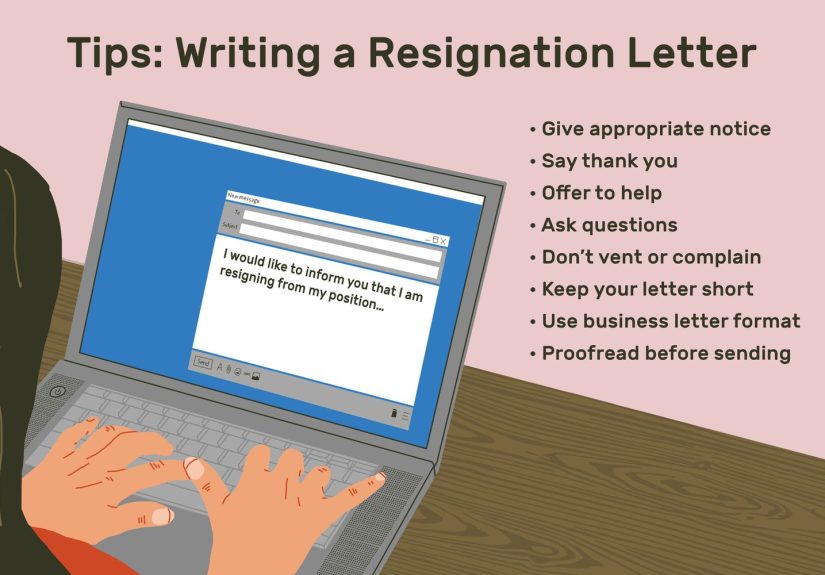
A strong resignation letter follows a simple formula. It tells the employer exactly what they need to know and leaves unnecessary drama at the door.
1. A clear statement that you are resigning
Do not bury the point in flowery language. Say plainly that you are resigning from your position. This eliminates confusion and makes the letter easy to process.
2. Your job title and company name
Include your current role and employer so the letter is specific and formal. HR teams love clarity almost as much as they love correct dates.
3. Your last working day
State the exact date of your final day. This is one of the most important details in the letter because it affects payroll, benefits, transition planning, and internal communication.
4. A brief note of gratitude
You do not have to pretend the job was a magical journey through a field of career flowers. But a short, sincere thank-you for the opportunity, experience, or support goes a long way.
5. An offer to support the transition
This can be as simple as saying you are happy to help with handoff notes, training, or wrapping up projects before your departure. You do not need to promise the moon. Just signal cooperation.
6. A professional closing
End with a standard closing such as “Sincerely,” “Best regards,” or “Thank you,” followed by your name.
What to Leave Out of Your Resignation Letter
Knowing what not to include is almost as important as knowing what belongs in the letter.
- Long explanations: You do not owe the company a five-paragraph essay on why you are leaving.
- Complaints and grievances: A resignation letter is not the right place to roast management.
- Personal oversharing: “I need to find myself” might be true, but it is not required.
- Threats or emotional language: Save the mic drop for karaoke night.
- Negative comments about coworkers or leadership: Those lines can outlive your employment and follow you farther than you think.
If you have legitimate concerns about workplace misconduct, discrimination, pay issues, or legal problems, handle those through the proper channels rather than stuffing them into your resignation letter like a surprise appendix.
Sample Resignation Letter for Quitting Your Job
Here is a reliable, professional resignation letter sample you can adapt for most situations:
This sample works because it checks every important box. It is direct, respectful, and short enough that your manager can read it without needing a snack break.
More Resignation Letter Examples for Different Situations
Simple and Short Resignation Letter
If your workplace culture is straightforward and your relationship with your employer is neutral or positive, a short resignation letter may be all you need.
Resignation Letter for a New Opportunity
You do not have to mention your next job, but if you want to nod to a new opportunity, keep it broad and professional.
Resignation Letter for Personal Reasons
When you need to keep things private, this version does the job without inviting extra questions.
Two Weeks’ Notice Resignation Letter
This is one of the most commonly searched formats because it is widely seen as the standard in many workplaces.
How to Write a Resignation Letter That Sounds Professional
The tone of your resignation letter matters. You want to sound calm, competent, and gracious. That does not mean robotic. It means clear and emotionally controlled.
Use plain business language. Start strong. Name your final day. Add one or two sentences of appreciation. Offer transition help. Stop there. A resignation letter is not improved by fancy vocabulary, dramatic suspense, or excessive detail. In fact, the more you explain, the more likely you are to say something you later wish had stayed in your drafts folder.
Here is a useful rule: if a sentence would make sense in an exit interview, a private conversation, or a therapist’s office, it probably does not belong in your resignation letter.
The Best Way to Submit Your Resignation
Whenever possible, tell your manager verbally before sending the letter. A private conversation shows respect and gives your boss a chance to react, ask questions, and discuss transition timing. After that conversation, send the written resignation letter by email or provide a printed copy, depending on your workplace norm.
If you resign by email, use a simple subject line such as:
- Resignation – [Your Name]
- Notice of Resignation – [Your Name]
Keep the email itself brief and attach or paste the letter below the message. The goal is to be organized, not mysterious. No one wants to open an email titled “Big News!!!” at 8:14 a.m.
Common Resignation Letter Mistakes to Avoid
- Being vague: If your employer cannot tell whether you are quitting, the letter has failed.
- Forgetting the last day: Missing this detail creates unnecessary back-and-forth.
- Turning it into a complaint document: Even if your job inspired interpretive screaming, keep the letter clean.
- Writing too much: Two or three short paragraphs are usually enough.
- Using a casual tone: “Hey boss, I’m out” is memorable for all the wrong reasons.
- Submitting it impulsively: Proofread before sending. Your future self deserves that courtesy.
Resignation Letter Tips for Leaving on Good Terms
If you want a reference, a strong network, and a peaceful exit, professionalism should continue beyond the letter itself. Finish your assignments where possible. Document important processes. Communicate clearly with coworkers. Avoid office gossip during your final days. And resist the urge to deliver a farewell speech that sounds like an awards show acceptance mixed with a revenge podcast.
Leaving well does not mean pretending everything was perfect. It means being strategic. Careers are long. Industries overlap. Today’s manager could become tomorrow’s client, interviewer, or unexpected LinkedIn connection who remembers whether you handled your departure with class.
Real-World Experiences and Lessons From Quitting a Job
Many people assume the hardest part of quitting is writing the resignation letter. In reality, the letter is often the easiest part. The emotional side of leaving a job can be much messier. Some people feel relieved the minute they hit send. Others feel guilty, anxious, or strangely sentimental about a place they complained about every Tuesday.
One common experience is overexplaining. Employees often sit down to write a simple resignation letter and suddenly produce a mini autobiography. They explain the toxic meetings, the workload, the missed promotion, the commute, the existential dread, and perhaps the broken office coffee machine that served as the final straw. Then, thankfully, many of them delete ninety percent of it. The strongest resignations usually come from people who realize that the letter is a formal notice, not a courtroom closing argument.
Another frequent experience is discovering that managers react in wildly different ways. Some bosses are gracious and supportive. Some act shocked, even when you have looked burned out since the invention of fluorescent lighting. Others immediately switch into logistics mode and start asking about timelines, documentation, and handoff plans before you have even sat back down. Because reactions vary so much, a calm and professional letter gives you a stable script when the conversation gets awkward.
People also tend to remember the small things during a resignation. A manager who says, “Thank you for telling me directly,” is remembered fondly. A coworker who offers to help with the transition becomes part of the story you tell later. Even the tone of your final email can shape how people talk about your departure after you are gone. That is why a respectful resignation letter matters more than it seems. It often sets the tone for everything that follows.
There is also the experience of wanting to be brutally honest. This temptation is real, especially if your time at the company has been frustrating. But many professionals later say they were glad they kept their letter short and polite. Honest feedback can have its place in an exit interview or private discussion, but the resignation letter itself works best when it stays focused on the essentials. Burning bridges may feel satisfying for five minutes, but professional relationships can last for years.
Finally, many people are surprised by how empowering a well-written resignation letter can feel. It is a small document, but it marks a big decision. It says you are moving forward, closing one chapter cleanly, and making room for what comes next. Whether you are leaving for a better role, a career pivot, more education, family reasons, or simply a healthier life, the best resignation letter does one quiet but important thing: it helps you leave with your dignity, your clarity, and your reputation fully packed and ready to go.
Final Thoughts
A sample resignation letter for quitting your job should make your life easier, not more complicated. The best letters are simple, sincere, and professional. State your resignation clearly, include your final day, express appreciation, and offer help with the transition. That is the formula. It works whether you loved the job, outgrew it, or are just thrilled to never attend another Monday morning status meeting again.
If you use the templates and advice in this guide, you will have a resignation letter that is polished enough for HR, respectful enough for your manager, and clear enough that no one has to decode it like an ancient scroll. Leave well, finish strong, and let your next chapter begin without unnecessary mess.