Table of Contents >> Show >> Hide
- The Studio Begins with Atmosphere, but It Runs on Discipline
- Why California Is Such Fertile Ground for Sewing Artisans
- What the Work Really Looks Like, Stitch by Stitch
- The Ethics Are in the Room Too
- Mending Is Back, and Honestly, It Never Should Have Left
- What Makes a Sewing Artisan Different from a Fashion Brand
- What You Carry Home from a Studio Visit
- A Longer Studio Diary: 500 More Words from the Cutting Table
- Conclusion
Walk into a California sewing studio and you immediately understand one thing: this is not a place for people who need instant gratification. Sure, there may be good coffee, a sunlit cutting table, and enough beautiful fabric to make a grown adult forget every budget they ever made. But this is still a room built around patience. Garments do not appear here by magic. They arrive by chalk mark, pattern piece, steam, correction, re-cutting, pressing, and the occasional dramatic sigh aimed at a sleeve cap that refuses to behave.
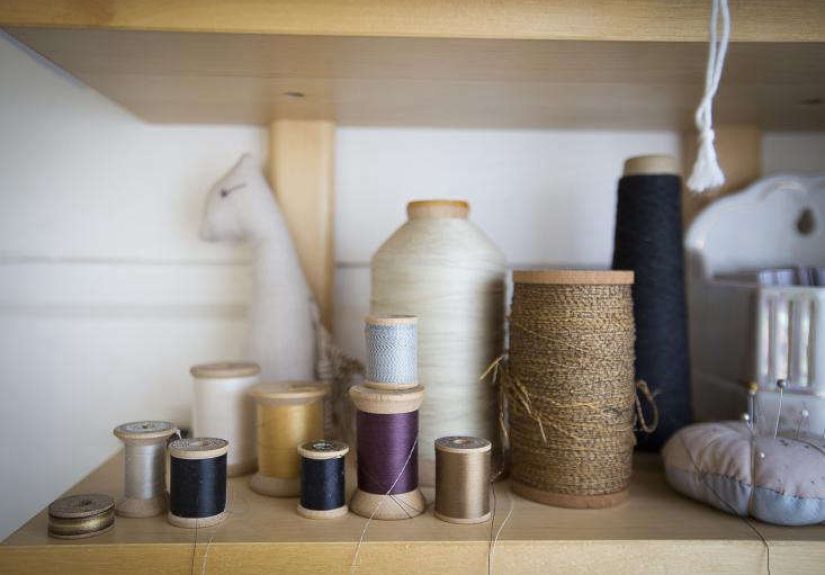
A real studio visit with a California sewing artisan is less like watching fashion happen and more like seeing problem-solving become an art form. The romance is there, absolutely. There are spools lined up like candy, scissors heavy enough to feel ceremonial, and muslin samples pinned to dress forms in mid-thought. But under the charm sits technical skill. A sewing artisan is part designer, part engineer, part storyteller, and part fabric whisperer. That last title is not official, but it should be.
In California, that work takes on a particular flavor. The state’s sewing culture lives at the crossroads of craft, commerce, and conscience. It pulls from the energy of the Los Angeles fashion ecosystem, the resourcefulness of small-batch making, the values of slow fashion, and the growing belief that well-made clothes should respect both the maker and the wearer. So if you have ever wondered what really happens inside a working sewing studio, pull up a stool. Mind the pins.
The Studio Begins with Atmosphere, but It Runs on Discipline
The fantasy version of a sewing studio is all linen aprons and golden afternoon light. The real version has that too, sometimes, but it also has order hiding inside apparent chaos. On one table: pattern weights, tracing paper, rulers, awls, and notches carefully marked with the seriousness of a surgeon prepping for a procedure. On another: cones of thread, folded remnants, and a garment halfway between idea and reality. Industrial machines hum with a kind of practical confidence. An iron hisses in the corner like it has opinions.
A California sewing artisan usually works in layers. There is the visual layer, where color, drape, and silhouette lead the conversation. Then there is the structural layer, where seam allowances, grainlines, interfacing, and fit quietly decide whether a garment will be loved or merely tolerated. Anyone can sketch something dramatic. The artisan’s real gift is making that dramatic thing wearable enough to survive a Tuesday.
That is why a studio visit feels so intimate. You are not just seeing finished work. You are seeing the decisions that made the finished work possible. The clipped curves. The revised dart. The first sample that almost worked. The second sample that definitely didn’t. The third sample that suddenly makes everybody in the room stand a little straighter.
Why California Is Such Fertile Ground for Sewing Artisans
California has long offered something that many makers need: proximity to materials, manufacturing know-how, and a customer base that appreciates personal style. In and around downtown Los Angeles, the apparel ecosystem is dense enough to make an artisan’s workflow more nimble. Fabrics, notions, trims, pattern services, alterations, small-batch production help, and specialty contractors can all exist within the same wider orbit. That kind of access matters. It means fewer delays, more experimentation, and the ability to fix problems before they become expensive life lessons.
For artisans, that local infrastructure is a huge advantage. If a sample needs a new zipper, a different weight of cotton, or a fresh pattern adjustment, the answer may be a short drive away instead of a three-week email chain. California’s sewing culture also benefits from overlap: costume work, ready-to-wear, denim, bridal, mending, upcycling, and custom clothing often bump into one another. Skills travel. Ideas cross-pollinate. A seam finish learned in one corner of the industry shows up later in a one-of-a-kind jacket or a carefully rebuilt pair of jeans.
There is also the state’s strong visual identity. California style tends to favor ease, movement, and individuality. That does not mean sloppy. It means clothes that look alive when worn. A sewing artisan working here often thinks about light, climate, layering, and lifestyle in very physical ways. Can the garment breathe? Can it travel? Can it be dressed up without looking like it is trying too hard? California fashion, at its best, understands that effort and ease are not enemies. They are dance partners.
Small-Batch Production Is a Strength, Not a Limitation
One of the most exciting things happening in California studios is the embrace of small-batch production. In fast fashion, “more” is treated like a moral good. In a thoughtful sewing studio, more can simply mean more waste, more guesswork, and more inventory that nobody truly wanted. Small-batch work flips that logic. It rewards precision. It makes room for testing. It lets a maker adjust a fit, improve a construction detail, or respond to what customers actually wear instead of what a spreadsheet hoped they might wear.
That smaller scale also changes the emotional tone of the work. A customer ordering from a sewing artisan is not just buying a product. They are often buying process, care, conversation, and trust. Maybe they choose the fabric. Maybe they give measurements. Maybe they return later for alterations, repairs, or another version in a different textile. That relationship is old-fashioned in the best way. It turns clothing back into something personal.
What the Work Really Looks Like, Stitch by Stitch
A studio visit quickly cures anyone of the notion that sewing is simply “putting fabric together.” That is like saying architecture is just stacking materials. The actual work begins long before the machine. First comes the pattern, whether drafted from scratch, adapted from a block, or developed through draping. Then comes sampling. A muslin or toile reveals where the body and the idea disagree. That disagreement is useful. It is where the garment becomes smarter.
Fit Is the Quiet Hero
Fit is not glamorous on Instagram, but it is the difference between a garment that gets compliments and one that becomes a permanent resident of the back closet. A skilled artisan studies how fabric falls at the shoulder, where tension lines appear, how the hip moves, and whether the sleeve rotates naturally when the arm lifts. The work is subtle. Tiny changes can transform comfort. A quarter-inch adjustment can save a design from heartbreak. Fashion loves drama, but sewing loves millimeters.
That precision is why artisans often keep test versions nearby. You may see a half-finished bodice, a sleeve with chalk arrows, or pants with one leg altered and the other left as a control sample. It is not mess. It is evidence. Every beautiful garment has a paper trail, even when that trail is made of muslin and tailor’s chalk.
Pressing Deserves Its Own Standing Ovation
If sewing has a secret superstar, it is pressing. Ask any experienced maker and they will tell you that the iron is not a finishing tool; it is a construction tool. Seams must be set. Curves must be coaxed. Collars need crispness. Hems need memory. A garment that has been expertly pressed carries itself differently. It looks intentional. It stops being “fabric that was sewn” and starts becoming clothing.
This is one of the funnier truths of a studio visit: the machine may get the spotlight, but the iron does half the work and none of the bragging.
The Ethics Are in the Room Too
A modern studio visit with a California sewing artisan is not just about aesthetics. It is also about values. More makers are openly talking about sourcing, labor, longevity, and repair. That shift matters because California’s apparel story includes both creative brilliance and hard labor history. You cannot celebrate craftsmanship honestly without acknowledging the people whose sewing has too often been undervalued.
Today, many artisans and small brands are trying to build something better. They use deadstock when possible. They produce locally when budgets allow. They make fewer pieces. They invite customers to mend, alter, and keep garments longer. They treat clothing as an object with a life cycle instead of a one-night stand with a checkout cart.
Slow Fashion Has Real Texture
Slow fashion can sound like a slogan until you see it in practice. In a California studio, it often means using what is nearby, making fewer but better things, and accepting that quality takes time. It may mean choosing natural fibers when possible, rethinking scraps, or building a wardrobe around pieces meant to be reworn instead of endlessly replaced. It also means transparency. Customers increasingly want to know not just what a garment looks like, but how it was made and by whom.
This is where California’s maker culture feels especially alive. There is strong interest in local fiber systems, natural dyes, repair, and creative reuse. In plain English: fewer landfill-bound impulse buys, more garments with actual biographies. A shirt becomes more interesting when you know where the fabric came from, who stitched it, why the shape was chosen, and how it can be repaired years later. Suddenly clothing has plot.
Good Craft Should Not Depend on Bad Labor
California has also become a crucial place for conversations about fair garment work. Responsible artisans know that “made locally” is not enough on its own. Local production must still be ethical production. Better labor protections in California have helped push that conversation forward, especially around wages and accountability. For serious makers, this is not a side issue. It is central to what makes craftsmanship meaningful. A beautifully sewn garment loses its glow if the system behind it is exploitative.
That is why so many California artisans talk about care in a broader sense. Care for the seam. Care for the fabric. Care for the worker. Care for the customer. Care, it turns out, is not a soft word. It is an operational principle.
Mending Is Back, and Honestly, It Never Should Have Left
One of the most refreshing parts of California’s sewing scene is the renewed excitement around mending and visible repair. For years, fashion trained people to think that wear and tear meant failure. A sewing artisan sees something else: possibility. A split seam can be repaired. A worn knee can be reinforced. A faded jacket can be patched, quilted, reworked, or beautifully restitched into its second act.
Mending changes the relationship between people and clothing. Instead of asking, “Should I replace this?” the question becomes, “Can I make this worth keeping?” That shift is practical, sustainable, and surprisingly emotional. Clothes hold memory. Repair lets memory stay in circulation a little longer.
California makers have been especially good at treating repair as design rather than apology. Decorative topstitching, contrast patches, sashiko-inspired details, and deliberate visible mends can turn damage into character. The result is less “Oops, I ripped my jeans” and more “Yes, this garment has been through something, and now it looks cooler.”
What Makes a Sewing Artisan Different from a Fashion Brand
The difference is intimacy. A big brand is built to scale. A sewing artisan is built to notice. They notice how a linen blend softens after pressing, how a customer always tugs at the sleeve, how a bias-cut panel behaves differently from what the pattern promised, and how a fabric that looks dreamy on the bolt may become dramatic in all the wrong ways once it meets daylight.
That attentiveness is hard to mass-produce. It creates garments with personality, but it also creates better communication. In a studio, you can ask why a seam sits where it does. You can hear why a maker changed a cuff width or rejected a cheaper trim. You can learn that a perfect topstitch line is not decorative fussiness; it is part of how the garment holds itself together over time.
In other words, the artisan does not just sell a dress, jacket, or pair of trousers. They sell judgment. And good judgment, as we all learn eventually, is never really cheap.
What You Carry Home from a Studio Visit
The best studio visits leave you with more than shopping temptation. They sharpen your eye. After watching an artisan work, you begin to notice construction details everywhere. You start checking hems. You peek inside garments. You become suspicious of flimsy facings and oddly twisted side seams. Congratulations: you are now the person in the fitting room muttering, “Hmm, the grain is off.” This is how it begins.
More importantly, a studio visit restores respect for clothing as made culture. In a world crowded with anonymous products, seeing work in progress is grounding. It reminds you that clothing begins with hands, training, and time. Even when technology supports the process, sewing remains profoundly human. Someone has to decide. Someone has to adjust. Someone has to care enough to redo the part that is technically fine but secretly annoying.
And maybe that is the real charm of visiting a California sewing artisan. You leave impressed, yes, but also slightly recalibrated. The next time you buy something well made, you know what you are actually paying for. Not just style. Skill. Not just trend. Thought. Not just a garment. A sequence of careful choices that turned cloth into something worth living in.
A Longer Studio Diary: 500 More Words from the Cutting Table
There is a moment in nearly every good studio visit when conversation fades and observation takes over. The artisan leans over the table. The shears begin their slow, satisfying glide. Paper pattern pieces lift and settle. Someone reaches for pins without looking because their hands already know the geography of the table. You realize you are watching fluency. Not speed for the sake of speed, but practiced movement. The kind that only comes from repetition, mistakes, and enough stubbornness to keep going when the first ten attempts looked like well-dressed despair.
What makes this experience especially California is the layering of influences. On one rack there may be a breezy top that feels coastal and relaxed. Nearby, a sharply structured denim piece nods to workwear and street style. In a basket, there are scraps sorted by color because even leftovers feel like future material. The whole room reflects a state where style is rarely boxed into one tribe. Surf ease, art-school experimentation, practical utility, vintage obsession, and cinematic flair can all end up in the same jacket if the maker is feeling adventurous.
You also notice how often artisans speak in verbs rather than nouns. They do not just discuss “a dress.” They talk about shaping, easing, binding, understitching, clipping, turning, basting, and finishing. This is a useful correction to how fashion is usually marketed. Consumers are trained to think in outcomes. Makers think in actions. That shift in perspective makes clothing feel less disposable, because once you understand how many actions a garment requires, tossing it carelessly starts to feel a little absurd.
Then there is the fitting process, which is part technical review and part emotional diplomacy. The artisan studies proportion with calm focus. Does the waist hit where it should? Is the neckline elegant or merely ambitious? Can the wearer sit, reach, bend, and breathe? Nobody writes poems about seam allowance math, but perhaps they should. A fitting is where fantasy meets gravity. It is also where trust is built. A good artisan does not flatter blindly. They refine. They interpret. They help a person feel more like themselves, which is often more stylish than chasing whatever trend is currently stomping around online in oversized boots.
The longer you stay, the more the studio feels less like a workplace and more like a philosophy made visible. Nothing is rushed without consequence. Nothing is cut without commitment. Even improvisation has structure. The artisan may pivot mid-process, but the pivot is informed by knowledge, not chaos. That distinction matters. It is the difference between creativity and craft. Creativity has ideas. Craft gets the zipper in cleanly, matches the stripes, and somehow makes the inside look almost as good as the outside.
By the time you leave, your understanding of clothing has changed in small but permanent ways. You no longer see a finished piece as the whole story. You imagine the pattern revision, the sample, the pressing cloth, the ripped-out seam, the second try, the final topstitch. You remember the sound of the machine and the pause before a tricky corner. Most of all, you remember that in a sewing studio, beauty is not accidental. It is built. Slowly, skillfully, and with just enough California nerve to make practicality look chic.
Conclusion
A studio visit with a California sewing artisan reveals something that fast fashion usually hides: clothing is a craft before it is a commodity. In these studios, design is tactile, fit is respected, mending is intelligent, and small-batch production can feel more luxurious than mass abundance ever will. California’s sewing culture is not perfect, and no honest article should pretend otherwise. But it remains one of the most compelling places in the country to see what happens when style, skill, and ethics share the same worktable.
That is why these studios matter. They preserve technique. They support local knowledge. They offer a more human pace in an industry addicted to acceleration. And they remind the rest of us that a great garment is not simply bought. First, it is imagined. Then it is measured, marked, revised, stitched, pressed, tested, repaired, and finally worn into life. That is not old-fashioned. That is value.