Table of Contents >> Show >> Hide
- Why This Brooklyn Kitchen Look Works So Well
- How to Steal the Look Without Copying Every Last Detail
- The Layout Lessons That Matter Most
- Design Details That Deliver the Biggest Payoff
- Mistakes to Avoid When Re-Creating the Look
- Final Take: Why This Brooklyn Kitchen Style Keeps Winning
- What It Feels Like to Live With a Small but Smart Brooklyn Kitchen
- SEO Tags
Note: This is body-only HTML, ready for easy copying and web publishing.
A small Brooklyn kitchen has a certain reputation. It is either impossibly chic, impossibly cramped, or, on a bad Tuesday, both. But the best ones pull off a neat trick: they look calm, cook hard, and somehow make a galley layout feel less like a hallway and more like a tiny design miracle. That is exactly why the “small but smart” Brooklyn kitchen look keeps showing up in mood boards, renovation wish lists, and late-night “maybe we should just redo the cabinets” conversations.
The magic is not really magic, of course. It is smart planning wearing a very good outfit. The look usually combines slim appliances, flat-front cabinetry, light-reflecting finishes, open storage that behaves itself, and lighting that knows the difference between “romantic glow” and “I am trying to slice an onion without losing a thumb.” In other words, it is the kind of kitchen that respects square footage but refuses to be bullied by it.
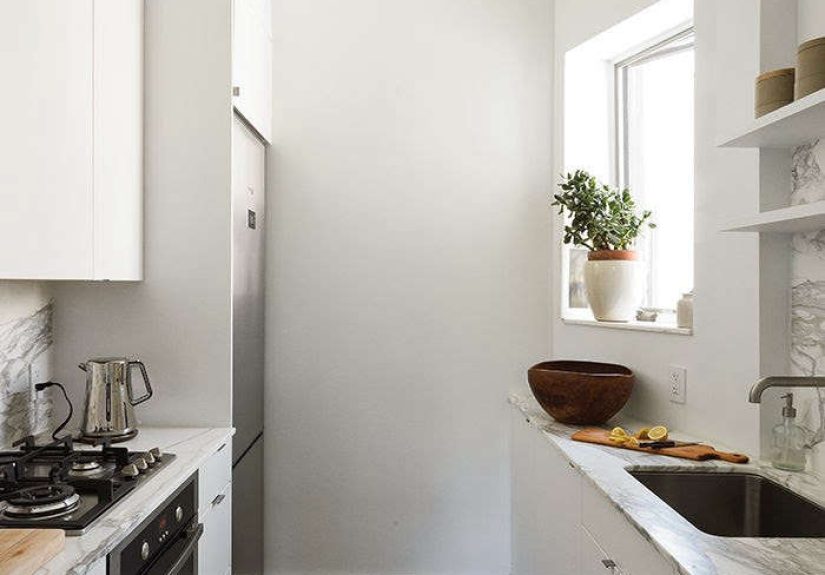
This version of the Brooklyn kitchen formula feels especially useful because it is not built on fantasy. It is built on choices real people can borrow: a compact range, a narrow refrigerator, white cabinets, honed stone, practical shelving, restrained hardware, and a layout that prizes movement over showing off. You do not need a sprawling suburban footprint to get the vibe. You just need discipline, a little editing, and the emotional strength to admit you probably do not need seven cutting boards.
Why This Brooklyn Kitchen Look Works So Well
At first glance, the appeal seems obvious: it is minimalist, bright, and polished. But the deeper reason this style works is that every pretty detail also pulls practical weight. Nothing is just there to look cute. Even the cute things have a job.
1. Compact appliances make the whole room breathe
One of the biggest lessons from small Brooklyn kitchens is that oversized appliances can act like bullies. A standard giant fridge or hulking range may be impressive, but in a narrow kitchen it can also eat circulation, crowd storage, and make the room feel like it is holding its breath. Slimmer 24-inch appliances, by contrast, buy back precious inches without forcing the kitchen to function like a dollhouse. That extra clearance matters every single day, especially when two people are trying to exist at the same time without becoming enemies.
The beauty of choosing smaller appliances is that the room starts working as one visual composition instead of a parking lot for shiny machines. The layout feels calmer, the cabinets read more cleanly, and the kitchen gains that elusive quality all city dwellers want: ease.
2. Flat-front cabinets keep visual noise low
If a tiny kitchen already has enough going on, fussy cabinetry is not helping. Flat-front cabinet doors, especially in white or soft warm neutrals, create an uninterrupted surface that visually stretches the room. Think of them as the kitchen equivalent of a well-tailored coat: simple, sharp, and doing a lot more than it first appears.
This is also why minimal hardware works so well here. Edge pulls or discreet handles keep the cabinetry crisp and modern. Instead of shouting for attention, the cabinets recede just enough to let the room feel larger. In a small-space kitchen, that is not a minor victory. That is the whole game.
3. Honed stone adds polish without the drama queen shine
Glossy finishes can help bounce light, sure, but honed marble or marble-look surfaces bring something equally valuable: softness. A honed counter and matching backsplash feel refined but relaxed, which is a lovely balance in a hard-working kitchen. The finish adds texture without making every fingerprint look like a crime scene.
It is also a clever way to make a compact room feel more custom. When the countertop and backsplash share the same material or color family, the eye reads one long, cohesive gesture instead of lots of chopped-up parts. Small kitchen, big composure.
4. Open shelving works best when it is curated, not chaotic
Open shelves in a tiny kitchen can be great or terrible. There is almost no middle ground. Done well, they keep daily essentials within reach, lighten the look of the upper wall, and create a little breathing room where bulky cabinets might feel heavy. Done badly, they become a public exhibition of mismatched mugs and impulsive condiment decisions.
The Brooklyn-smart version of open shelving is disciplined. A few stackable bowls, everyday dishes, maybe a favorite kettle, maybe one attractive cutting board leaning like it knows it is photogenic. That is enough. Shelving should look useful, not like a yard sale with good lighting.
How to Steal the Look Without Copying Every Last Detail
The smartest way to borrow this kitchen style is to copy the principles, not the exact shopping list. You are not trying to clone someone else’s apartment. You are trying to steal the logic.
Start with a restrained palette
A small kitchen benefits from consistency. White cabinets, pale walls, warm wood accents, stainless or brushed metal details, and one stone or stone-look surface create a clean foundation. The result is bright without feeling sterile, especially if you mix in natural textures like wood boards, linen towels, matte ceramics, or woven shades.
If you want contrast, use it strategically. A darker faucet, black stool legs, a moody sconce, or a single deep paint color on lower cabinets can add character without visually shrinking the room. Small spaces do not need to be boring. They just need to be edited.
Go vertical like you mean it
When square footage is limited, the walls need to earn their keep. Tall cabinetry, shelving to the ceiling, rails for utensils, magnetic knife strips, under-cabinet storage, and pegboards can add serious utility without chewing up floor space. This is one of the most repeated lessons in small-kitchen design for a reason: vertical storage is not a bonus feature. It is survival with good posture.
Even awkward little gaps can become heroes. A narrow pull-out for spices, a slim tray slot, a shelf above a doorway, or a petite rolling cart can rescue storage that would otherwise disappear into the great void of “wasted space.” In Brooklyn, every inch gets a résumé.
Layer the lighting
A tiny kitchen with one sad overhead fixture is basically an apology in room form. Better lighting changes everything. You want a mix: general ambient light for the whole room, task lighting for counters and prep areas, and one decorative fixture that gives the space personality.
Under-cabinet lighting is especially useful because it brightens work surfaces without stealing any room. A slim flush mount or small pendant keeps overhead space feeling open, while a statement light can create a focal point that distracts from the kitchen’s limited size. It is a classic designer move: when you cannot make the room bigger, make it smarter looking.
The Layout Lessons That Matter Most
Good small kitchens are not only decorated well. They are choreographed well. The flow between sink, stove, prep zone, and storage should feel natural, even if the room is narrow. That is where many Brooklyn kitchens quietly outperform larger ones. They are planned around how people actually move.
- Keep the path clear: Leave as much uninterrupted walkway as possible.
- Put everyday items closest to the action: Oils near the stove, dishes near the dishwasher or sink, trash where prep happens.
- Hide what you do not use daily: Small appliances, bulk groceries, and visual clutter should be tucked away when possible.
- Let one area multitask: A counter can be prep zone, coffee station, and serving area if it stays uncluttered.
- Respect scale: A tiny kitchen does not need a giant island, enormous pendants, or a professional-grade range pretending it lives in a loft from a movie.
That last point matters. Scale is what separates “small but smart” from “small but trying way too hard.” The best Brooklyn-inspired kitchens know exactly what they can carry, and they stop there.
Design Details That Deliver the Biggest Payoff
If you want the fastest route to this look, prioritize the details that punch above their weight.
Counter discipline
Leaving the counters mostly clear instantly makes a tiny kitchen feel more luxurious. Mount the paper towel holder underneath a cabinet. Use a soap dispenser you actually like looking at. Corral oils and salt on a small tray. Put the toaster away if you are not using it daily. A smart kitchen is not one with more stuff; it is one with less stuff out.
Reflective but not frantic finishes
Reflective backsplashes, subtle sheen on paint, glass-front moments, or stainless details can bounce light around a compact room. But moderation matters. Too many reflective surfaces can make the kitchen feel busy. The sweet spot is a balanced mix of matte and shine.
Small doses of personality
You still want the room to feel like a home, not a showroom staged by a robot with excellent taste. A framed print, a vintage stool, a handsome kettle, or beautifully stacked dishes can add soul without clogging the space. The best tiny kitchens always remember this: utility is essential, but charm is what keeps the room from feeling like a well-organized closet.
Mistakes to Avoid When Re-Creating the Look
Plenty of small kitchens go off the rails because they confuse minimalism with deprivation or style with clutter. Here are the usual suspects:
- Too many open shelves: airy in theory, exhausting in practice.
- Oversized hardware or fixtures: they can overwhelm the room fast.
- Ignoring lighting: no amount of expensive tile can outshine bad illumination.
- Choosing aesthetics over movement: if the fridge door blocks everything, the kitchen is not smart.
- Using every inch for storage and none for breathing room: yes, storage matters, but so does calm.
A good small kitchen should feel edited, not squeezed. If every surface is working overtime, the room starts to feel tired before you do.
Final Take: Why This Brooklyn Kitchen Style Keeps Winning
The reason this look endures is simple: it understands real life. It knows a kitchen can be compact and still elegant, hardworking and still beautiful, minimalist and still warm. It respects movement, light, storage, and scale. It borrows from modern design without becoming cold, and it uses practical choices to create visual ease.
That is the real steal here. Not the exact faucet, not the exact cabinet front, not even the honed marble. It is the attitude. A small kitchen does not need pity. It needs better planning, fewer distractions, and a little confidence. Get those right, and even a narrow Brooklyn galley can feel downright generous.
What It Feels Like to Live With a Small but Smart Brooklyn Kitchen
There is also something worth saying about the experience of a kitchen like this, because photos tend to flatten the story. A small but smart Brooklyn kitchen is not impressive in the obvious way. It does not wow you with a ten-foot island or a refrigerator large enough to shelter a village. Its charm shows up slowly, in daily use. You notice it when you make coffee without bumping into a cabinet door, when you can reach the pan you need in one motion, when the counter is clear enough that chopping vegetables feels weirdly calming instead of like a tactical operation.
That is the pleasure of a well-edited kitchen: it removes friction. Morning routines move faster. Cleanup feels less punishing. Cooking for one feels civilized, and cooking for two feels possible. Even hosting becomes less intimidating because the room has already been trained to multitask. One corner handles drinks, another manages prep, and suddenly your tiny kitchen is participating in the party instead of apologizing for itself.
There is a psychological benefit, too. Small kitchens can easily trigger a scarcity mindset. You start thinking only about what you do not have: more drawers, more counters, more square feet, more everything. But a smart layout changes that emotional math. Instead of feeling deprived, you feel capable. You know where things belong. You buy more selectively. You stop treating storage like an emergency and start treating it like a system. That shift is surprisingly freeing.
And yes, there is a small amount of vanity involved, in the best way. A clean row of dishes on an open shelf, a compact lamp or pendant glowing in the evening, a cutting board leaning against a pale backsplash, the coffee setup looking almost suspiciously put together, all of it makes ordinary routines feel a little more intentional. Not fancy. Just better. It turns making pasta on a weeknight into a scene with decent production design.
Of course, living with this kind of kitchen also teaches discipline. You become brutally honest about what earns a place on the counter. You learn that duplicates are not always useful, that giant novelty gadgets are the enemy, and that one good chef’s knife is more valuable than an entire drawer of nonsense. In that sense, the kitchen quietly edits your habits along with your storage.
That may be why the Brooklyn version of this look resonates so much. It reflects a way of living that values resourcefulness over excess. It says a home can be stylish without being wasteful, and efficient without feeling stripped down. It proves that design is not only about making things look expensive. It is about making them work beautifully. In a small kitchen, that philosophy becomes visible every day. And once you experience that kind of ease, it is very hard to go back to chaos, clutter, or a refrigerator that needs its own zip code.