Table of Contents >> Show >> Hide
- What Makes the Best Home Air Purifier?
- Best Home Air Purifier Types by Room and Need
- Features Worth Paying For
- How to Choose the Right Size Air Purifier
- Common Mistakes to Avoid
- Where to Place a Home Air Purifier
- Experience-Based Tips for Using the Best Home Air Purifier
- Final Verdict: What Is the Best Home Air Purifier?
The best home air purifier is not always the fanciest machine with a glowing app, futuristic tower shape, and a name that sounds like it should launch satellites. The best air purifier is the one that fits your room, moves enough clean air, uses a reliable filter, runs quietly enough that you actually leave it on, and does not require a second mortgage every time you replace the filter. In other words, the winner is practical, powerful, and boring in all the right ways.
Indoor air can carry dust, pollen, pet dander, smoke particles, mold spores, cooking odors, and fine pollution that drifts in from outside. A good home air purifier helps reduce many airborne particles, especially when paired with smart habits such as vacuuming, controlling moisture, ventilating when outdoor air is clean, and avoiding indoor smoke. It is not a magic box. It will not clean your carpet, fix a mold problem behind the drywall, or convince your dog to stop shedding like a tiny carpet factory. But the right purifier can make your bedroom, living room, nursery, home office, or allergy-prone space feel noticeably fresher.
What Makes the Best Home Air Purifier?
A great home air purifier should do three things well: capture particles, circulate air efficiently, and remain easy to live with. That sounds simple, but product pages often bury the useful details under marketing terms like “plasma,” “turbo ion,” “nano mist,” or “space-age purification.” For most homes, the most reliable formula is a fan-driven air purifier with a high-efficiency particle filter, a pre-filter for larger debris, and an activated carbon layer for light odors.
1. CADR: The Number That Actually Matters
CADR stands for Clean Air Delivery Rate. It tells you how much filtered air a purifier can deliver per minute. Higher CADR generally means faster cleaning. You may see separate CADR ratings for smoke, dust, and pollen. Smoke CADR is especially useful because smoke particles are tiny and difficult to capture.
A practical rule is to choose a purifier with a smoke CADR that is at least two-thirds of the room’s square footage. For a 150-square-foot bedroom, look for a smoke CADR of about 100 or higher. For a 300-square-foot living room, aim for around 200 or higher. If your ceilings are taller than eight feet, size up. Air does not read square-foot labels, and it definitely does not respect vaulted ceilings.
2. HEPA Filtration for Fine Particles
For allergies, dust, wildfire smoke, and pet dander, mechanical filtration is the star of the show. A true HEPA or high-efficiency particle filter is designed to trap very small particles as air passes through dense filter media. This is why many top-rated home air purifiers use HEPA or HEPA-grade filtration as the core technology.
Look for clear filter information, not vague claims. Phrases like “removes up to 99.97% of particles” are common, but the details matter: What particle size? Under what test conditions? Is the purifier independently rated? Does it publish CADR numbers? A trustworthy air purifier should be transparent about performance, not just photogenic on a nightstand.
3. Activated Carbon for Odors and Gases
HEPA filters are excellent for particles, but they are not designed to remove gases or many odors. That is where activated carbon comes in. Carbon filters can help with cooking smells, pet odors, smoke smells, and some volatile organic compounds, often called VOCs. However, a thin carbon sheet may only help lightly and temporarily. If odor control is a major concern, choose a purifier with a substantial carbon filter and plan to replace it regularly.
Important reality check: an air purifier should not be your only strategy for strong chemical smells, gas appliance emissions, or heavy smoke. Remove the source, ventilate when safe, and use filtration as support. The best home air purifier is part of an indoor air plan, not the entire plan wearing a plastic shell.
Best Home Air Purifier Types by Room and Need
Best Overall for Most Homes
For most households, the best choice is a mid-size air purifier with a smoke CADR around 200 to 300, a high-efficiency particle filter, a washable or vacuumable pre-filter, an activated carbon layer, and Energy Star certification. This size works well in many bedrooms, home offices, nurseries, and medium living rooms. It is also easier to move, quieter at moderate speeds, and usually cheaper to maintain than an extra-large unit.
Popular models in this category often include familiar names such as Coway Airmega, Levoit Core or Vital series, Blueair Blue Pure models, Honeywell HEPA units, and Winix purifiers. The exact best model depends on price, room size, filter cost, noise tolerance, and whether you want app controls. If two purifiers have similar CADR ratings, choose the one with cheaper replacement filters and quieter performance. Future you will appreciate not paying luxury-car prices for a rectangle of pleated filter media.
Best Air Purifier for Bedrooms
In a bedroom, quiet operation matters almost as much as filtration. A purifier that sounds like a tiny jet engine will not help if you turn it off after eight minutes. Look for sleep mode, dimmable lights, low noise ratings, and enough CADR to run effectively on a medium setting. Oversizing slightly can help because a stronger purifier can clean the room at a lower, quieter speed.
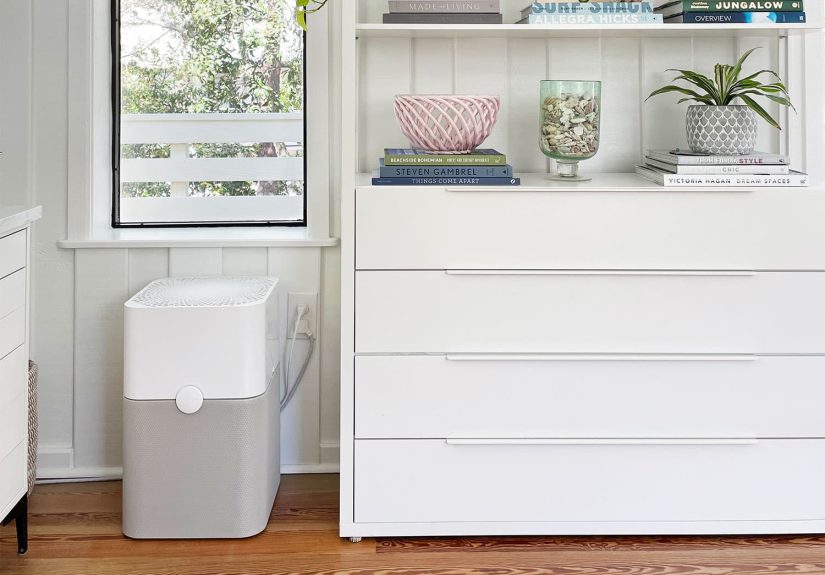
Place the purifier near the breathing zone but not directly against the wall. Keep several inches of clearance around the intake and outlet. Do not hide it behind curtains, under a desk, or in the corner where forgotten exercise equipment goes to retire. Air purifiers need open airflow to do their job.
Best Air Purifier for Pets
Pet owners should prioritize a strong pre-filter and easy maintenance. Pet hair itself is usually large enough to fall onto surfaces, but dander and odor-causing particles can remain airborne. A washable pre-filter helps catch hair before it clogs the main filter. This can extend filter life and keep airflow strong.
For homes with cats, dogs, or several furry roommates who do not pay rent, choose a purifier with a reliable particle filter and carbon layer. Run it continuously in the rooms where pets sleep or spend the most time. Also vacuum regularly with a sealed HEPA vacuum if possible. The purifier helps the air; the vacuum helps the furniture; your black pants are still on their own.
Best Air Purifier for Wildfire Smoke
Wildfire smoke contains fine particles that can travel indoors through gaps, windows, doors, and HVAC systems. During smoky conditions, a high-CADR portable air purifier can help create a cleaner room, especially when windows and doors remain closed. Choose a purifier with strong smoke CADR, mechanical particle filtration, and enough capacity for the room you plan to use as your clean-air space.
If wildfire smoke is a recurring issue, consider pairing a portable purifier with a high-efficiency HVAC filter that your system can safely handle, often MERV 13 or higher when compatible. Keep extra replacement filters on hand before smoke season. Filters tend to sell out exactly when everyone suddenly remembers breathing is important.
Best Air Purifier for Large Rooms
Large rooms need large CADR. Do not buy a small bedroom purifier and expect it to handle an open-concept living room, kitchen, and dining area. It will try its best, but so would a teaspoon in a swimming pool. For spaces over 500 square feet, look at higher-capacity models with smoke CADR above 300, or use two smaller units placed strategically.
Extra-large purifiers can be excellent for open spaces, but check the noise level, weight, filter price, and energy use. Some high-performance machines are heavy and expensive to maintain. If you move the purifier often, handles and wheels become surprisingly exciting features.
Features Worth Paying For
Energy Star Certification
Air purifiers work best when they run for long periods. That means energy efficiency matters. Energy Star-certified room air cleaners use significantly less energy than standard models, helping reduce operating costs. A cheaper purifier that uses more power and needs expensive filters may not be cheaper after a year.
Auto Mode and Air Quality Sensors
Auto mode can be useful because it adjusts fan speed based on detected air quality. This helps during cooking, cleaning, pollen spikes, or smoky days. However, sensors vary in accuracy. Treat auto mode as convenient, not perfect. If outdoor smoke is heavy or allergies are acting up, manually run the purifier at a higher speed for a while.
Filter Replacement Indicators
A filter indicator is helpful, but it is not psychic. Many reminders are based on time, not actual filter condition. Homes with pets, smoke, high dust, or wildfire exposure may need more frequent changes. If airflow drops, odors return, or the filter looks dirty, replace it. Washing a non-washable HEPA or carbon filter can damage it, so always follow the manufacturer’s instructions.
Low Ozone or No Ozone
Avoid air purifiers that intentionally produce ozone. Ozone can irritate the lungs and is not something you want added to indoor air. Be cautious with ionizers, plasma features, and “active purification” technologies unless the model is certified to meet strict ozone limits and allows the feature to be turned off. For most homes, mechanical filtration is the safer and more proven choice.
How to Choose the Right Size Air Purifier
Start by measuring the room. Multiply length by width to get square footage. Then compare that number with the purifier’s CADR and recommended room size. Ignore exaggerated claims based on cleaning the air once per hour in a huge room. For real-world performance, you want multiple air changes per hour, especially for allergies, smoke, or high dust.
Here is a simple guide:
- Small bedroom, 100–150 square feet: smoke CADR around 70–100 or higher.
- Medium bedroom or office, 150–250 square feet: smoke CADR around 100–170 or higher.
- Living room, 250–400 square feet: smoke CADR around 170–270 or higher.
- Large open room, 400–700 square feet: smoke CADR around 270–450 or higher.
- Extra-large area: consider one large purifier or two well-placed units.
Common Mistakes to Avoid
Buying Too Small
The most common mistake is choosing a purifier that looks cute but cannot clean the room quickly. Tiny purifiers may work for a desk or small nursery, but they are not ideal for large bedrooms or living rooms. A purifier should be sized for the space, not for the empty spot on your shelf.
Turning It Off Too Often
Air pollution is not a one-time visitor. Dust, dander, and particles keep entering the air. For best results, run the purifier continuously on a low or medium setting, then increase the speed during cooking, cleaning, high pollen days, or smoke events.
Forgetting Filter Costs
Replacement filters can become the hidden cost of air purifier ownership. Before buying, check the price and availability of filters. If a purifier is cheap but needs costly filters every few months, the deal may be wearing a fake mustache.
Expecting It to Solve Moisture or Mold Problems
An air purifier can capture airborne mold spores, but it cannot fix mold growing on damp walls, carpets, or ceilings. If moisture is the source, repair leaks, improve ventilation, and keep indoor humidity under control. Air cleaning helps, but source control wins.
Where to Place a Home Air Purifier
Placement affects performance. Put the purifier in the room where you spend the most time, such as the bedroom at night or the living room during the day. Keep it away from walls, furniture, curtains, and anything that blocks airflow. Close windows during outdoor pollution events, but ventilate when outdoor air is clean and indoor pollutants are high.
In bedrooms, placing the purifier a few feet from the bed can be effective without blowing air directly at your face. In living rooms, place it near the center of activity or close to likely pollutant sources, such as a doorway, pet bed, or cooking-adjacent area. Just do not put it next to a litter box and expect miracles. Technology has limits.
Experience-Based Tips for Using the Best Home Air Purifier
After using home air purifiers in real-life rooms, one lesson becomes clear: the best purifier is the one you can live with every day. Specifications matter, but habits matter too. A powerful purifier left unplugged is just modern sculpture. A modest purifier running consistently in the right room can make a bigger difference than a premium model that is too loud, too bright, or too annoying to maintain.
In a bedroom, the first thing people often notice is less morning stuffiness. This is especially true during pollen season or in homes with pets. Running a purifier for several hours before bedtime can help reduce airborne dust and dander before you sleep. If the unit has a display light, dim it or cover it according to the manual. Nobody wants to be kept awake by a glowing blue circle that looks like a tiny UFO judging your sleep schedule.
In a living room, the purifier becomes most useful during high-activity moments. Vacuuming, folding dusty blankets, opening packages, brushing pets, or cooking can stir particles into the air. Turning the purifier to a higher speed for 30 to 60 minutes after these activities can help clear the room faster. Auto mode may respond to particles or odors, but manually boosting the fan is often more reliable when you know pollution has increased.
For pet owners, maintenance is everything. Check the pre-filter weekly. A layer of pet hair can reduce airflow and make the purifier work harder. Vacuuming the pre-filter, when allowed by the manufacturer, is a quick habit that can preserve performance. Place the purifier near the area where pets lounge, but not so close that fur blocks the intake every afternoon. If your pet treats the purifier like a suspicious robot roommate, give it space and let the animal adjust.
During wildfire smoke days, preparation matters more than panic. Keep replacement filters available before smoke season. Choose one room as a clean-air room, close windows and doors, and run the purifier continuously. Avoid adding indoor pollutants from candles, fireplaces, incense, or heavy frying. The purifier is already fighting outdoor smoke; do not make it battle a scented candle named “Mountain Thunderstorm Cupcake.”
Odor expectations also need to be realistic. A purifier with carbon can reduce mild cooking smells, pet odors, and stale air, but it may not remove strong chemical fumes quickly. If a smell comes from a source that is still present, such as damp carpet, fresh paint, smoke residue, or a trash can conducting biological research, remove the source first. Filtration works best after the problem is reduced.
Finally, pay attention to sound. Many users start on turbo mode, get annoyed, and turn the purifier off. A better approach is to run it on medium when the room is empty and low when you are sleeping, reading, or working. If you buy a purifier slightly larger than your room requires, it can usually clean well at lower speeds. That means cleaner air without the soundtrack of a hair dryer trying to become a helicopter.
Final Verdict: What Is the Best Home Air Purifier?
The best home air purifier for most people is a properly sized, Energy Star-certified, high-CADR purifier with strong mechanical filtration, a useful carbon layer, quiet operation, affordable replacement filters, and no intentional ozone production. For bedrooms and small spaces, choose a quiet mid-size model. For pets, prioritize a washable pre-filter and easy filter changes. For wildfire smoke, choose the highest smoke CADR you can reasonably afford for your clean-air room. For large living areas, size up or use multiple purifiers.
Do not buy based on looks alone. Buy based on CADR, room size, filter quality, noise, maintenance cost, and safety. A great air purifier should quietly improve your home in the background. It should not need applause, dramatic lighting, or a 47-step app setup. When the machine is well matched to your space and used consistently, cleaner indoor air becomes less of a luxury and more of a daily comfort.