Table of Contents >> Show >> Hide
- Why Kitchen Carts Are Having a Very Deserved Moment
- What Makes a Kitchen Cart Actually Worth Buying?
- The Best Kitchen Carts by Use Case
- How to Choose the Right Cart for Your Kitchen Style
- Common Kitchen Cart Mistakes to Avoid
- Smart Ways to Use a Kitchen Cart Every Day
- Real-Life Experiences With Kitchen Carts: What People Love After Bringing One Home
- Conclusion
Note: This article is based on real, synthesized information from current U.S. home, design, and retail sources and has been cleaned for web publishing.
Some kitchens have big-main-character energy. Others are more like, “I have one drawer, two feet of counter space, and a dream.” That is exactly where a great kitchen cart earns its stripes. It is the rare piece of furniture that can add storage, create prep space, improve flow, and still look like it belongs in the room instead of wandering in from the garage.
The best kitchen carts do more than hold a fruit bowl and pretend to help. They solve actual problems. They give small kitchens a place to land. They help open layouts feel more organized. They turn dead space into working space. And when chosen well, they also bring style, warmth, and personality to the busiest room in the house.
Today’s best options range from slim rolling utility carts to handsome butcher-block islands with drawers, shelves, towel bars, spice racks, and drop leaves. Some are designed for tiny apartments. Others are robust enough to hold heavy appliances, serve as a baking station, or moonlight as a coffee bar during the week and a buffet during the holidays. In other words, the modern kitchen cart is no longer a backup singer. It can absolutely headline the show.
Why Kitchen Carts Are Having a Very Deserved Moment
Kitchen design has shifted toward flexibility, especially in homes where cooking, entertaining, working, and general life chaos all happen in the same zone. A kitchen cart fits beautifully into that reality. It offers the benefits people love in an island, including storage and extra surface area, without the commitment, construction, and budget demands of a built-in piece.
That flexibility matters. Renters may not be able to renovate. Owners may not want to give up floor space permanently. And plenty of kitchens simply do not have the footprint for a full island. A well-sized cart bridges that gap. It can roll where you need it, tuck away when you do not, and support everything from weeknight chopping to weekend hosting.
Style is another reason these pieces are so appealing right now. Kitchen carts are showing up in warm wood finishes, painted bases, mixed materials, open-shelf designs, and classic butcher-block tops that feel more furniture-like than purely utilitarian. Instead of looking temporary, the best ones now look intentional.
What Makes a Kitchen Cart Actually Worth Buying?
1. The right size for your floor plan
The first rule is simple: a cart should help your kitchen breathe, not turn it into an obstacle course. Measure carefully before you fall in love with a model online. You want enough room to move comfortably around it, open cabinets and appliance doors, and still carry a pot of pasta without performing advanced choreography.
In general, a kitchen should have enough clearance around a freestanding island or cart to keep traffic moving smoothly. If your space is tight, a narrow cart can still be incredibly useful. Even a compact footprint can add a shelf for cookware, a drawer for utensils, and a top surface for prep.
2. A top that matches how you cook
The countertop matters more than most shoppers think. A butcher-block top is one of the most popular choices because it adds warmth and gives the cart a hardworking, classic feel. It is especially appealing in kitchens that need a little softness or natural texture.
Stainless steel is the workhorse option. It has a clean, professional look, handles heavy-duty prep well, and is easy to wipe down after messy cooking sessions. If your kitchen leans modern, industrial, or appliance-heavy, this material makes a lot of sense.
Painted wood or composite tops can work beautifully in style-forward spaces, though they are often better for light prep and serving than for serious chopping. The best choice depends on whether your cart will be a true prep station, a storage hub, or a little bit of both.
3. Storage that fits real kitchen habits
Not all storage is equally useful. A kitchen cart earns its keep when its storage matches how people actually use the kitchen. Drawers are great for utensils, measuring tools, and towels. Shelves work well for mixing bowls, small appliances, baskets, and pretty everyday dishes. Closed cabinets help hide visual clutter. Side hooks, spice racks, and towel bars are small features that can make daily cooking feel much easier.
The best designs strike a balance. Too much open storage can look messy fast. Too much closed storage can make a small cart feel bulky. A mix of both usually wins.
4. Lockable wheels
Casters are part of the magic, but only if they lock. A rolling cart that scoots away every time you slice a tomato is not charming. It is a trust issue on wheels. Good casters let you move the cart when needed and then keep it stable during prep, serving, or appliance use.
5. A look that belongs in your kitchen
The best kitchen carts do not just add function. They also support the room’s style. A black cart with a wood top can bring contrast to a light kitchen. A white or cream-painted cart can brighten a compact space. A warm oak or walnut finish can make the whole room feel more layered and lived-in. If your kitchen already has strong cabinetry, a cart can either echo those tones or provide a tasteful contrast.
The Best Kitchen Carts by Use Case
Best overall: the butcher-block rolling island
If one style has become the all-around favorite, it is the medium-size rolling island with a butcher-block top, drawers, shelves, and at least one cabinet. This type of cart works in a wide range of kitchens because it adds prep surface, concealed storage, and visual warmth in one shot. It is the Swiss Army knife of kitchen furniture, only prettier and less likely to disappear into a junk drawer.
This is the right pick for households that cook often and want one piece that can hold mixing bowls, linens, oils, boards, or even a stand mixer. It also suits people who want their cart to look substantial enough to feel like part of the kitchen, not an afterthought.
Best for small kitchens: the slim utility cart
For compact layouts, a slim rolling cart is often the smartest buy. These narrower pieces can slide beside a wall, park near the fridge, or fill the awkward little gap that otherwise collects reusable shopping bags and mild resentment. They work especially well for pantry overflow, coffee supplies, produce baskets, and baking ingredients.
In a small kitchen, a cart does not need to be huge to be transformative. A narrow design with open shelves can keep essentials accessible while preserving visual lightness. This is a particularly smart option for apartments and galley kitchens.
Best for serious cooks: the stainless-steel prep cart
If your kitchen cart is going to do real labor, not decorative labor, a stainless-steel prep cart deserves a hard look. These carts tend to be sturdy, easy to clean, and better suited to heavy appliances or messy projects like bread making, roasting prep, and batch cooking. They have a more professional vibe, but that can be a good thing, especially in a kitchen where performance matters most.
This type is ideal for home cooks who care more about durability and workflow than display styling. It is not trying to be adorable. It is trying to help you survive holiday cooking.
Best for entertaining: the drop-leaf cart
A drop-leaf kitchen cart is a clever choice for people who need flexibility. With the leaf down, it stays compact. With the leaf up, it becomes a much more generous prep or serving station. That makes it excellent for homes where space is limited most of the time but hosting still happens regularly.
It can function as a coffee station in the morning, a chopping surface in the afternoon, and a snack or drinks station when guests arrive. That is a pretty strong résumé for one piece of furniture.
Best for style lovers: the painted furniture-style cart
If aesthetics are high on your list, a painted cart with a furniture-inspired silhouette can be the most satisfying option. Think turned legs, paneled cabinet fronts, brass or black hardware, and a finish that complements the rest of the room. These carts are particularly attractive in farmhouse, cottage, transitional, and classic kitchens.
The beauty of this style is that it can make your kitchen feel more curated. Instead of shouting “extra storage,” it quietly says, “Yes, I am useful, but I also have taste.”
Best budget option: the metal or composite multi-tier cart
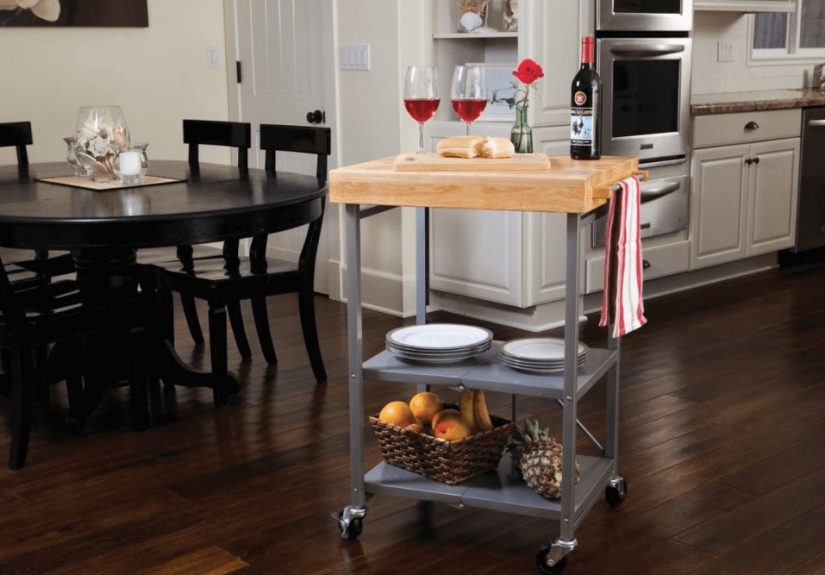
Budget-friendly carts often skip the bells and whistles, but that does not mean they are not useful. A simple three-tier cart can become a produce stand, coffee cart, baking center, or overflow pantry in seconds. If you need storage fast and do not want to spend like you are buying custom cabinetry, this category is hard to beat.
The key is to be realistic. Budget carts are often better for light-duty storage and portability than for heavy prep. But in the right kitchen, they punch far above their price point.
How to Choose the Right Cart for Your Kitchen Style
For modern kitchens
Look for clean lines, simple hardware, matte black details, or a stainless-steel top. Open shelving can keep the look airy. Avoid anything too ornate if your cabinetry is sleek and streamlined.
For farmhouse or traditional kitchens
Butcher-block tops, painted bases, and classic cabinet doors feel right at home. White, black, navy, sage, cream, and natural wood finishes all play nicely in this style family.
For small or open-concept kitchens
Choose a cart that defines function without eating the room. Slim profiles, open bases, light finishes, and locking wheels help. A cart can act as a soft divider between the kitchen and living area while still staying flexible.
For colorful kitchens
A cart is a great place to introduce contrast. If your cabinets are neutral, a deep green, blue, or black cart can add punch. If your kitchen already has strong color, a warm wood cart can ground the palette and keep things from feeling too busy.
Common Kitchen Cart Mistakes to Avoid
- Buying too large: More storage is tempting, but a cart that blocks movement will quickly become a nuisance.
- Ignoring wheel quality: Cheap casters can wobble, stick, or fail under weight.
- Choosing the wrong storage mix: Open shelves look nice, but they are not ideal for every kitchen item.
- Forgetting visual balance: A bulky dark cart can overwhelm a small bright kitchen, while a flimsy metal cart may look lost in a warm traditional space.
- Using it as a clutter magnet: A cart adds storage, but it also attracts random junk if it does not have a defined purpose.
Smart Ways to Use a Kitchen Cart Every Day
The best kitchen carts shine when they are assigned a role. Make yours a baking station with flour, sugar, and mixing tools. Turn it into a breakfast hub with mugs, cereal, and the toaster. Use it as a coffee bar, a produce center, a bar cart, a meal-prep station, or a place to keep serving pieces that do not fit anywhere else. When the cart has a job description, it stays useful and organized.
Styling also matters. A cart looks best when the top surface is not buried under mail, appliance cords, and the emotional leftovers of three rushed weekdays. Leave some breathing room. Add a bowl, a tray, a cutting board, or a vase if it suits your kitchen. The goal is practical beauty, not staged perfection.
Real-Life Experiences With Kitchen Carts: What People Love After Bringing One Home
One of the most consistent experiences people describe after adding a kitchen cart is simple relief. Suddenly, the kitchen feels less crowded even though a new piece of furniture has been added. That sounds backwards, but it makes sense. When utensils, oils, bowls, towels, small appliances, and snack items finally have a home, the counters stop carrying the whole burden. The room starts working better because the clutter is distributed more intelligently.
In smaller homes, a kitchen cart often becomes the piece that makes the kitchen feel finished. Before the cart, there may be just enough room to cook but not enough room to stage ingredients, cool baked goods, or set down groceries. Afterward, there is a clear landing spot. That extra surface can change the rhythm of cooking in a surprisingly big way. You stop playing countertop Tetris every night.
Families often end up using a cart in more ways than expected. A piece bought for meal prep becomes the place where lunchboxes get packed, fruit gets stored, homework gets started, and snacks mysteriously disappear. In homes with open shelving on the cart, kids can grab breakfast bowls or water bottles more easily. In homes with closed cabinets, the cart becomes a sneaky place to hide the visual noise that builds up in active kitchens.
People who entertain also tend to love the flexibility. A cart can roll closer to the dining area when serving, then move back into the kitchen afterward. During holidays or parties, that extra surface becomes precious. It may hold appetizers, desserts, pitchers, or stacks of plates. On ordinary days, it goes right back to being a humble storage hero. That shape-shifting ability is a big part of the appeal.
Another common experience is discovering that mobility matters more than expected. Even when a cart mostly stays parked, the fact that it can move changes how useful it feels. You can pull it out for deep cleaning, shift it when guests gather, or reposition it when you need more room near the stove or sink. In tight kitchens, that flexibility feels almost luxurious.
Style satisfaction shows up too. A thoughtfully chosen cart can warm up a kitchen that feels flat or overly built-in. A wood top adds texture. A painted base adds charm. A black cart can anchor a pale room. Instead of looking like storage you settled for, it can look like a design choice you meant to make all along. That matters because kitchens are emotional spaces. They are where people start mornings, host friends, and reheat leftovers while staring into the refrigerator like it might reveal destiny.
Of course, real-life use also teaches a few lessons. People quickly learn that the best carts are the ones with a clear purpose. Without one, even a beautiful cart can become a parking lot for unopened mail, grocery bags, and random gadgets no one remembers buying. The happiest owners usually treat the cart like a micro-zone: coffee here, baking there, produce below, towels on the side. Once the cart has a role, it becomes part of the kitchen workflow instead of part of the problem.
That is ultimately why kitchen carts remain such a smart buy. They are practical without feeling purely utilitarian, stylish without requiring a renovation, and flexible enough to adapt as life changes. In a room that is always being asked to do more, a great kitchen cart says, “I got this.” And honestly, that is the kind of support every kitchen deserves.
Conclusion
The best kitchen carts add more than storage. They create breathing room, support better cooking habits, and make kitchens feel more polished and more personal. Whether you choose a butcher-block island, a slim rolling shelf, a stainless prep cart, or a drop-leaf multitasker, the winning formula is the same: the right size, the right storage, stable mobility, and a design that fits your kitchen instead of fighting it.
If your kitchen feels cramped, underorganized, or just one countertop short of sanity, a well-chosen cart can make an outsized difference. It is one of the easiest upgrades you can make without knocking down walls, draining your budget, or pretending you enjoy assembling fifteen cabinets on a weekend. Choose one with purpose, and it will earn its place fast.