Table of Contents >> Show >> Hide
- The Viral Dirty Talk Fail That Launched a Thousand Shellfish Jokes
- Why Dirty Talk Goes Wrong (Even When Your Heart’s in the Right Place)
- Why Everyone Laughs: The Relationship Science Behind Awkward Sexy Moments
- Dirty Talk 101: How to Sound Hot Without Accidentally Summoning Seafood
- Common Dirty Talk Mistakes (A Survival Guide)
- How to Recover When You’ve Already Said “Moister Than an Oyster”
- Turning a Dirty Talk Fail Into a Relationship Win
- of Real-World “Been There” Experiences (So You Feel Less Alone)
- Conclusion: The Secret to Not Becoming a Meme Is… Being a Team
There are two kinds of people in this world: the ones who can whisper something sexy at exactly the right moment… and the ones who accidentally turn the bedroom into a seafood counter.
If you’ve ever tried dirty talk and immediately felt your soul leave your body, congratulationsyou’re human. And if you haven’t… please teach a class, because the rest of us are out here improvising like it’s community theater and the only prop is panic.
The Viral Dirty Talk Fail That Launched a Thousand Shellfish Jokes
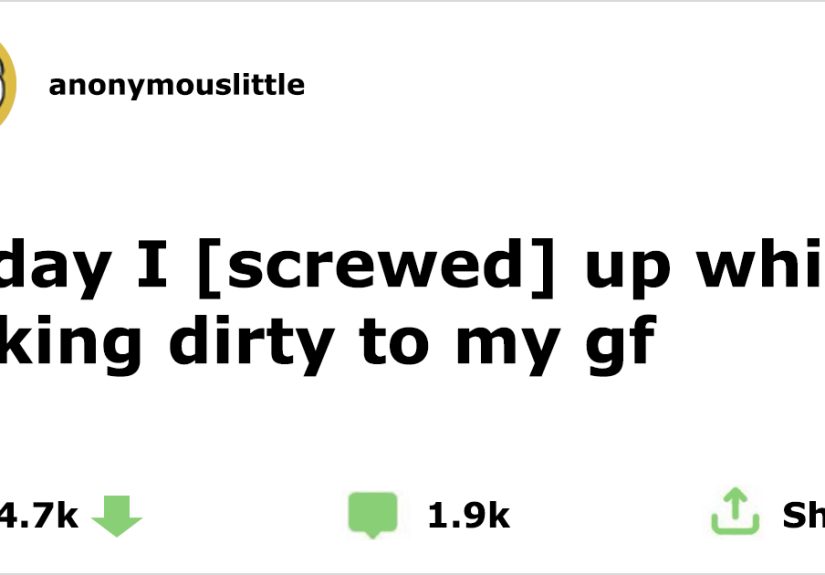
The internet fell in love with a simple, painfully relatable moment: a guy, new to sexual experience, wanted to meet his girlfriend where she was. She liked dirty talk. He was willing. He had enthusiasm. He had… rum. And he had a metaphor that never should’ve been allowed to see daylight.
Right in the middle of trying to be confident, he went for a line that sounded clever in his head and catastrophic out loud: he asked if he made her “moister than an oyster.”
Her reaction? Not anger. Not screaming. Just that instant facial shift that says, “I was emotionally prepared for many things tonight, but not this seafood documentary.” The moment deflated, the mood evaporated, and the internet did what it does best: adopted the phrase like a stray cat and fed it memes.
And honestlywhy is it so funny? Because it’s not mean. It’s not cruel. It’s just… wildly the wrong vibe. Dirty talk is supposed to heighten the moment, not make your partner picture an oyster bar with a happy hour special.
Why Dirty Talk Goes Wrong (Even When Your Heart’s in the Right Place)
1) The “Metaphor Gap” Is Real
Dirty talk lives and dies by imagery. When the image is “desire,” things escalate. When the image is “shellfish,” your brain takes an emergency exit.
It’s not that oysters can’t be romantic (some people swear by them). It’s that the wrong metaphor at the wrong time makes your partner do mental math: “Wait… am I supposed to feel sexy, or hungry, or concerned about tides?”
2) Performance Pressure Makes People Say Weird Things
Dirty talk can feel like you’re onstage with no script. If you’re nervous, you’ll reach for anythingmovie lines, a questionable rhyme, or whatever phrase has been bouncing around your head since a random conversation two years ago.
Add alcohol and the filter disappears. Your brain thinks it’s creating seduction. Your mouth delivers National Geographic: Mollusk Edition.
3) Culture Trains Us to Be Awkward About SexThen Expects Us to Be Fluent
Most people don’t grow up practicing clear, comfortable sexual communication. Then adulthood arrives and suddenly you’re supposed to be playful, confident, and emotionally attunedlike you got a certification in “Erotic Banter” in sophomore year.
That mismatch is why dirty talk fails are so common: we’re learning in real time, in high-stakes moments, with someone we actually want to impress.
Why Everyone Laughs: The Relationship Science Behind Awkward Sexy Moments
The funny part isn’t just the lineit’s the shared human experience of trying, failing, and wanting to crawl into a pillowcase afterward. And here’s the twist: laughter isn’t always a mood-killer. In a lot of relationships, it’s a glue.
Shared laughter can be a sign of closeness
Researchers studying couples have found that laughing togetherliterally at the same timecan track with relationship well-being and feelings like closeness and support. In plain English: when you can laugh with each other, you often feel more like a team.
Sexual humor can help people recover from awkwardness
A more recent wave of research has focused on humor specifically around sexinside jokes, playful comments, gently smoothing over clumsy moments. The theme is pretty intuitive: positive humor can make people feel more comfortable, more connected, and less embarrassed.
But humor has rules (and sarcasm is not a loophole)
Relationship experts often describe humor as a “repair” toolsomething that de-escalates tension and brings you back to “us” instead of “me vs. you.” The catch is that humor works best when it isn’t weaponized. Teasing that lands as criticism, contempt, or mockery doesn’t fix anythingit adds damage.
So yes: laughing at “moister than an oyster” can be bonding. Laughing at your partner like you’re hosting a roast? Different genre. Bad outcome.
Dirty Talk 101: How to Sound Hot Without Accidentally Summoning Seafood
If you want to avoid a classic dirty talk fail, don’t start by trying to be a poet. Start by trying to be understood. The sexiest thing you can do is communicate in a way your partner actually likes.
Step 1: Get consent and boundaries out in the open (yes, it can still be sexy)
The smoothest dirty talk usually starts outside the bedroom. When you’re both relaxed, ask what your partner enjoys: compliments? instructions? playful teasing? specific words? certain topics that are a hard “no”?
Consent isn’t just “yes/no,” it’s also “yes to what.” A helpful way to remember this is the FRIES framework: consent should be freely given, reversible, informed, enthusiastic, and specific.
Step 2: Start simpledescribe, compliment, invite
A lot of people freeze because they think dirty talk must be graphic or extreme. It doesn’t. You can keep it simple and still be exciting.
- Describe: What you’re enjoying, what you want, what feels good.
- Compliment: Focus on what you like about your partner and how they make you feel.
- Invite: Ask what they want, or give two options so it’s easy to answer.
Think “warm and specific,” not “random and lyrical.” If your line sounds like it belongs on a diner placemat poem, step away from the mic.
Step 3: Negotiate “no-fly” words and topics
People can interpret the same word completely differently. What feels like playful praise to one person can feel insulting or triggering to another. That’s why it helps to set boundaries in advance, including words you never want to hear and themes that are off-limits.
Step 4: Match the tone your partner likes
One reason the oyster line failed is tone mismatch: it was silly in a moment she wanted to feel intensely desired. Some couples love humor during sex. Others prefer playful moments after, not in the peak of the scene.
The fix is simple: ask. Then follow the answer like it’s a GPS instruction and not a vibe suggestion.
Step 5: Don’t “borrow” lines unless you’re sure they fit
Plenty of people pull inspiration from pop culture or adult media. The problem is that borrowed lines can sound unnaturalor worse, impersonal. If your partner hears a phrase that feels copy-pasted, the mood can switch from intimacy to “Wait, where did you get that?”
Use your own words. Awkward authenticity beats polished weirdness every time.
Common Dirty Talk Mistakes (A Survival Guide)
Mistake: Accidentally bringing in family vibes
Many “worst dirty talk” stories share one theme: someone said something that brought the wrong people into the room mentallylike a parental nickname or a roleplay premise that feels uncomfortable. If your partner’s expression shifts from “into it” to “concerned,” stop and reset.
Mistake: Confusing “edgy” with “sexy”
Insults, humiliation, or aggressive language can be hot only when it’s explicitly negotiated and desired. Without that agreement, it’s the fastest way to turn intimacy into an emotional exit ramp.
Mistake: Overthinking your lines
Dirty talk isn’t a screenplay. If you’re searching for “the perfect phrase,” you’ll miss what’s happening. Stay present. Use short, real sentences. Respond to your partner instead of auditioning.
How to Recover When You’ve Already Said “Moister Than an Oyster”
Let’s say you’ve already dropped the line. The room is spiritually silent. Somewhere, an oyster shucks itself out of pity. Here’s how to recover like an adult with dignity (or at least with teamwork).
1) Name itgently
Try: “Okay, that came out way funnier than I meant. Can I try again?” The goal is to acknowledge the moment without making your partner responsible for your embarrassment.
2) Check in
Ask a quick question: “Still good?” or “Want me to keep it serious?” A two-second check-in can rescue the vibe because it shows respect and awareness.
3) Use humor as a repair, not a distraction
Humor works when it reconnects you. A shared laugh can be a reset button. But if humor turns into you spiralingapologizing ten times, narrating your shame, turning it into a standup setpause. Breathe. Then come back to your partner.
4) Have the “debrief” later, not mid-moment
Afterward, talk about what landed and what didn’t. Keep it light, not judgmental: “What kind of talk do you actually like?” and “Any words you never want again?” are both relationship gold.
5) Protect trust (including privacy)
One reason viral bedroom stories can get messy is that intimacy depends on trust. Before sharing anything publicly, make sure your partner would genuinely feel okay about it. “It’s anonymous” doesn’t automatically mean “it’s harmless.”
Turning a Dirty Talk Fail Into a Relationship Win
Here’s the best part of the oyster disaster: it can actually become a couple’s inside jokethe kind that makes you laugh years later and reminds you you’re safe being imperfect together.
Couples who can use positive humor around sex often report feeling more comfortable and connected. That doesn’t mean you should try to be funny every time. It means you can treat awkward moments as normal, survivable, and sometimes even charming.
Dirty talk is a skill. Like any skill, you get better by practicing, getting feedback, and not quitting because of one poorly-timed trip to the ocean.
of Real-World “Been There” Experiences (So You Feel Less Alone)
Since everyone’s comfort level is different, the “best” dirty talk isn’t universalit’s personal. But people tend to report the same kinds of awkward moments again and again. Here are a few common scenarios (and what actually helps), drawn from the patterns sex educators and relationship writers talk about constantly.
The Accidental Corporate Meeting Voice
Someone tries to sound confident and suddenly slips into their “work persona,” saying something that feels like a performance review: “Great job. Keep up the strong effort.” It’s funny because it’s not wrongit’s just… not bedroom language. What helps: agree on a “reset phrase” you can say without shame, like “Too formallet me try that again.” Then switch to simpler words.
The Shakespeare Problem
Another classic: a person tries to be poetic, but the line comes out like a dramatic monologue. Flowery language can be hot if both people like it, but it can also feel distant or confusing. What helps: keep one foot in reality. Instead of metaphor, try specific appreciation: what you like, what you want, what feels good. If your partner laughs, you can decide together whether to keep it playful or steer back to serious.
The “Wrong Nickname” Moment
Nicknames can be sweet or sexyuntil one lands wrong. A term that feels affectionate to one person can feel weird to another, especially if it echoes family language or an old relationship. What helps: talk about it outside the moment. Ask, “Any nicknames you love? Any you hate?” It’s a small conversation that prevents a big cringe.
The Over-Influenced Line
Sometimes people repeat a phrase they’ve heard somewhere else and it lands like a copy-paste. Even if the words aren’t offensive, the vibe can feel impersonallike you’re auditioning for a role instead of connecting with the person in front of you. What helps: make it yours. Start with your partner’s name. Use details unique to them. The sexiest talk often sounds like a private conversation, not a quote.
The Awkward Moment That Became a Tradition
And then there’s the best-case scenario: a line fails so spectacularly that it turns into an inside joke. Some couples keep a “hall of fame” of goofy momentsclumsy attempts, accidental word swaps, laugh attacksbecause it takes the pressure off being perfect. What helps: positive humor (the kind that says “we’re in this together”) can increase comfort. The key is consent: if one person feels embarrassed, the joke should be handled gently and never used as ammunition later.
If there’s one lesson in all of these experiences, it’s this: successful dirty talk isn’t about being shocking or clever. It’s about being attuned. Communicate boundaries directly. Stay present. Use words that match your partner’s preferences. And if you accidentally wander into seafood territory, remember: you’re not brokenyou’re learning.
Conclusion: The Secret to Not Becoming a Meme Is… Being a Team
The “moister than an oyster” moment is hilarious because it captures a universal truth: intimacy is awkward sometimes. Bodies are weird. Timing is fragile. Words misfire. But couples who can communicateabout consent, boundaries, tone, and what actually feels goodcan turn even a dirty talk fail into a stronger connection.
So if you’re trying dirty talk, aim for warmth, clarity, and consent. Save the metaphors for the kitchen. And if you do slip up? Take a breath, check in, laugh together if it feels right, and try again. Your relationship doesn’t need perfect lines. It needs trust.