Table of Contents >> Show >> Hide
- The Short Answer: Why Prune Tomato Plants?
- What Pruning Actually Does for Tomato Plants
- Which Tomato Plants Should You Prune?
- How to Prune Tomato Plants the Right Way
- The Biggest Tomato Pruning Mistakes to Avoid
- When You Should Not Prune Much at All
- The Expert Gardener’s Takeaway
- Garden Experience: What Tomato Pruning Looks Like in Real Life
- SEO Tags
Tomato plants have a way of turning innocent gardeners into obsessive inspectors. One day you are admiring a tiny transplant. A few weeks later, you are crouched in the garden, squinting at a jungle of stems, asking yourself whether that little shoot is “growth” or “chaos wearing a green disguise.” That is exactly where pruning comes in.
If you have ever wondered whether pruning tomato plants is actually necessary, the expert-gardener answer is this: it depends on the type of tomato, the way you support it, and what kind of harvest you want. Pruning is not a magical trick that guarantees a mountain of tomatoes by Friday. But done correctly, it can help keep plants healthier, easier to manage, quicker to ripen, and more productive in the ways many home gardeners actually care about.
In plain English, pruning helps you tell the plant, “Let’s calm down with the leafy drama and focus on making beautiful fruit.” For many gardeners, especially those growing vining tomatoes on stakes or trellises, that is a very smart conversation to have.
The Short Answer: Why Prune Tomato Plants?
You should prune tomato plants because it can improve airflow, reduce disease pressure, direct the plant’s energy into fruit development, make harvesting easier, and keep vigorous plants from becoming a tangled mess. It can also help tomatoes ripen a little sooner, which matters a lot when summer is short and frost shows up like an uninvited relative.
That said, pruning is not a one-size-fits-all rule. Heavy pruning works best on indeterminate tomato plants, the tall, vining types that keep growing and producing until frost. Determinate tomatoes, often called bush tomatoes, usually need only light cleanup. Prune those too aggressively, and you may accidentally trim away part of your future dinner.
What Pruning Actually Does for Tomato Plants
1. It improves airflow and can lower disease risk
Tomatoes are delicious. Fungal problems think so too. When a plant gets too dense, leaves stay damp longer after rain, dew, or watering. That humid little pocket inside the canopy becomes a cozy place for leaf diseases to settle in.
Pruning opens up the plant so air can move through it more easily. Leaves dry faster, lower foliage stays cleaner, and the plant is less likely to sit around wrapped in moisture like it is spending the day at a spa. In gardening terms, that is a good thing.
Removing lower leaves and drooping stems near the soil is especially helpful. Those leaves can get splashed with soil during watering or rain, which increases the chance of disease problems. In other words, a tomato plant should not be wearing muddy pants all season.
2. It helps the plant focus on fruit
Tomato plants naturally produce suckers, which are shoots that grow in the angle between the main stem and a leaf branch. Left alone, those suckers can turn into full stems with their own leaves, flowers, and fruit. That sounds nice in theory, but it also means the plant spreads its energy over more and more growth.
When you remove some of those suckers, you reduce the plant’s workload. The result is often fewer tomatoes overall, but they tend to be larger, easier to find, and quicker to ripen. For many home gardeners, that is a fair trade. Nobody has ever bitten into a giant homegrown slicer and said, “Shame this plant was too organized.”
3. It makes support systems work better
If you grow tomatoes on stakes, string trellises, or a Florida weave, pruning is almost part of the deal. A wildly branching tomato is harder to tie up, harder to inspect, and more likely to topple into a dramatic heap after a storm.
Pruned plants are easier to train into one or two main stems. That creates a plant that is neater, more upright, and simpler to manage all season long. If your garden is small, this matters even more, because compact vertical growth saves space.
4. It can speed ripening
Pruning can help fruit mature earlier by reducing extra vegetative growth and shading. This is especially useful in regions with shorter growing seasons or at the end of summer, when gardeners start doing math in their heads every time the weather forecast mentions “cool nights.”
Many experienced gardeners also top indeterminate tomatoes about a month before the first expected frost. That means removing the growing tips so the plant stops trying to make new flowers and redirects energy into ripening the fruit it already has. It is basically telling the plant, “No new projects. Finish what’s on your desk.”
Which Tomato Plants Should You Prune?
Indeterminate tomatoes: Yes, usually
If you grow indeterminate tomatoes, pruning is usually worth your time. These are the varieties that keep growing, flowering, and fruiting through the season. They can become massive, leafy, and hard to manage if left totally alone.
Popular heirloom and slicing varieties often fall into this category. These plants benefit most from sucker removal, lower-leaf cleanup, and occasional shaping.
Determinate tomatoes: Lightly, not aggressively
Determinate tomatoes grow to a set size, flower, and produce much of their crop over a shorter period. Because they have a more fixed fruiting plan, heavy pruning can reduce yield. That is why expert advice usually recommends only minimal pruning for these plants.
For determinate tomatoes, focus on removing leaves that touch the soil, cleaning up damaged or diseased growth, and possibly removing suckers below the first flower cluster. Beyond that, step away slowly and let the plant do its thing.
Caged tomatoes: Prune less
When tomatoes are grown in sturdy cages, many gardeners prune only once or lightly throughout the season. Cages are designed to support fuller growth, so the plant can keep more foliage. That extra leaf cover can protect fruit from sunscald, though it may also create more humidity if the plant gets too dense.
That is why pruning is really about balance, not plant perfection. You want enough foliage to shade fruit, but not so much that the center of the plant turns into a dark, damp mystery zone.
How to Prune Tomato Plants the Right Way
Start with the lower leaves
Begin by removing any leaves or stems that touch the ground or hang close to the soil. This is one of the easiest and most useful pruning moves you can make. It improves air circulation near the base and helps prevent disease spread from soil splash.
Identify the suckers
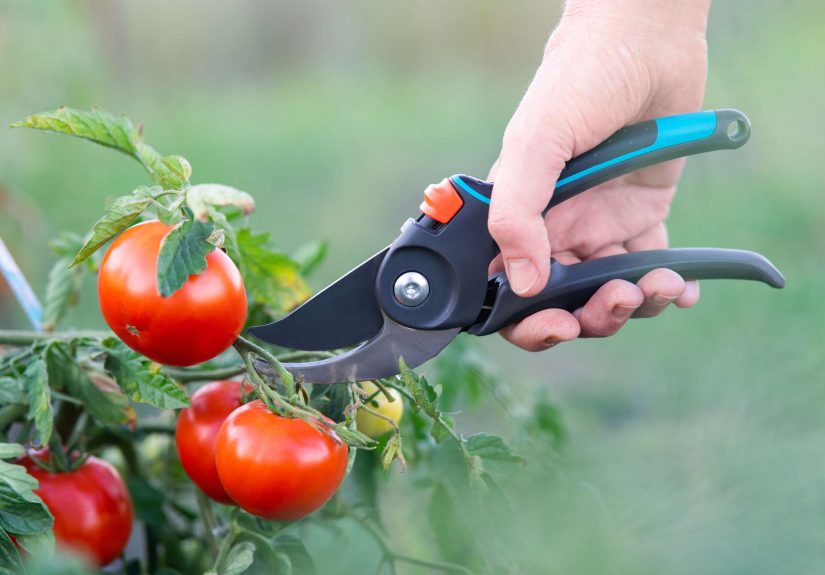
Look at the spot where a leaf branch meets the main stem. If a new shoot is growing in that little “V,” that is a sucker. On indeterminate plants, those are the shoots you will manage throughout the season.
Prune while suckers are still small
Small suckers are easy to pinch off with your fingers. Once they get large, removing them creates bigger wounds and wastes more of the plant’s energy. A good rule is to remove them when they are just a few inches long, not when they have already started applying for citizenship as a second tomato plant.
Choose your pruning style
For a one-stem plant, remove all suckers as they appear. This is common for tightly trellised tomatoes.
For a two-stem plant, keep the strong sucker just below the first flower cluster, and remove the others. This creates a balanced plant that still stays manageable while giving you more fruiting capacity.
If you are growing tomatoes in cages, a looser approach often works best. Remove lower suckers and any crowded, diseased, or weak growth, but leave enough top growth to shade the fruit.
Use clean hands or clean tools
Pruning can spread disease if you move from plant to plant with dirty fingers or clippers. If you smoke or use tobacco, sanitation matters even more because viruses can be transferred mechanically. Wash hands, sanitize pruners, and do not toss diseased clippings at the base of the plant like you are decorating it with problems.
The Biggest Tomato Pruning Mistakes to Avoid
Pruning determinate tomatoes too hard
This is probably the classic mistake. If you heavily prune a determinate tomato, you may remove productive stems and reduce the crop. These plants are not trying to become an unruly vine monster. They are on a schedule. Respect the schedule.
Removing too much foliage
More pruning is not always better. If you strip too many leaves, fruit can be exposed to intense sunlight and develop sunscald, which causes pale, leathery, damaged patches. Tomatoes like sunshine, but the fruit itself appreciates a little natural shade.
Ignoring support
Pruning and support go hand in hand. Once you reduce a plant to one or two stems, you need to keep those stems tied and supported. Otherwise, the plant can bend, snap, or flop over when fruit gets heavy.
Waiting too long
If you let suckers grow large before removing them, the plant has already invested energy in them. Large cuts are harder on the plant and can create bigger openings for problems. Frequent light pruning beats one dramatic haircut every time.
When You Should Not Prune Much at All
There are situations where minimal pruning is the smarter move. If you garden in a brutally hot climate, extra foliage can help protect fruit from scorching sun. If your tomato plants are growing in cages and have good spacing, they may need only basic cleanup. And if you are growing small-fruited cherry tomatoes, some gardeners prefer to let them run a little wild because the harvest is already abundant.
Also, remember that pruning is optional. A healthy tomato plant can still produce well without an elaborate pruning strategy. The real goal is not to “win” at pruning. It is to grow healthy plants and tasty fruit with the amount of effort that makes sense for your garden.
The Expert Gardener’s Takeaway
So, why should you prune tomato plants? Because the right kind of pruning helps the right tomato plants stay healthier, better ventilated, easier to support, and more focused on ripening quality fruit. It is less about forcing the plant into obedience and more about guiding it toward a smarter shape.
If you grow indeterminate tomatoes on stakes or trellises, pruning is one of the most useful habits you can learn. If you grow determinate tomatoes in cages, go lighter and focus on sanitation and airflow. In both cases, the best pruning job is thoughtful, moderate, and based on the plant in front of you.
And that is the secret expert gardeners know: tomatoes do not need perfection. They need attention, common sense, and the occasional intervention when they start acting like they own the place.
Garden Experience: What Tomato Pruning Looks Like in Real Life
In real gardens, pruning tomato plants often feels less like a textbook lesson and more like a running conversation between gardener and plant. Early in the season, everything looks simple. The transplant is tidy, the leaves are fresh, and you think, “This year I will stay on top of it.” Then warm weather arrives, the plant doubles in size, and suddenly every leaf axil seems to have produced a tiny green opinion.
One of the most common experiences gardeners report is that the first pruning session feels awkward. You stare at the plant, worry about making a mistake, and hesitate before pinching off that first sucker. But after a week or two, the pattern becomes obvious. The main stem is stronger, the flower clusters are easier to spot, and the plant starts to look organized instead of frantic. Many gardeners say this is the moment pruning finally “clicks.”
Another common experience is discovering how quickly suckers grow. What looks tiny on Tuesday can look like a whole new branch by Saturday. That is why experienced gardeners prefer frequent, light pruning rather than waiting for a giant weekend overhaul. A few minutes here and there usually works better than one dramatic session that leaves you sweaty, confused, and apologizing to the tomato plant.
Gardeners also notice that pruned, staked tomatoes are easier to inspect. You can spot yellowing leaves sooner, see pests more clearly, and pick ripe fruit without conducting a full archaeological dig through the canopy. Harvest becomes faster, cleaner, and much less likely to end with you accidentally snapping off a stem while reaching for one perfect tomato hiding in the back.
Of course, the real-world lesson that sticks with people most is moderation. Many beginners under-prune the first year and wind up with a tangled green thicket. Then they overcorrect the next season and prune too hard, exposing fruit to hot sun. After that, the sweet spot becomes clearer: remove enough growth to improve airflow and structure, but leave enough foliage to protect and feed the fruit.
By late summer, the benefits are often easy to see. A thoughtfully pruned indeterminate tomato usually looks calmer, stands better on its support, and ripens fruit more predictably. And when the season begins winding down, topping the plant can feel almost ceremonial, like closing the kitchen after the dinner rush. The plant stops chasing new flowers and puts its final energy into the tomatoes already hanging there, green and hopeful.
That practical rhythm is what expert gardeners trust most. Pruning is not about creating a showroom tomato plant. It is about making the plant easier to manage in the real world, where heat, rain, disease pressure, limited space, and busy schedules all matter. Over time, gardeners learn that the best pruning decisions come from observation: how dense the canopy is, how humid the weather has been, how strong the support system is, and how much sun the fruit is getting.
In the end, experience teaches a simple truth. Tomato pruning works best when it is responsive, not rigid. Watch the plant. Adjust as needed. Keep the fruit shaded, the leaves dry, and the stems supported. Do that, and your tomato patch will usually reward you with healthier plants, easier harvests, and fewer moments of midsummer regret.