Table of Contents >> Show >> Hide
Note: This general guide is for educational purposes only. If you have an injury, severe pain, dizziness, balance concerns, or a medical condition, check with a qualified clinician or yoga instructor before starting.
If you’ve ever opened a yoga video and immediately felt judged by a cheerful human folding into a pretzel before breakfast, welcome. You are among friends. The truth is, a good yoga routine does not need fancy Sanskrit, gravity-defying heroics, or leggings that cost more than your groceries. It needs one thing: to fit your body, your goals, and your actual life.
That is what makes a personalized yoga pose and stretch guide so useful. Instead of randomly collecting poses like a squirrel hoarding acorns, you build a simple practice around what you need most. Tight hips from sitting all day? There is a stretch for that. Stiff shoulders from hunching over a laptop like a Wi-Fi goblin? Also fixable. Looking for better balance, mobility, and a calmer brain? Yoga says, “Come on in, the mat is fine.”
This guide walks you through beginner-friendly yoga poses and stretches, shows you how to personalize them, and helps you build a routine that feels smart, safe, and sustainable. No dramatic chanting required. A little patience and a few slow breaths will do nicely.
Why Personalization Beats Copying Random Yoga Poses
Yoga works best when it meets you where you are. Some people want a morning yoga stretch routine to loosen up before work. Others need a reset after long hours at a desk. Some want gentle movement for flexibility and stress relief. Others care more about posture, balance, or easing everyday stiffness. Different bodies, different goals, different recipes.
Think of yoga like coffee. One person wants espresso. Another wants half-caf with oat milk and emotional support. Neither is wrong. They are just not the same order.
Start by Choosing Your Main Goal
- For flexibility: Focus on hamstrings, hips, chest, and shoulders.
- For mobility: Use gentle flowing movements like Cat-Cow and low lunges.
- For stress relief: Choose slower, breath-led poses and restorative stretches.
- For balance: Add standing poses like Tree Pose and steady posture work.
- For desk-body recovery: Open the chest, lengthen the spine, and stretch the hips.
Use These Smart Safety Rules
- Warm up first with a short walk, light marching, or gentle joint circles.
- Stretch to mild tension, not pain. If your face looks like you bit into a lemon, back off.
- Breathe slowly. In general, inhale to lengthen and exhale to soften into the pose.
- Hold most stretches for 3 to 5 slow breaths, or a little longer if it feels comfortable.
- Use props freely: a wall, pillow, folded towel, block, or sturdy chair.
- If you are brand-new, skip extreme poses and complicated transitions.
Your Foundational Yoga Pose & Stretch Menu
Below is a practical menu of beginner-friendly poses. These are the kind of movements that make a yoga stretch guide feel useful instead of decorative.
1) Mountain Pose
Best for: posture, body awareness, balance, grounding.
Stand tall with feet hip-width apart. Spread your toes, soften your knees, lengthen your spine, and relax your shoulders away from your ears. Reach through the crown of your head without turning into a wooden plank.
Personalize it: If balance feels shaky, stand near a wall. If you sit a lot, imagine gently lifting your chest while keeping your ribs relaxed. Mountain Pose looks simple, but it teaches the alignment that makes other poses feel better.
2) Cat-Cow
Best for: spinal mobility, warming up, easing morning stiffness.
Start on hands and knees. On an inhale, tip the pelvis and lift the chest for Cow. On an exhale, round the spine and draw the belly in for Cat. Move slowly, like you are polishing each vertebra one by one.
Personalize it: Put a folded blanket under your knees if they are sensitive. Make the motion smaller if your lower back feels cranky. This is a fantastic first move for nearly any beginner yoga routine.
3) Child’s Pose
Best for: stress relief, lower back decompression, hips, recovery.
Kneel, sit back toward your heels, and fold forward. Rest your forehead on the mat, stacked fists, or a pillow. Arms can stretch forward or rest by your sides.
Personalize it: Widen the knees if your belly or hips need more space. Put a cushion between your hips and heels if sitting back fully is too much. This is the yoga equivalent of a deep exhale wearing pajamas.
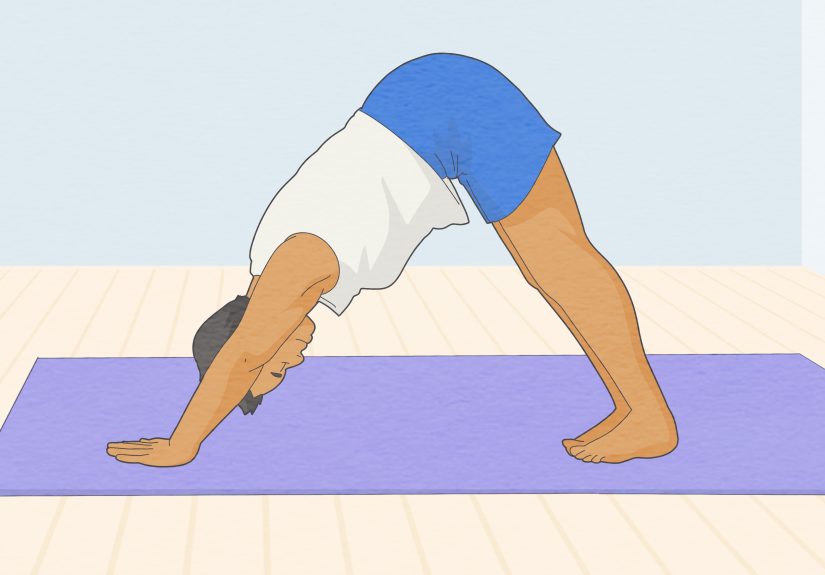
4) Downward-Facing Dog
Best for: hamstrings, calves, shoulders, upper-body strength, full-body lengthening.
From hands and knees, tuck your toes and lift your hips up and back into an upside-down V shape. Press your hands down firmly and keep a soft bend in the knees if needed.
Personalize it: Bend the knees generously if your hamstrings are tight. Focus on a long spine before straight legs. If your wrists complain, shorten the hold or try the pose with hands on a wall instead.
5) Low Lunge
Best for: hip flexors, quads, and “I sat too long” syndrome.
Step one foot forward and lower the back knee. Keep the front knee stacked over the ankle. Lift your chest and, if it feels okay, raise your arms overhead.
Personalize it: Pad the back knee. Keep hands on blocks or your front thigh if reaching up feels unstable. This one is especially helpful if your hips feel like they’ve been negotiating peace treaties with your desk chair all day.
6) Warrior II
Best for: leg strength, hip opening, posture, focus.
From a wide stance, turn one foot forward and the back foot slightly in. Bend the front knee over the ankle and stretch your arms wide. Gaze over the front hand.
Personalize it: Shorten the stance if your legs are yelling. Keep the bend smaller if needed. Warrior II is excellent when you want yoga that feels strong without becoming chaotic.
7) Tree Pose
Best for: balance, concentration, ankle stability, confidence.
Stand on one foot and place the other foot on your ankle or calf, avoiding the knee. Bring hands together at your chest or reach them overhead.
Personalize it: Lightly touch a wall or keep the lifted toes on the floor like a kickstand. Stare at one steady spot. Wobbling is normal. Wobbling is yoga’s way of reminding you that you are, in fact, a human.
8) Reclined Figure 4 Stretch
Best for: hips, glutes, lower-back tension.
Lie on your back with knees bent. Cross one ankle over the opposite thigh, then gently draw the legs in toward your chest.
Personalize it: Hold behind the thigh if reaching the shin is awkward. Keep the bottom foot down if the full version feels too intense. This pose is a hero after long hours of sitting.
9) Seated Spinal Twist
Best for: gentle spinal rotation, posture, mid-back mobility.
Sit tall with legs extended or one knee bent. Twist gently toward one side, lengthening upward before rotating. Keep the twist easy and controlled.
Personalize it: Sit on a folded blanket if your lower back rounds. Think “grow taller, then twist” instead of wrenching yourself around like you are trying to see who texted behind you.
10) Easy Chest-Opening Stretch
Best for: rounded shoulders, desk posture, upper-body tightness.
Stand or kneel and gently clasp hands behind your back, or place forearms on a doorway and step through lightly. Lift the chest without flaring the ribs.
Personalize it: Use a towel between your hands if clasping is not comfortable. Keep the stretch light. Your chest should feel open, not ambushed.
How to Build Your Personalized Yoga Routine
Now that you have the pose menu, build your routine around your goal. Think simple. A personalized yoga pose guide should feel doable on an ordinary Tuesday, not just on the day you suddenly become a wellness influencer.
If You Want a Morning Mobility Routine
- Mountain Pose – 5 breaths
- Cat-Cow – 6 to 8 rounds
- Downward Dog – 3 breaths
- Low Lunge – 3 to 5 breaths each side
- Standing Forward Fold with bent knees – 3 breaths
This combination wakes up the spine, hips, calves, and shoulders without demanding Olympic-level enthusiasm before coffee.
If You Sit at a Desk All Day
- Mountain Pose – 5 breaths
- Cat-Cow – 6 rounds
- Chest-Opening Stretch – 20 seconds
- Child’s Pose – 5 breaths
- Reclined Figure 4 – 5 breaths each side
- Seated Twist – 3 breaths each side
This sequence targets the classic desk-worker package: stiff hips, grumpy shoulders, and a spine shaped like a question mark.
If You Want Balance and Strength
- Mountain Pose – 5 breaths
- Warrior II – 5 breaths each side
- Tree Pose – 3 to 5 breaths each side
- Downward Dog – 3 breaths
- Child’s Pose – 5 breaths
This one helps build stability while still keeping the practice approachable.
If You Need to Wind Down at Night
- Cat-Cow – 4 slow rounds
- Child’s Pose – 8 breaths
- Reclined Figure 4 – 5 breaths each side
- Gentle Twist – 5 breaths each side
- Rest quietly on your back – 1 to 2 minutes
Keep the lighting soft and the pace slow. Evening yoga is not the time to audition for Cirque du Soleil.
How Often Should You Practice?
Consistency matters more than marathon sessions. A short routine done three to five times a week usually beats a single heroic 60-minute session followed by six days of “I meant to.” Even 10 minutes can improve how your body feels and moves over time.
If you are working on flexibility, repeat the same few stretches often enough to learn them. If you are working on stress relief, go slower and use your breath as the main event. If you want a mix of mobility, posture, and balance, rotate two or three mini-routines through the week.
Common Mistakes to Avoid
- Forcing range of motion: Progress in yoga is not measured by how dramatic the pose looks.
- Holding your breath: If you stop breathing smoothly, the pose is probably too aggressive.
- Skipping modifications: Props are not a sign of failure; they are a sign of intelligence.
- Copying someone else’s body: Your hip structure, hamstring length, and mobility are your own.
- Going too hard too soon: Gentle, steady practice wins.
Yoga Experiences: What This Journey Often Feels Like in Real Life
The first experience many people have with yoga is surprisingly unglamorous. It is not spiritual thunder. It is not a choir of angels. It is usually something more like, “Wow, my hamstrings have been filing complaints for years.” That realization is actually a great starting point. A personalized yoga practice makes you notice where you are tight, where you are rushing, and where your body has quietly adapted to daily habits such as sitting, scrolling, driving, and carrying stress in your shoulders like unpaid rent.
In the beginning, progress often feels subtle. You may not touch your toes in week one, and Tree Pose may look less like a majestic oak and more like a houseplant caught in a breeze. But little changes start showing up in ordinary life. You bend down to tie your shoes and notice less strain. You get out of bed without moving like a rusty folding chair. You sit at your desk and catch yourself lifting your chest instead of collapsing forward. These are not tiny victories. These are the real receipts.
People also often notice that breathing becomes part of the experience in a way they did not expect. At first, the instruction to “inhale and exhale slowly” can sound suspiciously simple. Then you realize that when a stretch gets intense, your breath tells the truth. If it becomes choppy, you are probably pushing too hard. If it stays steady, you are likely in a productive place. That connection between breath and movement is one reason yoga feels different from random stretching. It is not just about lengthening muscle. It is also about learning how to calm the nervous system while you move.
Another common experience is discovering that the best pose is not always the flashiest one. Child’s Pose, for example, can feel almost too simple until one stressful day when it becomes the exact shape your body needed. Reclined Figure 4 may not look impressive, but after a long day of sitting, it can feel like your hips are finally being spoken to in a language they understand. A short Cat-Cow flow can turn a stiff, grumpy back into something much more cooperative. Yoga has a funny way of making modest poses feel like minor miracles.
Over time, many people become less focused on “performing” yoga and more interested in using it. That is where personalization really clicks. You stop asking, “What is the perfect routine?” and start asking, “What does my body need today?” Some mornings the answer is strength and focus. Some evenings it is floor-based stretches and deep breathing. Some days it is five honest minutes instead of a grand plan. That flexibility in approach is often what keeps people practicing long enough to feel real benefits.
And perhaps the most encouraging experience of all is realizing that yoga does not require you to become a different person. You do not need to be naturally flexible, ultra-serene, or wildly enthusiastic about waking up at dawn. You just need a little curiosity, a little patience, and a willingness to show up as you are. The mat does not demand perfection. It only asks for presence. Which, frankly, is a much better deal.
Final Thoughts
Your best yoga routine is not the one that looks impressive online. It is the one you will actually do, the one that helps your body move better, breathe easier, and feel a little more like home. Start with a few beginner-friendly yoga poses, personalize them for your goals, and practice often enough that your body begins to trust the process.
That is the beauty of a personalized yoga pose and stretch guide. It turns yoga from a vague wellness idea into a practical tool. One pose for your stiff back. One stretch for your tight hips. One breath to slow down the noise. No pretzel audition necessary.