Table of Contents >> Show >> Hide
- 1. Pope Francis Was the First Pope From the Americas
- 2. His Birth Name Was Jorge Mario Bergoglio
- 3. He Trained as a Chemical Technician Before Becoming a Priest
- 4. He Joined the Jesuits, an Order Famous for Education and Mission
- 5. He Chose the Name Francis for a Powerful Reason
- 6. He Preferred a Simple Lifestyle Over Papal Luxury
- 7. He Had a Gift for Memorable One-Liners
- 8. He Made Climate Care a Central Moral Issue
- 9. He Expanded the Church’s Global Leadership Circle
- 10. His Final Years Reflected Both Fragility and Determination
- Why Pope Francis Still Fascinates the World
- Experiences and Reflections Inspired by Pope Francis
- Conclusion
- SEO Tags
Few modern religious leaders changed the global conversation quite like Pope Francis. Born Jorge Mario Bergoglio in Buenos Aires, Argentina, he became the first pope from the Americas, the first Jesuit pope, and one of the most recognizable moral voices of the 21st century. His papacy, from March 13, 2013, until his death on April 21, 2025, was marked by humility, reform, climate advocacy, concern for migrants, interfaith dialogue, and a habit of making headlines with one sentence delivered in plain human language.
Francis did not always sound like a distant ruler in white. He often sounded like the wise uncle at the family table who has seen too much suffering to waste time on fancy speeches. He challenged Catholics, politicians, billionaires, bishops, and everyday believers to ask uncomfortable questions: Are we caring for the poor? Are we listening before judging? Are we protecting the planet or just redecorating the deck chairs on a very holy Titanic?
This article explores 10 fascinating facts about Pope Francis, with context, examples, and a few warm smiles along the way.
1. Pope Francis Was the First Pope From the Americas
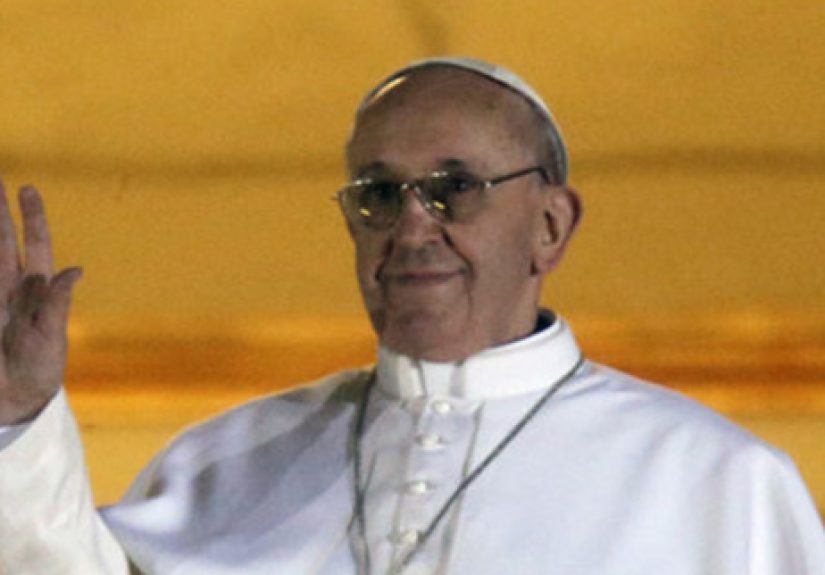
Pope Francis made history the moment he stepped onto the balcony of St. Peter’s Basilica on March 13, 2013. Before him, every pope had come from Europe, the Middle East, or North Africa. Francis, born in Argentina, represented a dramatic geographic shift for the Catholic Church.
His election reflected the global reality of modern Catholicism. Large Catholic populations were no longer concentrated only in Europe. Latin America, Africa, and Asia had become central to the life of the Church. By choosing a pope from Buenos Aires, the cardinals signaled that the Church’s future was not limited to Rome’s old neighborhoods, however charming their cobblestones may be.
Francis brought with him a Latin American pastoral style shaped by economic inequality, urban poverty, migration, and lively popular devotion. He knew the smell of crowded buses, working-class neighborhoods, and local parishes where faith was not abstract theology but daily survival with candles.
2. His Birth Name Was Jorge Mario Bergoglio
Before the world knew him as Pope Francis, he was Jorge Mario Bergoglio. He was born on December 17, 1936, in Buenos Aires to a family of Italian heritage. His father worked in railways, and his mother cared for the family at home. That immigrant family background became an important part of how Francis saw the world.
Throughout his papacy, he spoke often about migrants and refugees, not as statistics but as people with names, children, shoes, fears, recipes, and stories. His own family history made him sensitive to the courage required to leave one country and build a life in another.
This background also shaped his language. Francis often preferred simple, memorable phrases over polished institutional vocabulary. He did not speak like someone trying to impress a committee. He spoke like someone trying to wake up a room before the coffee wore off.
3. He Trained as a Chemical Technician Before Becoming a Priest
One of the most fascinating facts about Pope Francis is that his early path was not immediately clerical. As a young man, Bergoglio studied chemistry and trained as a chemical technician. He worked in a laboratory before entering religious life.
This detail matters because it reminds us that great spiritual leaders often arrive through ordinary doors. Francis was not born wearing papal white. He studied, worked, commuted, got sick, recovered, and made decisions step by step. His life included practical training before theological formation.
That scientific background may also help explain why he treated climate change and environmental care as serious moral issues. His 2015 encyclical Laudato Si’ became one of the most influential religious documents on ecology, urging humanity to care for “our common home.” In classic Francis style, the message was both poetic and pointed: the Earth is not a disposable coffee cup.
4. He Joined the Jesuits, an Order Famous for Education and Mission
Pope Francis was the first Jesuit ever elected pope. He entered the Society of Jesus in 1958 and was ordained a priest in 1969. The Jesuits are known for education, missionary work, intellectual discipline, and a willingness to go where the need is greatest.
The Jesuit influence can be seen throughout Francis’s papacy. He emphasized discernment, listening, mercy, and engagement with real-world problems. He also had a missionary instinct. Rather than seeing the Church as a fortress, he often described it as a field hospital after battle. In other words, the Church should treat wounds before giving lectures on posture.
His Jesuit identity also made him comfortable with complexity. Francis often resisted easy labels. Conservatives sometimes thought he went too far; progressives sometimes thought he did not go far enough. He lived in the tension, which is basically the Jesuit Olympic sport.
5. He Chose the Name Francis for a Powerful Reason
No pope before him had taken the name Francis. Jorge Mario Bergoglio chose it in honor of Saint Francis of Assisi, the medieval saint associated with poverty, humility, peace, and love for creation.
The choice was not decorative. It was a mission statement. From the beginning, Pope Francis wanted to place the poor and marginalized at the center of the Church’s attention. He repeatedly called for a Church that goes out into the streets rather than one that stays safely polished behind closed doors.
His name also connected his papacy to environmental concern. Saint Francis of Assisi is remembered for his deep reverence for nature, and Pope Francis expanded that spiritual tradition into a modern ecological message. Under Francis, caring for the planet became not just a political issue but a moral and spiritual responsibility.
6. He Preferred a Simple Lifestyle Over Papal Luxury
Pope Francis became famous for his modest personal habits. As archbishop of Buenos Aires, he lived in a simple apartment, cooked for himself, and used public transportation. After becoming pope, he chose to live in the Vatican guesthouse, Casa Santa Marta, instead of the grand Apostolic Palace.
This decision was deeply symbolic. Francis wanted to live closer to people, meals, conversations, and ordinary routines. He also preferred practical simplicity. He wore plain shoes, used modest cars, and seemed allergic to excessive ceremony. If humility had a wardrobe, Francis kept it in sensible black footwear.
His lifestyle strengthened his credibility when speaking about poverty and inequality. People are more likely to listen to a message about simplicity when the messenger is not arriving in a gold-plated parade float.
7. He Had a Gift for Memorable One-Liners
Pope Francis had a remarkable ability to say something short that traveled around the world. One of his most famous comments came in 2013 when he said, “Who am I to judge?” while speaking about gay people seeking God in good faith. The phrase became a global symbol of his more pastoral tone.
Francis did not change every doctrine people debated, but he changed the mood of many conversations. He asked the Church to lead with mercy rather than suspicion. He encouraged pastors to accompany people through complicated lives instead of acting like spiritual border guards with clipboards.
His communication style was powerful because it sounded human. He criticized gossip, warned against indifference, defended the poor, and reminded people that faith without compassion becomes a very well-dressed skeleton.
8. He Made Climate Care a Central Moral Issue
In 2015, Pope Francis published Laudato Si’, an encyclical on the environment, human ecology, and the responsibility to protect the Earth. It became one of the most widely discussed documents of his papacy.
Francis argued that environmental destruction and human suffering are connected. Pollution, climate change, water scarcity, and reckless consumption affect the poor most severely. For him, ecology was not only about trees, glaciers, or animals. It was about people, especially those with the fewest resources to survive disaster.
His message challenged the throwaway culture: throwaway products, throwaway people, throwaway communities. He urged the world to rethink progress that enriches a few while exhausting the planet. It was a spiritual wake-up call with a carbon footprint calculator hiding behind the incense.
9. He Expanded the Church’s Global Leadership Circle
One major legacy of Pope Francis was his effort to make Church leadership more global. He appointed cardinals from places that had often been overlooked, including smaller Catholic communities and countries far from traditional European centers of power.
This mattered because cardinals help shape the Church’s future and elect future popes. By choosing leaders from the margins, Francis shifted attention toward communities facing poverty, conflict, migration, climate pressure, and religious minority status.
Francis wanted the Church to listen to voices beyond the usual rooms. He pushed for a more synodal Church, meaning a Church that walks together, listens, consults, and discerns. Of course, listening is much harder than issuing memos, which may explain why it sounded revolutionary.
10. His Final Years Reflected Both Fragility and Determination
Pope Francis faced serious health challenges in his later years, including mobility problems, respiratory illness, and hospitalizations. He often used a wheelchair or cane, yet he continued to meet people, travel when possible, speak on global crises, and lead major Church events.
He died on April 21, 2025, at the age of 88, after a papacy of just over 12 years. His death came shortly after Easter, a deeply symbolic moment in the Christian calendar. His funeral was attended by world leaders, clergy, and ordinary mourners who saw in him a pope of humility, compassion, and moral urgency.
His legacy remains layered. Admirers celebrate his care for the poor, migrants, the environment, and people wounded by exclusion. Critics argue that some reforms moved too slowly or did not go far enough. But few deny that Francis changed the tone of the papacy. He made the office feel less like a marble monument and more like a pastor walking into a crowded room and asking, “Who needs help first?”
Why Pope Francis Still Fascinates the World
The fascination with Pope Francis comes from contrast. He held one of the most formal offices on Earth but often behaved with disarming simplicity. He led an ancient institution but spoke constantly about modern wounds. He defended Catholic tradition while inviting the Church to speak with more mercy, patience, and humility.
He also understood symbolism. Washing prisoners’ feet, embracing people with disabilities, visiting refugees, choosing modest housing, and speaking about climate change were not random gestures. They were visual sermons. Francis knew that in a noisy world, actions sometimes preach louder than documents.
His papacy also fascinated people because it exposed real tensions inside Catholicism and global society. How should ancient faith respond to modern culture? How should religious institutions address abuse scandals, inequality, war, ecological destruction, and polarization? Francis did not solve every problem. No pope could. But he forced the questions into the open.
That may be one reason his influence reached beyond Catholics. Many people who disagreed with Church teachings still respected Francis’s moral seriousness. He spoke about the poor, prisoners, migrants, elders, children, and the planet with unusual tenderness. He reminded the world that leadership is not only about power. Sometimes it is about kneeling, listening, and refusing to look away.
Experiences and Reflections Inspired by Pope Francis
Reading about Pope Francis can feel less like studying a distant historical figure and more like being gently cornered by a grandfather who knows exactly which part of your conscience you have been avoiding. His life invites reflection because many of his most powerful lessons are practical, not abstract.
Choosing Simplicity in a Loud World
One experience many people can relate to is the pressure to appear successful. Bigger house, better title, shinier phone, more impressive vacation photos, preferably with a sunset that says, “I am spiritually fulfilled and also have excellent Wi-Fi.” Francis challenged that instinct. His preference for simple living was not a rejection of beauty or comfort; it was a reminder that possessions should serve people, not become tiny bosses with price tags.
In everyday life, that lesson can look very ordinary. It may mean buying less, giving more, calling someone lonely, or choosing time with family over another status symbol. Francis made simplicity feel strong, not boring. He showed that humility does not shrink a person; it gives them room to breathe.
Listening Before Judging
Another Francis-inspired experience is learning to listen before forming a verdict. This is difficult because judging is fast, and listening requires emotional cardio. Francis often asked pastors and believers to accompany people, especially those in painful or complicated situations.
In daily relationships, this can change everything. A friend going through divorce, a coworker struggling with money, a teenager questioning faith, or a neighbor with different politics may not need an instant lecture. They may need someone to sit down, ask a real question, and resist the urge to become a one-person courtroom.
Francis did not suggest that truth does not matter. He suggested that truth without mercy can become a hammer. Most people already know where life hurts. What they need first is not always correction. Sometimes they need compassion strong enough to stay in the room.
Caring for the Planet as a Human Issue
For many readers, Pope Francis’s environmental message offers another personal challenge. Climate care can feel huge, technical, and exhausting. Francis made it intimate. The planet is our common home, and nobody sane throws trash around the living room while guests are still sitting on the couch.
Personal experiences connected to this teaching can be simple: reducing waste, planting trees, supporting clean water projects, saving energy, or paying attention to how consumption affects poorer communities. Francis’s point was not that every person must become a climate scientist. His point was that every person can become less careless.
Remembering the People at the Edges
Perhaps the most enduring experience related to Pope Francis is the decision to notice people at the edges. He constantly pointed toward migrants, prisoners, the poor, the sick, the elderly, and those who felt unwelcome. He seemed to believe that a society can be judged by who gets ignored.
That lesson travels well beyond religion. In a workplace, it may mean noticing the quiet employee who never gets credit. In a family, it may mean caring for an aging relative with patience. In a city, it may mean seeing homeless people not as scenery but as human beings. Online, it may mean refusing to turn every disagreement into a gladiator match with emojis.
Pope Francis’s life suggests that holiness, or simple human decency, often begins with attention. Look again. Listen longer. Waste less. Judge slower. Help sooner. It is not flashy advice, but it may be exactly why his papacy continues to matter.
Conclusion
Pope Francis remains one of the most fascinating figures in modern religious history because he combined firsts with familiarity. He was the first pope from the Americas, the first Jesuit pope, and the first to choose the name Francis. Yet his appeal came from something deeply recognizable: a preference for humility, a concern for the poor, and a voice that kept asking the world to become more human.
His papacy did not erase disagreement, and it did not solve every crisis facing the Catholic Church. But it changed the conversation. Francis made mercy sound urgent, simplicity look powerful, and care for the planet feel like a moral duty rather than a hobby for people who own reusable tote bags.
In the end, the most fascinating fact about Pope Francis may be this: he held one of the world’s most elevated roles, yet he kept pointing downward, toward the streets, the poor, the wounded, and the forgotten. That is where he believed the Church should go. That is also where much of his legacy will be found.
SEO Tags
Note: This article is written in original American English and synthesized from reputable biographical, Vatican, Catholic, research, and news-based information for web publication.