Table of Contents >> Show >> Hide
- Before You Start: The Golden Rules of Patio Cleaning
- Way #1: Clean With Dish Soap and Warm Water for Everyday Dirt
- Way #2: Use a Vinegar Solution for Mild Stains and Dingy Spots
- Way #3: Pressure Wash for Deep Cleaning and Fast Results
- Way #4: Tackle Grease and Oil With a Degreaser
- Way #5: Treat Mold, Mildew, and Organic Stains the Smart Way
- What About Rust Stains?
- Common Mistakes to Avoid When Cleaning a Concrete Patio
- How to Keep a Concrete Patio Clean Longer
- Which Cleaning Method Is Best?
- Final Thoughts
- Extra: Real-Life Experiences With Cleaning a Concrete Patio
A concrete patio is a little like a white T-shirt at a barbecue: it starts out looking crisp and confident, then life happens. Muddy footprints, grilled-burger grease, leaf stains, mystery splatters from potted plants, and that greenish film that shows up after a damp week all love to move in. The good news? Cleaning a concrete patio is not some elite home-improvement ritual reserved for people who alphabetize their power tools.
With the right method, a few basic supplies, and a little patience, you can make a tired patio look dramatically better. Even better, you do not always need a pressure washer or a trunk full of expensive chemicals. Sometimes the fix is as simple as a good sweep, a scrub brush, and a smart cleaning solution matched to the type of mess.
In this guide, you will learn five effective ways to clean a concrete patio, when each method works best, which mistakes to avoid, and how to keep that freshly cleaned surface from sliding back into grime mode. If your patio currently looks like it has been through three seasons and a small war, you are in the right place.
Before You Start: The Golden Rules of Patio Cleaning
Before jumping into any cleaning method, do a little prep work. Sweep away leaves, dirt, pollen, and loose debris first. This step matters more than people think. If you skip it, you are basically turning dust into muddy soup and pushing it around with a brush like you are auditioning for a very boring dance routine.
Quick prep checklist
- Remove patio furniture, planters, rugs, and decor.
- Sweep or blow off loose debris.
- Pull weeds from cracks and edges.
- Test any cleaner in a small, hidden area first.
- Wear gloves and eye protection if using stronger cleaners.
- Protect nearby grass or plants if using commercial products.
Also, remember that concrete is porous. That means stains do not always stay politely on the surface. Some sink in, settle down, and act like they pay rent. That is why matching the cleaning method to the stain type is the real secret.
Way #1: Clean With Dish Soap and Warm Water for Everyday Dirt
If your concrete patio is mostly dusty, lightly grimy, or dotted with everyday outdoor messes, start simple. A mix of warm water and a few squirts of dish soap can do a surprisingly nice job on surface dirt, food drips, and general buildup.
Best for
- Routine maintenance
- Light dirt and grime
- Food spills and soft stains
- Patios that do not need deep restoration
How to do it
- Fill a bucket with warm water and add a small amount of dish soap.
- Wet the patio with a garden hose.
- Dip a stiff nylon brush into the solution and scrub in sections.
- Rinse thoroughly with clean water.
- Let the patio air-dry before putting furniture back.
This is the best place to start if you are not sure how dirty the patio really is. Think of it as the “let us not overreact” method. It is affordable, gentle, and often enough for patios that just look dull rather than truly stained.
One more tip: use a nylon-bristle brush, not a wire brush. Metal bristles can leave tiny pieces behind that may rust later and create brand-new stains. That is the kind of plot twist nobody wants.
Way #2: Use a Vinegar Solution for Mild Stains and Dingy Spots
For patios with light discoloration, water spots, or mild organic grime, a vinegar-based cleaner can work well. White vinegar is a classic DIY option because it helps cut through residue without turning your cleaning session into a chemistry final exam.
Best for
- Light stains
- Dingy areas
- Water marks
- Patios that need a refresh without heavy-duty products
How to do it
- Mix a simple vinegar solution.
- Apply it to the stained area.
- Let it sit briefly, but do not let it dry completely on the surface.
- Scrub with a stiff brush.
- Rinse very well with clean water.
This method is especially handy when your patio is not terrible, just… sad. You know the look: faded, slightly blotchy, vaguely haunted by last fall’s leaves. Vinegar can brighten things up without a major production.
That said, do not expect miracle-level stain removal from a mild DIY cleaner. It is a refresh strategy, not a superhero cape. If you are dealing with grease, rust, mold, or old set-in stains, you will likely need to move up to one of the next methods.
Way #3: Pressure Wash for Deep Cleaning and Fast Results
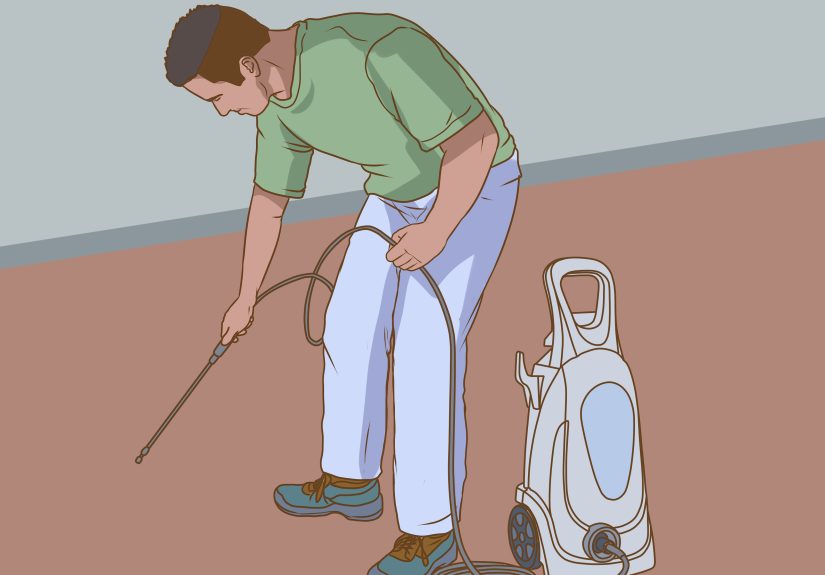
If your patio looks like it has not been cleaned since flip phones were cool, a pressure washer may be your best friend. Pressure washing can remove embedded dirt, mildew, and layers of grime much faster than scrubbing by hand. It is the most dramatic method on this list, and yes, it is deeply satisfying.
Best for
- Large patios
- Heavy dirt buildup
- Mildew and outdoor grime
- People who want visible results quickly
How to do it safely
- Rinse and clear the area first.
- Use the appropriate spray tip for concrete.
- Start with a lower-pressure approach before going more aggressive.
- Keep the spray moving in even passes.
- Avoid blasting one spot too long, which can etch or damage the surface.
- Rinse thoroughly after applying any detergent.
Pressure washing is not just about raw power. Technique matters. Hold the wand at a steady angle, work in sections, and resist the urge to get dramatic and carve your initials into the slab. Concrete is tough, but it is not indestructible. Too much pressure in the wrong spot can leave streaks, marks, or surface damage.
If you are using a concrete cleaner with the pressure washer, let it dwell briefly before rinsing, but do not let it dry on the patio. Also wear proper safety gear. Nothing ruins a productive Saturday like realizing your “quick clean” has turned into “why are my shoes soaked in patio detergent?”
Way #4: Tackle Grease and Oil With a Degreaser
Grease and oil stains are a different breed. They sink into concrete pores and settle in like they just signed a lease. Plain soap and water may lighten them, but older or darker stains usually need a dedicated concrete degreaser.
Best for
- Grill grease
- Oil drips
- Automotive stains
- Heavy food or cooking residue
How to do it
- Blot or scrape up any fresh residue first.
- Apply the degreaser directly to the stained area.
- Let it sit according to the product directions.
- Scrub with a stiff nylon brush.
- Rinse thoroughly, and repeat if needed.
This is not the time for a random all-purpose cleaner from under the sink. Concrete oil stains often need a product designed specifically to break down grease. For fresh stains, quick action helps a lot. For older stains, multiple treatments may be necessary. Concrete can be stubborn, and sometimes your first attempt is just the opening act.
If your grill sits in one place all summer, check underneath it. That area is often the patio’s secret shame. A degreaser can make a huge difference there, especially before entertaining. Because nobody wants guests admiring the burgers while standing over a grease halo.
Way #5: Treat Mold, Mildew, and Organic Stains the Smart Way
Green, black, or dark blotchy growth on a concrete patio often points to mold, mildew, algae, or organic staining. These stains are common in shady, damp, or tree-covered areas. They are also excellent at making an otherwise nice patio look like a set piece from a moody mystery series.
Best for
- Mold or mildew stains
- Leaf stains
- Dark organic discoloration
- Patios in shady or damp spots
How to do it
- Start with a hose or pressure washer to remove loose buildup.
- Use an oxygen-based outdoor cleaner or another concrete-safe cleaner for organic stains.
- For stubborn mildew on suitable surfaces, use a properly diluted mildew-removal approach and follow safety precautions carefully.
- Scrub with a brush, let the cleaner dwell briefly, and rinse completely.
- Allow the patio to dry fully.
This category is where people often make mistakes. They grab whatever strong cleaner they see first, splash it around, and hope for greatness. Slow down. Read the label. Protect plants. Ventilate the area. Never mix cleaners. And always test a small patch first.
Organic stains respond well when you give the cleaner a little time to work. Scrubbing helps, but patience helps too. The stain did not appear overnight, and it may not disappear in one pass either.
What About Rust Stains?
Rust stains are the diva of patio stains: dramatic, orange, and weirdly persistent. They often come from metal furniture legs, tools, planters, or hard water. These usually need a concrete-safe rust remover, not just soap or vinegar. If rust is the main issue, choose a product made for mineral or rust stains and follow the label closely.
As with oil stains, spot treatment is usually smarter than cleaning the whole patio with a specialty remover. Rust products can be powerful, so use them precisely and carefully.
Common Mistakes to Avoid When Cleaning a Concrete Patio
- Skipping the sweep: Loose dirt turns into muddy sludge and makes cleaning harder.
- Using the wrong brush: Wire brushes can leave metal behind and cause rust marks later.
- Letting cleaner dry on the concrete: This can leave residue or reduce effectiveness.
- Using too much pressure: A pressure washer can scar concrete if used carelessly.
- Mixing chemicals: Never combine cleaners, especially bleach with acids or ammonia.
- Ignoring the stain type: Grease, mildew, and rust all need different approaches.
How to Keep a Concrete Patio Clean Longer
Once the patio is clean, a few simple habits can help keep it that way:
- Sweep regularly, especially after storms or windy days.
- Clean spills quickly before they sink into the surface.
- Move planters occasionally so moisture does not build up underneath.
- Trim nearby plants to reduce shade and mildew growth.
- Consider sealing the concrete after it is fully cleaned and dry.
Sealing is especially worth considering if your patio gets heavy use or tends to stain easily. A good sealer can help concrete resist moisture, grime, and future staining. It is not magic, but it does make maintenance easier. Think of it as giving your patio a raincoat instead of asking it to heroically absorb every mess forever.
Which Cleaning Method Is Best?
If you want the short version, here it is:
- Dish soap and water: Best for routine cleanup and light dirt.
- Vinegar solution: Good for mild stains and dingy spots.
- Pressure washer: Best for deep cleaning and large areas.
- Degreaser: Best for oil, grease, and grill-related disasters.
- Oxygen-based or mildew-targeted cleaner: Best for mold, mildew, algae, and leaf stains.
In many cases, the best strategy is not choosing one method forever. It is using the right one for the problem in front of you. That is how you clean smarter, not harder.
Final Thoughts
Cleaning a concrete patio is one of those jobs that sounds bigger and more annoying than it really is. Once you break it down by stain type and choose the right method, it becomes a manageable project with a very satisfying payoff. A cleaner patio looks better, feels better, and makes the whole backyard seem more put together, even if the rest of your outdoor setup is still one citronella candle away from total chaos.
Start simple, go stronger only when needed, rinse well, and avoid the temptation to use every cleaner in your garage at once. Whether you are doing seasonal maintenance, removing grill grease, or rescuing a patio from mildew season, these five methods can help bring the concrete back to life without turning your weekend into a full-blown renovation drama.
Extra: Real-Life Experiences With Cleaning a Concrete Patio
If there is one thing people learn after cleaning a concrete patio the hard way, it is this: the job usually looks worse in the middle than it does at the beginning. You start with confidence, a broom, and a playlist. Ten minutes later, the patio is wet, half-scrubbed, streaky, and suddenly exposing stains you swear were not visible before. That is normal. Concrete has a funny way of revealing every old spill and forgotten season once you disturb the surface dirt.
A lot of homeowners also discover that the dirtiest part of the patio is not always the center. It is usually the edges, the corners near the house, the space under the grill, and the patches beneath planters where moisture sat for weeks. Those areas can collect leaf tannins, potting soil, algae, and random grime that quietly builds up until you move a chair and gasp a little. Patio cleaning has a way of creating these tiny jump scares.
Another common experience is realizing that elbow grease still matters. People often assume a pressure washer will solve everything in five glorious minutes. It helps a lot, yes, but stubborn grease spots, rust marks, and mildew patches often need pretreatment and scrubbing first. In real life, the most successful patio-cleaning jobs are usually a combination of methods: sweep first, spot-treat the ugly stains, wash the full surface, then rinse thoroughly. It is less “magic wand,” more “good strategy.”
There is also the satisfaction factor. Few home tasks deliver such immediate visual payoff. One cleaned section next to one dirty section can look like a before-and-after ad created by a suspiciously talented marketing team. That contrast is what keeps people going. Once you see the clean path cutting through the grime, you suddenly develop the energy of a person who will absolutely finish the job today, hydrate later, and maybe text a photo to someone who did not ask.
Then there is the lesson nearly everyone learns once: stronger is not always better. Too much cleaner, too much pressure, or too much impatience can leave streaks, etching, residue, or plant damage around the patio. The smarter move is working in smaller sections, rinsing thoroughly, and giving each cleaner time to do its job. Concrete rewards methodical effort. It does not respond well to chaos.
And finally, after a patio is fully cleaned, people almost always say the same thing: “I should have done this sooner.” The whole backyard feels brighter. Furniture looks newer. Even inexpensive outdoor decor suddenly seems more intentional. A clean concrete patio changes the mood of the space. It makes morning coffee outside feel nicer, evening dinners feel more inviting, and the entire yard feel less neglected. In other words, this is not just a cleaning task. It is a backyard reset with very solid emotional returns.