Table of Contents >> Show >> Hide
- Table of Contents
- Quick Facts: What Makes Monopoly Junior Different
- What’s in the Box
- Setup: How to Start in 5 Minutes
- Gameplay: What Happens on Your Turn
- Board Spaces Explained
- How to Win (and How the Game Ends)
- Special Note: The “2 Games in 1” Monopoly Junior (Double-Sided Board)
- Tips & Strategy (Kid-Friendly, Parent-Approved)
- Common Mistakes (and How to Fix Them)
- FAQs
- Conclusion
- Game Night Experiences (500+ Words): What It Feels Like to Play Monopoly Junior in Real Life
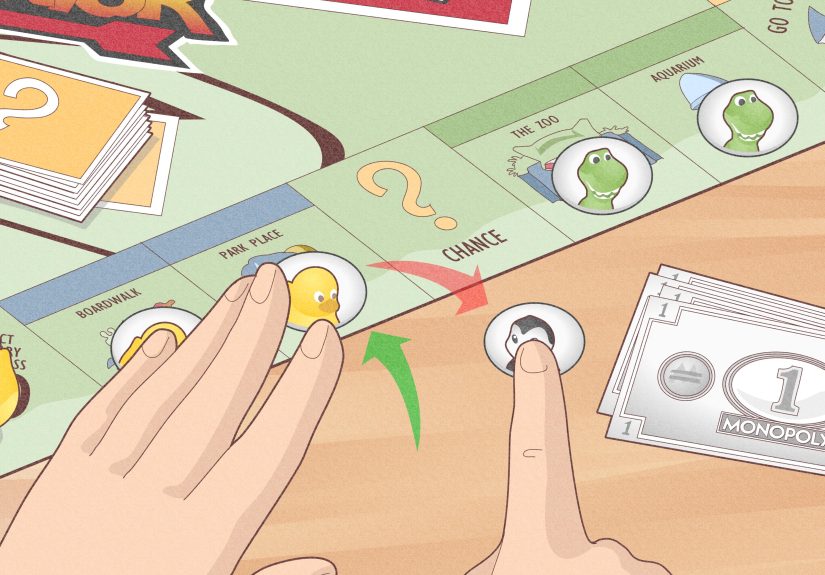
Monopoly Junior is basically Monopoly after it’s had a juice box and a nap: faster, simpler, and far less likely to trigger a full-scale family summit about “who started it.” It’s designed for young kids (usually ages 5+), uses one die, and keeps the choices bite-sized while still teaching the good stuffcounting, taking turns, paying rent, and learning that sometimes the dice are rude for no reason.
This guide walks you through the official Monopoly Junior rules (setup, turns, board spaces, and how the game ends), then levels up with tips, common mistakes, and what to do if your version looks different (spoiler: there are multiple editions, including a newer “2 games in 1” board).
Quick Facts: What Makes Monopoly Junior Different
- Faster play: Many games wrap up quickly compared with classic Monopoly, making it easier for younger attention spans.
- One die: Movement is simpler and turns move fast.
- Kid-friendly properties: Instead of streets and utilities, you’ll see playful locations (think ice cream, parks, arcades, zoos).
- Easy economy: Smaller money values, straightforward rent, and fewer “wait… how much do I owe?” moments.
- Clear ending: The game typically ends when someone can’t pay a required cost and goes bankrupt. Then everyone counts cash.
In other words: it still feels like Monopolybuy stuff, collect rent, be smug for 12 secondswithout the three-hour saga.
What’s in the Box
Contents can vary slightly by edition, but a common Monopoly Junior set includes:
- A gameboard
- Tokens (usually 4 in classic editions; some newer editions include 6)
- Chance cards
- “Sold” signs (used to mark owned properties)
- Play money
- One die
- (Sometimes) character cards or title deed cards, depending on the version
If you’re thinking, “My box has different stuff,” you’re not imagining it. Monopoly Junior has multiple versions (and themed editions), so treat your rulebook like the ultimate authority for your exact set.
Setup: How to Start in 5 Minutes
1) Put the board in the center
Open the gameboard and set it where everyone can reach it (including the kid who insists on sitting 14 feet away).
2) Separate and shuffle the Chance cards
Shuffle the Chance deck and place it facedown near the Chance space.
3) Pick tokens and matching “Sold” signs
Each player chooses a token. In many classic versions, you’ll take 12 sold signs that match your token and keep them in front of you. Those signs are how you “claim” properties you buy.
4) Choose a Banker
The Banker handles the money and pays out the bank when needed. (Pro tip: if you choose the child who loves sorting, you’ll have a happy Banker. If you choose the child who loves chaos, you’ll have… an exciting audit.)
5) Deal the starting money
A common official starting setup for classic editions is:
- 2 players: 20
- 3 players: 18
- 4 players: 16
Everyone places their token on GO. Youngest player usually goes first, and turns continue to the left (clockwise around the table).
Gameplay: What Happens on Your Turn
Step 1: Roll the die
Roll the single die and move forward that many spaces. No backing up. No “but I meant to roll a six.” The dice do not accept appeals.
Step 2: Collect money when you pass or land on GO
Each time you pass or land on GO, you collect a small salary from the Bank (commonly “2” in many editions).
Step 3: Follow the rule of the space you landed on
Monopoly Junior is built around a simple loop: land → do the thing → pass the die. The big “things” are buying properties, paying rent, and drawing Chance cards.
Step 4: End your turn
Once you’ve done what the space requires, your turn ends. Pass the die to the next player.
Board Spaces Explained
Unowned property
If you land on a property that no one owns, you typically must buy it. Pay the Bank the price shown, then place one of your sold signs on that property to mark ownership.
Owned property
If you land on a property owned by another player, you pay them rentthe amount written on that space. If you land on your own property, nothing happens.
Color pairs (double rent)
Many Monopoly Junior boards group properties in color pairs. If a player owns both properties of the same color, rent is typically doubled on those spaces. This is one of the biggest “strategy” levers in the game.
Chance
Land on Chance, draw the top card, read it aloud, and follow the instructions. When you’re done, return the card to the bottom of the deck.
Go to Jail (or Time Out)
Some editions use “Jail,” while others use “Time Out.” Either way, the message is the same: go directly there, do not pass GO, and do not collect the GO salary on that move.
In many classic Junior rules, you get out at the start of your next turn by paying a small fee (often “1”) or using a “Get Out of Jail Free” Chance card if you have it. Then you roll and move normally. You can still collect rent while you’re in Jail/Time Out.
Free Parking
In official play, Free Parking is usually a “nothing happens” spacea breather. (If your family likes the “Free Parking jackpot” house rule, that’s fine, but it changes the speed and balance.)
Just Visiting
Landing on Just Visiting is usually exactly that: visiting. No penalty. No dramatic courtroom scene. Just vibes.
How to Win (and How the Game Ends)
In many official Monopoly Junior rulesets, the endgame is simple: if you don’t have enough money to pay rent, buy a property you land on, or pay a Chance card fee, you’re bankruptand the game ends.
Then the remaining players count their cash. The player with the most money wins. If there’s a tie, some editions use property value as a tiebreaker (count what your properties are worth and add it to your cash total).
Optional “Advanced” rule (for older kids)
Some rulebooks include an advanced twist: if you can’t pay, you may settle the debt using properties you own (for example, transferring ownership to the player you owe, or returning property to the Bank depending on who you owe). If you still can’t pay after that, you’re bankrupt and the game ends.
Special Note: The “2 Games in 1” Monopoly Junior (Double-Sided Board)
Some newer Monopoly Junior editions come with a double-sided board featuring two levels of play. This is often marketed as a “grow with me” version for ages 4+. If your box mentions Level 1 and Level 2, you’re in this camp.
Level 1 (often recommended for ages 4–5)
- Focus: counting and matching
- Gameplay vibe: simpler money use, fewer “reading-heavy” steps
- Ending: commonly ends when the last property is purchased; winner is often the player with the most properties
Level 2 (often recommended for ages 6+)
- Focus: reading and simple math
- Gameplay vibe: closer to classic Monopoly Juniorbuying, rent, and bankruptcy can happen
- Ending: commonly ends when a player goes bankrupt; winner is usually the player with the most cash (ties may use properties as a tiebreaker)
Bottom line: if your board has two sides, pick the side that matches your kid’s comfort level. Nothing ruins “family game night” faster than turning a board game into a surprise reading exam.
Tips & Strategy (Kid-Friendly, Parent-Approved)
1) Buy early, buy often (especially in classic rules)
In many versions, you’re required to buy unowned properties you land on, so the real tip is: keep enough cash to survive the next few turns. Running out of money because you bought everything in sight is… very on-brand Monopoly, honestly.
2) Chase color pairs
Owning both properties in a color pair can mean double rent. That’s a big deal in a small-money economy, where “+1 rent” can feel like a financial uppercut.
3) Treat Chance cards like the weather: plan for surprise
Chance can move you around, make you pay fees, or occasionally save you. Teach kids to read the card slowly, do exactly what it says, and return it to the bottom like a responsible citizen.
4) For parents: narrate the math without stealing the turn
Try phrases like: “You have 6. Rent is 2. How many will you have left?” Kids stay in control, but you’re quietly leveling up their number sense.
5) Keep the Banker’s job simple
Place money in clear stacks, keep the Chance deck tidy, and use a small “bank tray” (a bowl works). Less mess = fewer mid-game delays = fewer tiny humans wandering off to pet the dog mid-turn.
6) Make it fun, not ruthless
Monopoly Junior is meant to introduce concepts, not produce tiny real estate villains. A little celebration when someone buys their first property goes a long way.
7) Use a soft time limit if your group needs it
If bedtime is looming, set a timer (15–20 minutes is often plenty). When it rings, everyone counts cash and declares a winner. It’s not always “official,” but it keeps the experience positive and repeatable.
Common Mistakes (and How to Fix Them)
Mistake: Turning Free Parking into a mega-jackpot
House rules can be fun, but a big Free Parking payout can make the game swingy and drag out longer. If you want speed, keep Free Parking as “nothing happens.”
Mistake: Forgetting to collect GO money
In Junior, GO income is part of the engine. Put the GO money in a visible spot or have the Banker say: “Passing GO? Collect your 2!”
Mistake: Not marking properties clearly
Sold signs exist for a reason. If ownership gets confusing, rent disputes happenand no one wants to litigate “who owns the Zoo” at 8:47 p.m.
Mistake: Adults “optimizing” the fun out of it
Yes, you could calculate probabilities. Or you could enjoy the giggle when a kid declares themselves “Mayor of the Ice Cream Parlour.” Choose wisely.
FAQs
How long does Monopoly Junior take?
Many families find it plays much faster than classic Monopoly. Exact time depends on the edition, number of players, and how often someone asks for a snack mid-turn.
Can you trade in Monopoly Junior?
Most common Junior rules focus on buying, rent, and Chance without complex trading systems. Some families add trading later as a “bonus rule” once kids understand ownership and rent.
What if my Monopoly Junior board looks different?
That’s normalthere are many themed editions and at least one popular double-sided “two-level” version. Use this guide for the general flow, then follow your included rulebook for any edition-specific twists.
Is Monopoly Junior educational?
It can be: kids practice counting spaces, counting money, making simple decisions, reading short cards, and learning turn-taking. It’s a sneaky little math-and-social-skills workout wrapped in bright colors.
Conclusion
Monopoly Junior is the sweet spot between “my kid is too young for classic Monopoly” and “I want a game that isn’t over in 90 seconds.” Once you know the basicssetup, buying properties, paying rent, Chance cards, and how bankruptcy ends the gameyou can run smooth, fun rounds that actually get replayed.
Start with the official rules, keep the pace upbeat, and remember: the goal isn’t to raise a tiny tycoon who negotiates bedtime like a hostile takeover. The goal is laughter, learning, and maybe a little victorious dance when someone completes a color pair.
Game Night Experiences (500+ Words): What It Feels Like to Play Monopoly Junior in Real Life
The official rules tell you what to do, but real family game nights teach you how it actually goes. Here’s the truth: Monopoly Junior is less like a silent chess match and more like a tiny paradecomplete with sound effects, snack breaks, and one player who tries to move their token “just a little extra” because it “looks closer.”
One of the first “aha” moments usually happens around ownership. A kid lands on a property, buys it, and proudly plants a sold sign like they just founded a new nation-state. Then another player lands there and has to pay rent. That’s the moment you can practically see the concept click: “Ohhhh… so owning stuff means people pay you.” It’s capitalism in training wheelsminus the spreadsheets.
Another classic experience: the GO payday celebration. The first time a child passes or lands on GO and collects their money, they often act like they discovered buried treasure. Parents quickly learn that if you keep the Banker cheerful and consistent (“Passing GO? Here’s your 2!”), the game stays smooth. If you forget the GO money a few times, kids will remember for you. Loudly. Repeatedly. With the passion of a courtroom attorney.
You’ll also notice that counting skills improve mid-game. Early turns can be slow: counting spaces, counting bills, recounting bills “just to be sure,” and then recounting them because someone else looked at the pile funny. By the end of the game, many kids speed up naturally. The repetition is the secret sauce: counting spaces every turn, adding and subtracting small amounts, and matching numbers to actions. It’s low-pressure practice disguised as play.
Then there’s the social side. Monopoly Junior is basically a friendly classroom for turn-taking and rule-following. Younger players often need a simple rhythm: roll, move, do the space, pass the die. When the routine becomes familiar, frustration drops. A great real-world trick is the “announce your turn” habit: “I rolled a four. One, two, three, four. I’m on the Zoo. It costs 4. I pay the Bank.” It keeps everyone aligned and reduces the “Wait, how did you get there?” debates.
Most households also discover the power of gentle narration. Not coachingnarrating. There’s a difference. Coaching is: “Don’t do that, do this.” Narrating is: “You have 5 and rent is 2. What happens next?” Narration helps kids build confidence without feeling like an adult is playing for them. And yes, it also prevents a full game stoppage while someone stares intensely at two bills like they’re written in ancient runes.
Finally, there’s the endgame: bankruptcy. Kids react in all kinds of ways. Some shrug and say, “Okay, can we play again?” Others treat it like a dramatic sports movie finale. The best experience tip is to normalize it: running out of money just means the game is finished, not that anyone “did bad.” If you keep the tone light, kids are more willing to replayand replays are where the learning (and the fun) really compounds.
In short, Monopoly Junior in real life is messy, funny, and surprisingly wholesome. It teaches money basics, patience, and sportsmanship and it does it while a kid proudly declares themselves “the boss of the Ice Cream Parlour,” which is honestly a job title we should all aspire to.