Table of Contents >> Show >> Hide
- What Is Your Core, Really?
- Why Beginners Should Start With Core Training
- The Biggest Mistake Beginners Make With Core Workouts
- Best Beginner Core Exercises To Start With
- A Simple 10-Minute Beginner Core Routine
- How To Know If You Are Doing Core Exercises Correctly
- How Core Strength Helps With Other Workouts
- Core First Does Not Mean Core Only
- Safety Tips Before You Begin
- How To Progress Without Overdoing It
- Real-Life Experiences: What Starting With Your Core Feels Like
- Conclusion: Build the Center Before You Build Everything Else
Starting an exercise routine can feel a little like walking into a hardware store when you only needed one screw. Suddenly there are machines, programs, influencers doing one-arm handstands, and someone on the internet insisting you need five kinds of protein powder before you can perform a single squat. But before you sprint into complicated workouts, there is one smart place to begin: your core.
And no, “core” does not simply mean “abs that look impressive at the beach.” Your core is the powerful center of your body: the muscles around your abdomen, lower back, hips, pelvis, glutes, and even the deep stabilizers that help you stand tall, move safely, breathe efficiently, and avoid feeling like a folding chair every time you bend down to pick up laundry.
Whether your goal is to lose weight, build strength, walk more, run your first mile, improve posture, reduce everyday aches, or simply stop making dramatic sound effects every time you get off the couch, core training is a practical first step. It teaches your body how to move with control. It helps connect your upper and lower body. It improves balance. It supports your spine. Most importantly, it gives beginners a safer foundation before adding heavier, faster, or more complex exercises.
This guide explains why core strength matters, how to start safely, which beginner core exercises actually help, and how to build a simple plan that fits real lifenot an imaginary perfect schedule where you sleep eight hours, meal prep beautifully, and never misplace your water bottle.
What Is Your Core, Really?
Many people hear “core workout” and immediately picture crunches. Crunches can have a place in fitness, but they are only one tiny slice of the core-strength pie. Your core includes several muscle groups that work together to stabilize your trunk and pelvis.
The major core muscles include the rectus abdominis, often called the “six-pack” muscle; the transverse abdominis, a deep muscle that acts like a natural weight belt; the obliques, which help with rotation and side bending; the erector spinae and multifidus, which support the spine; the pelvic floor; the diaphragm; and the muscles around your hips and glutes.
Think of your core as the body’s central control station. When it works well, your arms and legs move more efficiently. When it is weak or poorly coordinated, other areas often try to compensate. That is when exercises feel awkward, posture collapses, balance suffers, and simple movements become harder than they should be.
Why Beginners Should Start With Core Training
1. Core Strength Improves Stability
Every movement begins with some form of stabilization. When you walk, your core helps keep your torso upright. When you climb stairs, it helps control your hips. When you lift groceries, it supports your spine so your lower back does not have to do all the work like an unpaid intern.
For beginners, improving stability is especially important because it makes other exercises safer. Squats, lunges, push-ups, rows, cycling, jogging, and even stretching all become easier when your trunk can stay controlled. A strong core helps you move with better alignment instead of wobbling through every rep and hoping gravity is feeling generous.
2. It Supports Better Posture
Modern life is not exactly kind to posture. Many people spend hours sitting at desks, looking down at phones, driving, or leaning into screens like they are trying to crawl into their inbox. Over time, the shoulders round, the hips tighten, and the lower back may feel cranky.
Core training helps by strengthening the muscles that support an upright position. It does not magically erase years of slouching overnight, but it teaches your body to hold itself with more control. Combined with mobility work and regular movement breaks, core exercises can help you stand taller, sit more comfortably, and move with less stiffness.
3. It Helps Protect the Lower Back
Lower back discomfort is one of the most common reasons people hesitate to exercise. While serious or persistent pain should always be evaluated by a healthcare professional, many everyday aches are made worse by weak stabilizing muscles, poor movement habits, or jumping into intense workouts too quickly.
A well-designed beginner core routine focuses on control, breathing, and neutral spine position. Exercises such as dead bugs, bird dogs, bridges, and modified planks can train the deep core without aggressively loading the spine. The goal is not to “destroy your abs.” The goal is to build support so your back does not feel like it is carrying the entire committee alone.
4. Core Training Improves Balance and Coordination
Balance is not just for gymnasts, dancers, or people trying to carry too many grocery bags in one trip. It matters for everyday movement. A stronger core helps you react when you trip slightly, step off a curb, climb stairs, or shift weight during exercise.
Good balance also helps beginners feel more confident. When your body feels steady, you are more likely to keep exercising. Confidence is underrated in fitness. The best workout plan is not the fanciest one; it is the one you can actually repeat without dreading it.
The Biggest Mistake Beginners Make With Core Workouts
The most common mistake is chasing “burn” instead of control. Many beginners do endless sit-ups, bicycle crunches, or leg raises with poor form because they believe soreness equals success. Unfortunately, sloppy core training often shifts stress into the neck, hip flexors, or lower back.
A better approach is to master basic core activation first. That means learning how to gently brace your midsection while still breathing normally. Imagine someone is about to poke your stomachnot hard, just enough that you naturally tighten. That light, steady engagement is the feeling you want during many core exercises.
Another common mistake is holding the breath. Your core and breathing system work together. If every plank turns into a breath-holding contest, your form usually falls apart quickly. Practice breathing slowly while keeping your trunk stable. It may feel awkward at first, but it is one of the most useful skills in fitness.
Best Beginner Core Exercises To Start With
You do not need a gym membership, expensive equipment, or a living room large enough for a yoga commercial. A mat or soft surface is enough for most beginner core exercises. Start with slow, controlled movement and focus on quality over quantity.
1. Dead Bug
The dead bug is beginner-friendly, spine-friendly, and much more useful than its funny name suggests. Lie on your back with your arms reaching toward the ceiling and your knees bent over your hips. Slowly lower one arm and the opposite leg while keeping your lower back from arching. Return to the starting position and switch sides.
This exercise teaches your core to resist movement while your arms and legs move. That is exactly what your core does in real life. Start with 6 to 8 slow reps per side.
2. Bird Dog
Begin on your hands and knees. Extend one arm forward and the opposite leg back, keeping your hips level. Pause, then return to the starting position. Switch sides.
The bird dog trains balance, spinal stability, and coordination. Pretend you are balancing a cup of coffee on your lower back. Your goal is not to spill it. If pretending coffee is involved makes you more focused, excellent. Fitness motivation comes in many forms.
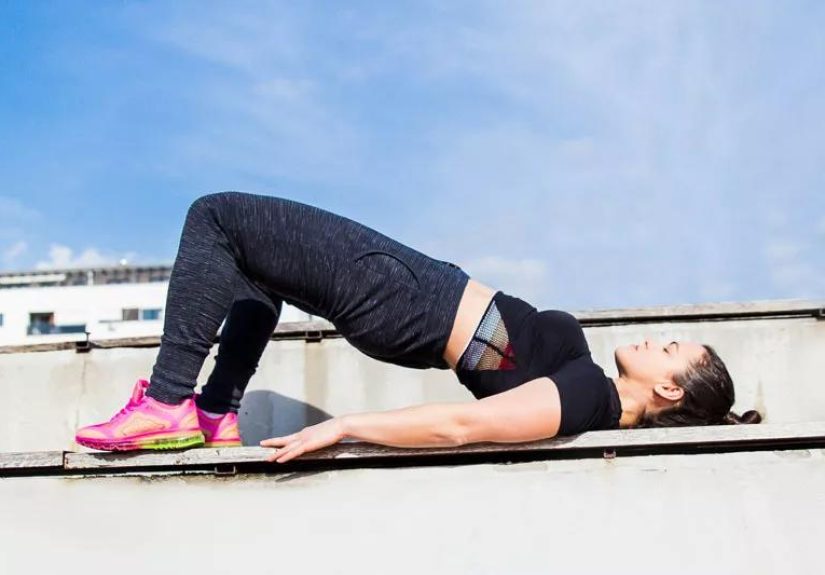
3. Glute Bridge
Lie on your back with your knees bent and feet flat on the floor. Gently brace your core, squeeze your glutes, and lift your hips until your body forms a straight line from shoulders to knees. Lower slowly.
Glute bridges strengthen the hips and glutes, which are closely connected to core function. They also help beginners learn hip extension without overusing the lower back. Try 10 to 12 controlled reps.
4. Modified Plank
A full plank is popular, but beginners often benefit from starting with a modified version. Place your forearms on the floor and keep your knees down. Brace your core, keep your shoulders away from your ears, and hold the position for 10 to 20 seconds.
The goal is a straight, stable linenot shaking like a phone on vibrate. As you get stronger, increase the hold time or progress to a full plank from your toes.
5. Side Plank From Knees
Lie on one side with your knees bent and your elbow under your shoulder. Lift your hips so your body forms a straight line from shoulders to knees. Hold briefly, then lower.
This move targets the obliques and side-body stabilizers. These muscles are important for posture, balance, and rotational control. Start with 10 to 15 seconds per side.
6. Pallof Press
If you have access to a resistance band, the Pallof press is a fantastic anti-rotation exercise. Anchor the band at chest height, stand sideways to the anchor point, and hold the band at your chest. Press your hands forward while resisting the band’s pull, then return.
This exercise teaches the core to resist twisting, which is useful for sports, lifting, carrying bags, and all the unexpected sideways movements life throws at you.
A Simple 10-Minute Beginner Core Routine
Here is a beginner-friendly routine you can do three times per week. Move slowly, rest when needed, and stop if anything causes sharp pain.
Beginner Core Circuit
- Dead bug: 6 to 8 reps per side
- Bird dog: 6 to 8 reps per side
- Glute bridge: 10 to 12 reps
- Modified plank: 10 to 20 seconds
- Side plank from knees: 10 to 15 seconds per side
Complete one round during your first week. If it feels manageable, build up to two or three rounds over time. You do not need to rush. Progress that feels almost too easy at first is often the kind that lasts.
How To Know If You Are Doing Core Exercises Correctly
Good core training should feel controlled. You may feel your abdominal muscles, glutes, or sides working, but you should not feel sharp pain in your lower back, neck, or hips. If your back arches during dead bugs, shorten the range of motion. If your neck strains during planks, check your head position. If your hips twist during bird dogs, move more slowly.
Use these simple form checks:
- Can you breathe while holding the position?
- Can you keep your ribs from flaring upward?
- Can you move without swinging or rushing?
- Can you finish the set with the same control you had at the start?
If the answer is yes, you are likely on the right path. If the answer is no, make the exercise easier. Easier is not failure. Easier is smart training wearing comfortable shoes.
How Core Strength Helps With Other Workouts
Once your core gets stronger, many other exercises start to feel better. Squats become more stable because your torso stays upright. Push-ups improve because your hips do not sag. Walking and running feel smoother because your pelvis is better controlled. Strength training becomes safer because you can brace before lifting.
Core strength also improves energy transfer. In simple terms, your body works like a chain. If the center of the chain is weak, force leaks everywhere. That can make movement inefficient. A stronger core helps your arms and legs do their jobs without unnecessary strain.
Core First Does Not Mean Core Only
Starting with your core does not mean ignoring the rest of your body. A balanced exercise plan should include cardio, strength training, mobility, and recovery. Core work simply gives you a strong foundation.
For example, a beginner week might include three short core sessions, two walks, and two simple full-body strength workouts. Over time, you can add more resistance, longer walks, light jogging, cycling, swimming, or gym workouts. Your core routine becomes the warm-up act that quietly makes the main event better.
Safety Tips Before You Begin
If you are new to exercise, returning after a long break, pregnant, recovering from injury, or dealing with ongoing pain, it is wise to check with a qualified healthcare professional or physical therapist before starting a new routine. This is especially important if you have back pain, balance issues, heart concerns, or recent surgery.
Also remember that soreness is not the goal. Mild muscle fatigue can be normal, but pain is information. Listen to it. Adjust your form, reduce the intensity, or choose a gentler variation. Fitness should challenge you, not punish you like you forgot your homework in gym class.
How To Progress Without Overdoing It
Progression is where many beginners get impatient. After a few good workouts, it is tempting to suddenly double everything. Unfortunately, your motivation may move faster than your tissues can adapt. That is how people go from “I am starting fresh” to “Why does my entire body sound like bubble wrap?”
Use gradual progression. Add a few seconds to plank holds. Add two reps to each side. Add one extra round. Move from knees to toes. Add a resistance band. Choose one change at a time and give your body a chance to respond.
A helpful rule: finish most beginner workouts feeling like you could have done a little more. That leaves room for consistency. The goal is not to win Monday and disappear until next month. The goal is to become someone who keeps showing up.
Real-Life Experiences: What Starting With Your Core Feels Like
Many beginners expect core training to feel dramatic. They imagine sweat flying, music blasting, and a coach yelling motivational phrases that sound suspiciously like a movie trailer. But the first few weeks of core training are often quieter. You may notice small changes first: standing a little taller, walking with more control, getting up from a chair more easily, or feeling less wobbly during basic exercises.
One common experience is discovering muscles you did not know existed. A beginner might try a dead bug and think, “This looks too easy,” only to realize that moving one arm and the opposite leg while keeping the back steady requires surprising concentration. That moment is valuable. It teaches body awareness, which is one of the most underrated parts of fitness.
Another common experience is learning that faster is not better. Many people rush through exercise because they believe speed equals effort. Core training rewards the opposite. Slow reps expose weak spots. Pauses build control. Breathing keeps the movement honest. At first, this can feel strange, especially if you are used to measuring workouts by sweat alone. But after a few sessions, slower movement begins to feel powerful.
Beginners also often notice that core training changes how they approach other exercises. A squat may feel less shaky. A walk may feel more upright. Carrying a backpack or grocery bag may feel easier. Even household chores can become mini fitness tests. Vacuuming, lifting laundry, reaching into the car, or moving boxes all require core stability. Suddenly, your workout is not just something that happens on a mat; it shows up in daily life.
There can be frustration too. Planks may feel impossible at first. Side planks may make one side seem much weaker than the other. Bird dogs may reveal that balance has apparently gone on vacation without telling you. This is normal. Most bodies are not perfectly symmetrical. The goal is not instant perfection. The goal is awareness, patience, and steady improvement.
A helpful beginner mindset is to treat core training like learning an instrument. You would not expect to play jazz piano after three lessons, unless you are in a very optimistic movie. In the same way, you should not expect flawless planks after one week. Practice builds coordination. Coordination builds strength. Strength builds confidence. Confidence makes it easier to continue.
Another real-life lesson: the best core routine is the one that fits into your schedule. Ten minutes before breakfast, five minutes after school or work, or a short session before a walk can be enough to build momentum. You do not need perfect conditions. You need a repeatable habit. A mat on the floor and a timer on your phone can be more useful than an elaborate plan you never start.
Some people find that core training helps them reconnect with their body in a positive way. Instead of focusing only on weight, appearance, or comparison, they start noticing function. Can I balance better? Can I hold this position longer? Can I move without pain? Can I breathe while bracing? These questions create a healthier relationship with exercise because they focus on what the body can do.
The biggest experience many beginners share is surprise. Core training may look simple, but it has a way of making the entire body feel more organized. After several weeks, you may not have movie-star absand that is perfectly finebut you may feel stronger, steadier, and more prepared to explore other types of exercise. That is the real win.
Conclusion: Build the Center Before You Build Everything Else
If you are planning to start exercising, beginning with your core is one of the smartest choices you can make. Your core supports posture, balance, stability, spinal control, and everyday movement. It helps beginners learn proper form before increasing intensity. It also makes other workouts feel safer and more effective.
You do not need complicated equipment or extreme routines. Start with simple exercises like dead bugs, bird dogs, glute bridges, modified planks, and side planks. Practice slowly. Breathe. Focus on control. Progress gradually. Your core is not just about how your stomach looks; it is about how your whole body moves.
Fitness does not have to begin with a dramatic transformation. Sometimes it begins with lying on a mat, moving slowly, and realizing your body is capable of more than you thought. Start with your core first, and you give every future workout a stronger, steadier foundation.
Note: This article is for general educational purposes and should not replace personal medical advice. Anyone with pain, injury, pregnancy-related concerns, or a medical condition should consult a qualified healthcare professional before beginning a new exercise program.