Table of Contents >> Show >> Hide
- Why the Crew Dragon Capsule Was Named Freedom
- The Historic Link to Alan Shepard and Freedom 7
- From a Tiny Mercury Capsule to a Modern Crew Dragon
- NASA, SpaceX, and the Commercial Crew Era
- The Crew-4 Mission: Freedom’s First Flight
- Why Spacecraft Names Still Matter
- Freedom as a Symbol Beyond One Nation
- How Dragon Freedom Shows the Power of Reusability
- The Emotional Power of Returning a Historic Name to Flight
- What Freedom Means for the Future of Human Spaceflight
- Analysis: Why the Name Worked So Well
- Experience Section: What the Name Freedom Feels Like From a Space Enthusiast’s View
- Conclusion
- SEO Tags
When a spacecraft gets a name, it is rarely just a label slapped onto a shiny machine like a bumper sticker on a family minivan. In spaceflight, names carry memory, ambition, identity, and sometimes a little dramatic flairbecause if you are going to ride a rocket into orbit, “Vehicle Serial Number C212” does not exactly stir the soul.
That is why the name Freedom landed with such emotional weight when SpaceX’s new Crew Dragon capsule was prepared for NASA’s SpaceX Crew-4 mission. The capsule’s name honored Freedom 7, the tiny Mercury spacecraft that carried Alan Shepard on America’s first human spaceflight on May 5, 1961. More than six decades later, SpaceX and NASA were no longer proving that an American could briefly touch space; they were sending rotating crews to live and work aboard the International Space Station. Same dream, much better legroom.
The name also reflected a broader idea: freedom as a human aspiration, the freedom to explore, to innovate, to cooperate across borders, and to keep asking the universe awkwardly large questions. For a vehicle built by a private American company, launched for NASA, carrying U.S. and European astronauts, and headed for an international laboratory orbiting Earth, the word fit surprisingly well. It was historical, patriotic, global, and just vague enough to make mission patch designers very happy.
Why the Crew Dragon Capsule Was Named Freedom
The Crew-4 astronauts selected the name Freedom for their spacecraft before launch. The crew included NASA astronauts Kjell Lindgren, Robert “Bob” Hines, and Jessica Watkins, along with European Space Agency astronaut Samantha Cristoforetti. Their mission was NASA’s fourth operational crew rotation flight using SpaceX’s Crew Dragon and Falcon 9 system.
In spaceflight tradition, astronauts often name their spacecraft to mark a mission’s spirit. NASA’s Mercury astronauts did it. Gemini and Apollo crews did it. SpaceX’s Crew Dragon capsules continued that tradition with names such as Endeavour, Resilience, Endurance, and then Freedom. These are not random words pulled from a motivational poster in a conference room. Each name ties the spacecraft to a specific moment, value, or legacy.
Freedom honored two things at once. First, it nodded directly to Alan Shepard’s Freedom 7, the first U.S. spacecraft to carry an American into space. Second, it celebrated the idea that exploration grows from open societies, bold engineering, and the human urge to go farther than seems reasonable at breakfast.
The Historic Link to Alan Shepard and Freedom 7
To understand why the name mattered, it helps to return to May 5, 1961. Alan Shepard, a U.S. Navy test pilot and one of NASA’s original Mercury Seven astronauts, climbed into a small capsule mounted on a Redstone rocket at Cape Canaveral. The mission, Mercury-Redstone 3, lasted only about 15 minutes, but those 15 minutes changed American space history.
Shepard did not orbit Earth. That milestone would come later with John Glenn. Instead, Shepard flew a suborbital arc, reaching space and splashing down in the Atlantic Ocean. It was brief, tense, and heroicthe kind of mission where every switch mattered and the spacecraft had roughly the cozy interior vibe of a metal laundry hamper with national expectations attached.
Yet Freedom 7 proved that the United States could send a human being into space and bring him home safely. The mission came less than a month after Yuri Gagarin became the first human in space, so the pressure on NASA was intense. Shepard’s successful flight helped restore American confidence and accelerated the space race that eventually led to Apollo 11 and the Moon landing.
From a Tiny Mercury Capsule to a Modern Crew Dragon
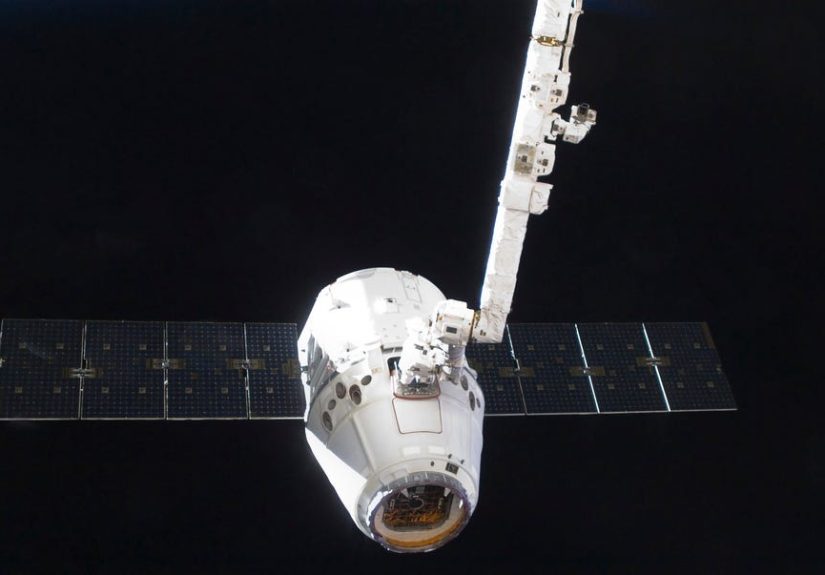
The contrast between Freedom 7 and SpaceX’s Dragon Freedom is enormous. Shepard flew alone in a capsule so compact that “personal space” was more theory than reality. Crew Dragon Freedom, by comparison, carries up to four astronauts for NASA missions, features touchscreen controls, autonomous docking capabilities, advanced life-support systems, and a sleek interior that looks like someone asked a spacecraft to attend a minimalist tech conference.
Freedom 7 was a first step. Dragon Freedom was part of a mature transportation system. That difference shows how far American human spaceflight has moved: from proving a human could survive a short hop beyond the atmosphere to regularly ferrying crews to a permanently inhabited orbital laboratory.
But the connection between the two vehicles is more than nostalgia. Both represented transitions. Freedom 7 signaled that America had entered human spaceflight. Dragon Freedom showed that commercial spacecraft had become central to NASA’s low-Earth orbit strategy. One opened a door. The other kept that door swinging on a reusable hinge.
NASA, SpaceX, and the Commercial Crew Era
Dragon Freedom belongs to the larger story of NASA’s Commercial Crew Program. After the Space Shuttle retired in 2011, NASA needed a new way to launch astronauts from American soil. For several years, U.S. astronauts traveled to the International Space Station aboard Russian Soyuz spacecraft. The arrangement worked, but it also made clear that the United States needed domestic crew launch capability again.
NASA partnered with private companies to develop human-rated spacecraft, and SpaceX became the first commercial company to launch astronauts to orbit. The Demo-2 mission in 2020 carried NASA astronauts Bob Behnken and Doug Hurley aboard Crew Dragon Endeavour, restoring crewed orbital launches from the United States. By the time Freedom entered service for Crew-4 in 2022, SpaceX was no longer simply demonstrating a system. It was operating one.
That is what makes Dragon Freedom important. It was not a one-off stunt. It was part of a regular rhythm: launch, dock, support a science mission, return, refurbish, repeat. In the old days, the phrase “routine spaceflight” sounded like science fiction. With Crew Dragon, it became closer to scheduling logisticsstill spectacular, just with more checklists.
The Crew-4 Mission: Freedom’s First Flight
SpaceX’s Dragon Freedom made its first flight on NASA’s Crew-4 mission, launching atop a Falcon 9 rocket from Kennedy Space Center’s Launch Complex 39A in Florida on April 27, 2022. The crew traveled to the International Space Station for a long-duration mission focused on science, maintenance, technology demonstrations, and the everyday business of keeping a football-field-sized laboratory alive in orbit.
Crew-4 included a notable mix of experience and firsts. Kjell Lindgren and Samantha Cristoforetti had flown in space before, while Bob Hines and Jessica Watkins were making their first trips. Watkins’ mission was especially historic because she became the first Black woman to serve on a long-duration mission aboard the International Space Station.
The crew spent months in orbit conducting research in areas such as human health, materials science, plant growth, and Earth observation. These experiments may not always sound as cinematic as a rocket launch, but they are the reason the International Space Station exists. Launches get the headlines; science does the homework.
Why Spacecraft Names Still Matter
In an age of reusable boosters, autonomous docking, and live-streamed launches, it might be tempting to think spacecraft names are decorative. They are not. Names help people connect emotionally with machines that otherwise seem distant, technical, and wrapped in acronyms.
“Freedom” is easier to remember than a capsule serial number. It gives the mission a story. It creates a bridge between schoolchildren learning about Alan Shepard and engineers preparing a modern spacecraft for launch. It reminds the public that spaceflight is not only about engines, propellant, and orbital mechanics. It is also about cultural memory.
NASA has always understood this. Names like Friendship 7, Columbia, Discovery, Atlantis, and Endeavour helped turn spacecraft into symbols. SpaceX’s Dragon names continue that lineage, blending old-school exploration romance with twenty-first-century engineering.
Freedom as a Symbol Beyond One Nation
Although the name Freedom has a clear American historical connection, the Crew-4 mission was international. Samantha Cristoforetti represented the European Space Agency, and the International Space Station itself is one of the most successful examples of long-term scientific cooperation among nations.
That gives the name a wider meaning. Freedom can refer to national history, but it can also point to the freedom to collaborate, to pursue knowledge, and to share the benefits of exploration. A spacecraft launched from Florida by an American rocket company, carrying astronauts from multiple space agencies to a multinational laboratory, is a pretty strong argument that space exploration works best when the door is not locked from the inside.
The timing of the name also resonated with world events in 2022, when the idea of freedom was being discussed with renewed urgency around the globe. Space missions do not happen in isolation from history. They rise from Earth, literally and politically, carrying the hopes and anxieties of the world below.
How Dragon Freedom Shows the Power of Reusability
One of SpaceX’s biggest contributions to modern spaceflight is making reusability feel normal. Falcon 9 boosters routinely land after launch. Crew Dragon capsules are refurbished and flown again. That approach lowers costs, increases flight opportunities, and changes how people think about access to orbit.
Dragon Freedom’s value did not end after Crew-4. The capsule went on to support additional missions, proving that a modern crew spacecraft can become a repeat performer rather than a single-use national monument. That is a quiet revolution. In earlier eras, spacecraft often became museum pieces after one mission. Today, a capsule can splash down, be inspected, refurbished, and prepared for another trip.
This does not make spaceflight easy. It remains demanding, risky, and technically unforgiving. But reusability helps shift the industry from rare expeditions toward sustained operations. Freedom’s name may come from the past, but its engineering belongs to the future.
The Emotional Power of Returning a Historic Name to Flight
There is something elegant about bringing the name Freedom back into active spaceflight. Alan Shepard’s Freedom 7 was a beginning. SpaceX’s Freedom was a continuation. The first was a compact capsule that gave America its first human foothold beyond the atmosphere. The second was a sophisticated spacecraft carrying a professional crew to a laboratory where humans had been living continuously for more than two decades.
That continuity matters because space exploration is not one heroic event. It is a relay race. Shepard carried the baton for 15 minutes. Apollo carried it to the Moon. The Shuttle carried it through decades of orbital construction and research. Commercial Crew now carries it to the International Space Station and, indirectly, toward future commercial stations, lunar missions, and Mars ambitions.
Every generation wants to believe it is inventing the future from scratch. Space history politely disagrees. The future is usually built from older dreams, upgraded hardware, and a surprising amount of paperwork.
What Freedom Means for the Future of Human Spaceflight
Dragon Freedom represents a future where government agencies and private companies work together more deeply than ever before. NASA sets safety requirements, mission goals, and exploration priorities. SpaceX designs, builds, launches, and operates the transportation system. Astronauts ride the result into orbit, where research continues in microgravity.
This model is likely to shape the next phase of low-Earth orbit. As the International Space Station approaches the later years of its service life, commercial space stations are being planned. The experience gained from Crew Dragon missions will help define how crews travel to those future platforms.
In that sense, Freedom is not only a tribute to Shepard. It is a preview of a more flexible space economy. The capsule’s name honors the first American spaceflight, but its work supports a future where more people, more nations, and more organizations may participate in orbital research and exploration.
Analysis: Why the Name Worked So Well
From a communication standpoint, Freedom was a strong name because it operated on several levels. It was short, memorable, historically grounded, emotionally clear, and easy to explain. That matters in public science communication. A good spacecraft name can make a mission more understandable to people who do not follow orbital launch schedules the way sports fans follow playoffs.
The name also avoided being too technical. “Freedom” does not require a degree in aerospace engineering. It invites curiosity. A reader might ask, “Why Freedom?” The answer leads directly to Alan Shepard, Project Mercury, the Commercial Crew Program, NASA-SpaceX cooperation, and the evolution of human spaceflight. That is excellent storytelling efficiency. NASA should honestly give it a parking spot.
It also matched the Crew Dragon naming pattern. Endeavour suggested achievement, Resilience suggested perseverance, Endurance suggested toughness, and Freedom suggested purpose. Together, those names form a small vocabulary of exploration values. They sound like spacecraft, but also like things you would want printed on a mission patch, a classroom poster, or possibly a very intense gym wall.
Experience Section: What the Name Freedom Feels Like From a Space Enthusiast’s View
For anyone who has followed spaceflight from childhood curiosity to full-blown launch-window obsession, the name Freedom hits differently. It is not just a word. It is a reminder of how space history tends to fold time together. You can watch a Falcon 9 rise from Florida on a livestream, with clean graphics, countdown audio, and high-definition camera views, and still feel connected to a grainy black-and-white morning in 1961 when Alan Shepard rode Freedom 7 into history.
That is the strange magic of spaceflight. The technology changes dramatically, but the emotional pattern stays familiar. There is the countdown. There is the hold-your-breath moment at ignition. There is the impossible brightness under the rocket. There is the voice on the loop confirming milestones. And somewhere, whether in a control room, a classroom, or a person watching on a phone at an unreasonable hour, there is the same thought: humans built that, and humans are on top of it. Sensible species? Debatable. Inspiring species? Absolutely.
Watching Dragon Freedom launch for Crew-4 felt like seeing history shake hands with modern engineering. Freedom 7 was small, dangerous, and experimental. Dragon Freedom was sleek, automated, and part of an operational transportation system. Yet both capsules asked the same basic question: how far can people go when courage and engineering agree to share a calendar?
The name also made the mission more approachable. Not everyone can explain orbital inclination, docking procedures, abort modes, or thermal protection systems. But almost everyone understands the emotional force of “freedom.” That word opens the door. Once people step inside the story, they can learn about NASA’s Commercial Crew Program, SpaceX’s reusable spacecraft, the International Space Station, and the science performed in orbit.
There is also something deeply satisfying about seeing a spacecraft name continue working after its first flight. Freedom was not simply launched, celebrated, and retired into trivia. Like other Crew Dragon vehicles, it became part of a reusable fleet. That makes the name feel earned. Freedom is not a museum label; it is a working spacecraft with scorch marks, mission history, and the kind of resume that would make a test pilot nod respectfully.
For students, teachers, writers, and everyday space fans, Dragon Freedom offers a clean way to explain the arc of American human spaceflight. Start with Shepard. Move to Mercury, Gemini, Apollo, Shuttle, the ISS, and Commercial Crew. Then look ahead to private stations, lunar landings, and Mars plans. One capsule name becomes a thread through the whole story.
That may be the best reason Freedom worked. It made the future feel connected to the past without getting stuck there. It honored America’s first spaceflight while pointing toward a time when space access may become more regular, more international, and more commercially diverse. The name carried pride, but not dust. It had history, but it still had a launch schedule.
Conclusion
SpaceX’s Dragon capsule Freedom was more than a new spacecraft with a noble name. It was a symbol of continuity between America’s first human spaceflight and the modern era of commercial crew transportation. By honoring Alan Shepard’s Freedom 7, the Crew-4 astronauts connected a 15-minute suborbital mission in 1961 with long-duration research aboard the International Space Station in 2022 and beyond.
The name worked because it was simple, historic, and emotionally powerful. It reminded the public that space exploration is both technical and human. Rockets need engines, fuel, software, and safety systems, but missions also need stories. Freedom gave this Dragon capsule a story worth remembering.
In the end, Dragon Freedom shows how far spaceflight has come. What began as a daring solo flight in a cramped Mercury capsule has evolved into reusable spacecraft carrying international crews to orbit. The hardware is different. The mission duration is different. The coffee situation is probably better. But the spirit remains familiar: look upward, build carefully, launch bravely, and keep going.