Table of Contents >> Show >> Hide
- It Started as Farm Candy, Not Fright Candy
- Who Invented Candy Corn?
- How Candy Corn Was Made in the Early Days
- From Year-Round Penny Candy to Halloween Icon
- Why Candy Corn Inspires Such Strong Opinions
- Candy Corn in the Modern Era
- Why Candy Corn Still Matters
- Conclusion
- Experiences: Why Candy Corn Still Feels Like Halloween
Few candies cause more annual family debate than candy corn. The second that orange, yellow, and white kernels hit store shelves, two camps form immediately: people who grab a handful with glee, and people who act as if someone offered them a candle. Either way, candy corn wins. It has survived more than a century of changing tastes, changing holidays, changing packaging, and changing opinions without losing its signature look. That is not a small accomplishment for a candy that basically looks like a cartoon kernel wearing formalwear.
Today, candy corn feels inseparable from Halloween. It shows up in party bowls, classroom crafts, bakery displays, grocery endcaps, and every “best or worst Halloween candy” ranking ever invented by humankind. But the funny thing is that candy corn did not begin as a spooky-season celebrity. Its story started in a very different America: a rural, farm-focused country where agricultural imagery helped sell sweets. Long before it became a Halloween staple, candy corn was marketed as a playful, farm-inspired confection for everyday enjoyment.
That journey, from harvest-themed novelty to Halloween icon, is what makes candy corn more interesting than its critics usually admit. Love it or loathe it, this little triangle has a surprisingly rich backstory.
It Started as Farm Candy, Not Fright Candy
To understand candy corn, you have to travel back to the late 19th century. In the 1880s, America was still heavily rural, and agriculture shaped everyday life in a way that is hard to imagine now. Candy makers often borrowed familiar farm imagery because it felt cheerful, practical, and instantly recognizable. Confections were molded into shapes like chestnuts, pumpkins, turnips, and other harvest-related forms. In that world, a candy shaped like a corn kernel made perfect sense.
Candy corn was not originally designed to be spooky. It was designed to be clever. It looked like something Americans saw around them every fall, and it fit neatly into a broader trend of “agricultural candies.” That context matters because it explains why the candy’s earliest identity was less about haunted houses and more about harvest season, country life, and everyday novelty.
Why “Chicken Feed” Was Actually a Smart Name
Before candy corn became candy corn, it was famously sold as Chicken Feed. Modern shoppers might look at that name and think, “Wow, the marketing department had a rough day.” But at the time, the branding was smart. Corn was strongly associated with livestock feed and farm life, and the package leaned into that identity with rooster imagery and cheerful slogans. In other words, the candy was not pretending to be fancy. It was winking at consumers.
That old branding also reveals something deeper about American food culture. Before World War I, corn did not have the same wholesome, comfort-food image it carries today in cornbread, summer sweet corn, and holiday side dishes. For many people, it was considered coarse, cheap, and more suitable for animals than elegant human dining. So selling a corn-shaped candy as playful “chicken feed” was both funny and culturally on point. It was a joke the public understood immediately.
Who Invented Candy Corn?
The exact origin story is a little fuzzy, because candy history is not always recorded with the precision of a moon landing. Most accounts credit George Renninger, a candy maker at Philadelphia’s Wunderle Candy Company, with creating the tri-colored confection in the 1880s. Oral histories and trade references point to him as the key figure behind the candy’s earliest version.
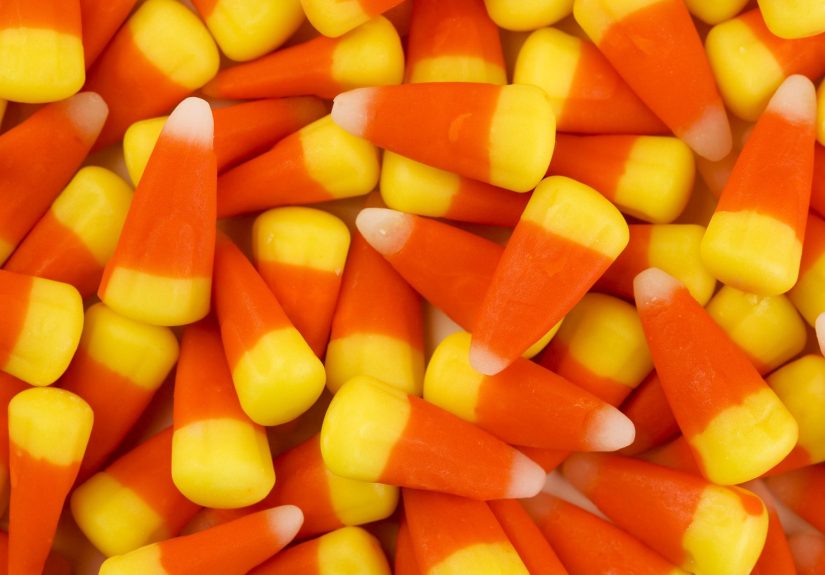
What made the product stand out was not just the shape. Other farm-themed candies already existed. What set candy corn apart was the three-color design: a yellow base, orange center, and white tip. It was simple, eye-catching, and surprisingly effective. Even now, more than a century later, you can recognize candy corn from across the room. That kind of visual branding is gold in the confection business.
Wunderle appears to have been among the first companies to commercialize it, but the candy’s bigger breakthrough came when the Goelitz Confectionery Company picked up the recipe in 1898. That company, which later became famous as Jelly Belly, helped bring candy corn to a much wider audience. If Wunderle helped start the legend, Goelitz helped scale it.
How Candy Corn Was Made in the Early Days
One reason candy corn earned admiration in the confection world is that it was labor-intensive. Early candy corn was made by hand, and the three layers had to be poured separately. The candy mixture, essentially a sweet slurry made from sugar, corn syrup, and a mellowcreme-style base, was cooked in kettles and transferred into buckets. Workers then poured the colored layers into kernel-shaped molds, one section at a time.
That process required coordination, timing, and a fair bit of patience. It was not a “dump it all in and hope for the best” operation. It was closer to edible assembly work. The molds were typically formed in trays of cornstarch, which held the shape while the candy cooled and set. Once hardened, the pieces were removed, sifted, and polished to create that familiar glossy finish.
Modern manufacturing is far more automated, of course, but the basic concept has remained remarkably similar. The machinery is faster, cleaner, and less dependent on human hands doing the pouring, yet the candy is still made by layering colored syrupy mixtures into kernel-shaped molds. That continuity is one reason candy corn feels so old-school. It really is.
A Recipe That Barely Changed
For a candy with such a loud reputation, candy corn is oddly conservative. While colors and seasonal versions have expanded, the basic formula has stayed close to its original roots. The texture still lands somewhere between fondant and marshmallow, with a mellow vanilla-like sweetness and a chewy-yet-soft bite. It belongs to the mellowcreme family, which helps explain why it feels richer than its tiny size suggests.
That consistency is part of the brand’s strange superpower. Candy trends come and go. Sour gets trendy. Then spicy gets trendy. Then everyone wants freeze-dried something. Meanwhile, candy corn keeps showing up each fall looking exactly like itself, as if trends are for other people.
From Year-Round Penny Candy to Halloween Icon
Here is the twist in the story: candy corn was not always locked to Halloween. In the early 20th century, it was more of a general candy, especially in autumn, and it also appeared around other seasonal celebrations. It functioned as a common penny candy, the kind children could buy in modest quantities without needing a trust fund or a stock portfolio.
Its transformation into a Halloween heavyweight happened gradually. As Halloween became more commercialized in the mid-20th century, candy companies saw an opportunity. Manufacturers increased seasonal advertising in the 1950s, and candy became more central to trick-or-treating culture. Candy corn was especially well suited for the shift because its harvest colors already matched the look of fall.
The 1950s Changed Everything
By the 1950s and 1960s, Halloween in America was becoming more candy-centered. Pre-packaged treats were convenient, colorful, and easy to hand out. Candy corn benefited from that shift in a major way. Its shape was whimsical, its colors fit the season, and it was easy to package for trick-or-treat distribution. Brach’s, which would become the best-known modern candy corn brand, was packaging it specifically for Halloween by the 1960s.
The candy also fit a visual need. Halloween was no longer just costumes and party games; it was becoming a retail season with a recognizable palette. Candy corn looked like Halloween even when it was sitting silently in a bowl doing absolutely nothing. That visual symbolism helped lock it into the holiday.
Safety, Packaging, and the Rise of Factory-Sealed Treats
Another cultural change helped candy corn cement its place. In the 1970s, fears about tampered homemade treats pushed many families toward factory-sealed candy. Even though many of those fears were exaggerated or urban legends, the impact on consumer behavior was real. Wrapped, branded, commercially produced candy felt safer and more reliable. Candy corn, already well established and easy to package, benefited again.
In other words, candy corn did not just become a Halloween favorite because it tasted festive. It became a Halloween favorite because history, packaging, convenience, and consumer psychology all lined up in its favor.
Why Candy Corn Inspires Such Strong Opinions
Not every classic food gets to be a cultural argument. Candy corn somehow does. Part of that comes from texture. Part comes from sweetness. Part comes from nostalgia. And part comes from the fact that candy corn is almost impossible to discuss in a neutral tone. It is the black licorice of autumn, except dressed like a traffic cone.
For fans, candy corn is pure seasonal comfort. It signals hayrides, classroom parties, grocery-store pumpkins, and cooler air. For critics, it is waxy, too sweet, too soft, too weird, or all of the above. But even the criticism keeps it culturally alive. Every October, people argue about candy corn as if they are reviewing serious public policy. That debate is part of the brand now.
Nostalgia plays a huge role here. Candy corn is not always a candy people eat in large amounts; often, it is a candy people remember. Its power is tied to memory as much as flavor. A handful can bring back old trick-or-treat bags, paper decorations, school carnivals, and orange plastic pumpkins faster than you can say “mini Snickers.”
Candy Corn in the Modern Era
Today, candy corn remains one of the most recognizable fall candies in the United States. More than 35 million pounds, or roughly 9 billion kernels, are produced annually, with the majority sold during the Halloween season. That is an impressive number for a candy that people routinely claim to dislike. Apparently, even candy corn haters are helping keep the legend alive, possibly by buying it “just for decoration” and then mysteriously eating half the bowl.
Modern brands have also expanded the concept. There is harvest corn for Thanksgiving, with brown, orange, and white coloring. There are Christmas versions, Valentine’s versions, Easter versions, and flavored spins that range from charming to slightly alarming. Some are genuinely fun. Some feel like confectionery dares. Either way, the original tri-color version remains the standard.
Brach’s is now the best-known mainstream name in the category and describes itself as America’s No. 1 candy corn brand, while Jelly Belly still points proudly to the Goelitz family’s long history with the confection. That combination of mass-market dominance and deep historical roots helps explain why candy corn keeps returning every year like a sugary migrating bird.
Why Candy Corn Still Matters
Candy corn matters because it tells a bigger American story. It reflects a shift from rural imagery to mass marketing, from penny candy to branded seasonal products, from harvest celebrations to a candy-driven Halloween economy. It also shows how a product can survive not by being universally loved, but by being unforgettable.
Plenty of candies are delicious. Far fewer are iconic. Candy corn crossed that line long ago. It has symbolism, history, visual identity, and enough emotional baggage to fuel a thousand social-media arguments. That is not just candy. That is cultural staying power.
Conclusion
The history of candy corn is sweeter and stranger than its tiny size suggests. Born in the agricultural America of the 1880s, marketed as Chicken Feed, popularized by Goelitz, and later embraced by Halloween culture, candy corn has traveled a long road from farm-inspired novelty to seasonal superstar. Its recipe barely changed, but its meaning definitely did.
That might be the real reason candy corn endures. It is not just a sugary treat. It is a symbol. It represents harvest colors, mid-century Halloween traditions, old-fashioned candy making, and a uniquely American style of seasonal nostalgia. Even people who claim they cannot stand it still recognize it instantly. In branding terms, that is legendary. In Halloween terms, that is immortality with a sugar coating.
Experiences: Why Candy Corn Still Feels Like Halloween
There is something oddly powerful about seeing candy corn for the first time each year. You can ignore it in January, forget it in March, and not think about it once in June. Then suddenly October arrives, a bag appears on a grocery shelf, and your brain goes, “Well, hello again, old friend-slash-enemy.” Few foods are that seasonal. Candy corn is less like an everyday snack and more like a yearly event with a very specific color palette.
For a lot of people, the experience of candy corn begins before anyone even eats it. It starts with the sight of it in a clear glass bowl on a kitchen counter, mixed into party candy, or poured into a plastic pumpkin bucket after trick-or-treating. The candy works almost like edible décor. It announces the season. You do not have to love the taste to appreciate the signal. Candy corn says fall has officially clocked in.
It also has a very particular role in family memory. Plenty of people remember sorting Halloween candy as kids, creating unofficial rankings with the seriousness of Supreme Court justices. Chocolate bars went in one pile. Gummies in another. Hard candy in the “maybe later” category. And candy corn? Candy corn usually got its own separate pile, because everyone had feelings about it. Strong feelings. Possibly dramatic feelings. That ritual of sorting, trading, and debating is part of the candy’s legacy.
Adults often experience candy corn through nostalgia more than appetite. One or two pieces can be enough to trigger memories of school parties, orange-and-black construction paper decorations, and those paper skeletons that somehow appeared in every classroom in America. The taste is almost secondary. Candy corn acts like a shortcut to childhood autumns, which is impressive for a candy roughly the size of a thumbnail.
Then there is the social experience. Candy corn is one of those rare foods that sparks instant conversation. Put out a bowl at a fall gathering, and someone will say, “I love these,” while another person will react as if you offered them drywall samples. That tiny argument is part of the fun. Candy corn has become a seasonal personality test. It is Halloween’s most cheerful little instigator.
Maybe that is the best way to think about it. Candy corn is not just candy you eat. It is candy you remember, discuss, joke about, decorate with, and associate with a very specific time of year. It turns up when the weather changes, when porch pumpkins appear, when costumes start showing up in store aisles, and when people begin reaching for familiar traditions. In that sense, candy corn’s greatest achievement may not be flavor alone. It may be atmosphere. It tastes like ritual, looks like nostalgia, and somehow manages to feel old-fashioned and timeless at the same moment. For a tiny three-color kernel, that is a pretty remarkable trick.