Table of Contents >> Show >> Hide
- What Are Parabens, Exactly?
- Why Are People Concerned About Parabens?
- What the Current Evidence Really Says
- What U.S. Health Authorities and Experts Tend to Agree On
- Should You Avoid Parabens?
- How to Spot Parabens on a Label
- How to Reduce Exposure Without Becoming Exhausted
- Paraben-Free Does Not Automatically Mean Problem-Free
- So, Are Parabens Safe?
- Everyday Experiences Related to Parabens
- Conclusion
Parabens have become the ingredient-list equivalent of a party guest with bad PR. The moment people spot words like methylparaben or propylparaben on a label, alarms go off, shopping carts pause, and someone whispers, “Wait… is this the bad one?” The truth is more complicated, less dramatic, and much more useful than the internet’s usual all-caps panic.
Parabens are preservatives. Their job is simple but important: they help keep products from turning into tiny science experiments filled with bacteria, mold, and yeast. You can find them in some moisturizers, shampoos, makeup, shaving products, medications, and even certain processed foods. They are common because they work. But they are also controversial because research has raised questions about whether long-term exposure could affect hormones in the body.
So should you avoid them completely? Panic-buy a “clean beauty” shelf? Toss your favorite face cream into the void? Not so fast. What you should know about parabens is that the science is still evolving, the real-world risks are not as simple as social media makes them sound, and “paraben-free” is not automatically the same thing as “better.”
What Are Parabens, Exactly?
Parabens are a family of preservatives used to stop harmful microbes from growing in products. Common examples include methylparaben, propylparaben, butylparaben, and ethylparaben. They are especially useful in products that contain water, because water-rich formulas are more likely to grow bacteria or mold over time.
In practical terms, parabens help your lotion stay lotion and your mascara stay makeup instead of becoming a microbial side hustle. That matters more than people sometimes realize. Preservatives are not there to make labels look busy. They are there to help protect both the product and the person using it.
You may see parabens in:
- Skin care products such as lotions, creams, and cleansers
- Hair care products such as shampoos and conditioners
- Cosmetics such as foundation, concealer, and mascara
- Shaving products
- Some topical medications and ointments
- Certain packaged or processed foods
Why Are People Concerned About Parabens?
The concern comes down to hormones. Parabens have shown weak estrogen-like activity in laboratory research, which is why they are often discussed as possible endocrine-disrupting chemicals. In other words, scientists want to know whether repeated exposure over time could interfere with the body’s normal hormone signaling.
That sounds scary, and it is worth taking seriously. But it also needs context. Many of the most attention-grabbing findings come from cell studies, animal research, or exposure models that do not neatly match everyday life. Human data exist, but the picture is still mixed and incomplete. That is why you see a gap between “there are scientific questions worth studying” and “there is proof this ingredient is dangerous in everyday use.” Those are not the same claim.
One reason the issue stays in the spotlight is that parabens are widely used. Biomonitoring studies have found that exposure is common, which is not surprising when these preservatives show up in so many products. The more common the exposure, the more researchers want to understand what repeated, long-term contact might mean for health.
What the Current Evidence Really Says
1. Parabens are widely used because they are effective preservatives
This part is not controversial. Parabens do a useful job. They help prevent contamination and extend shelf life. That matters for product quality, but it also matters for safety. A contaminated cosmetic is not a wellness icon. It is a problem.
2. Human exposure is real, but exposure does not equal proven harm
Researchers can measure parabens in human urine and other samples, which tells us people are exposed. That does not automatically mean those levels are harmful. Plenty of substances can be detected in the body at tiny levels without causing measurable disease. The real question is whether typical exposure levels are enough to create health effects over time. That is where the science is still being worked out.
3. Cancer fears are understandable, but the evidence is not definitive
Parabens get linked to breast cancer in headlines because they can act like very weak estrogen in lab settings, and estrogen can play a role in some breast cancers. That connection raises a fair scientific question. But a fair scientific question is not the same as a settled answer.
Major U.S. health sources have consistently said the evidence in humans is limited. That means parabens have not been proven to cause breast cancer in real-world consumer use. At the same time, researchers have not closed the book and declared the subject finished forever. The most accurate summary is this: concern exists, research continues, and definitive human proof is lacking.
4. Endocrine disruption is the bigger conversation
Even when cancer is not the focus, endocrine effects remain the main reason parabens are debated. Scientists continue to study whether chronic exposure may influence reproduction, metabolism, development, or other hormone-related systems. Some reviews of the scientific literature suggest possible concerns, but those reviews also point out the limits of current evidence. Translation: this is an active area of research, not a solved courtroom drama.
What U.S. Health Authorities and Experts Tend to Agree On
The most balanced reading of current U.S. guidance goes something like this: parabens are commonly used preservatives, typical amounts in cosmetics have not been shown to be harmful, but research into long-term and cumulative exposure is still ongoing. That is not a thrilling slogan for a sticker on a cleanser bottle, but it is a more accurate summary than either “parabens are totally harmless” or “parabens are definitely toxic.”
Another useful point: some experts argue that parabens may actually be less irritating than certain replacement preservatives in some products. That does not make them perfect. It simply means the conversation should not be reduced to “paraben-free equals universally safer.” Formulation matters. Concentration matters. Product type matters. Your own skin matters. Reality, as usual, refuses to fit neatly on a trendy label.
Should You Avoid Parabens?
The honest answer is: it depends on your priorities, your health concerns, and how cautious you want to be.
You might choose to limit parabens if:
- You are pregnant or trying to conceive and want to reduce exposure to chemicals of concern where practical
- You use a large number of personal care products every day and want to simplify your routine
- You feel more comfortable minimizing ingredients linked to endocrine-disruption research
- You simply prefer paraben-free products and they work well for your skin and budget
You might decide not to stress about parabens if:
- You use only a few products
- You have not had irritation or other issues with products containing parabens
- You prefer evidence-based moderation over ingredient blacklists
- You know that preservatives serve an important function, especially in products used around the eyes or on compromised skin
Neither choice makes you reckless or superior. It just means you are making a judgment call with imperfect but real information.
How to Spot Parabens on a Label
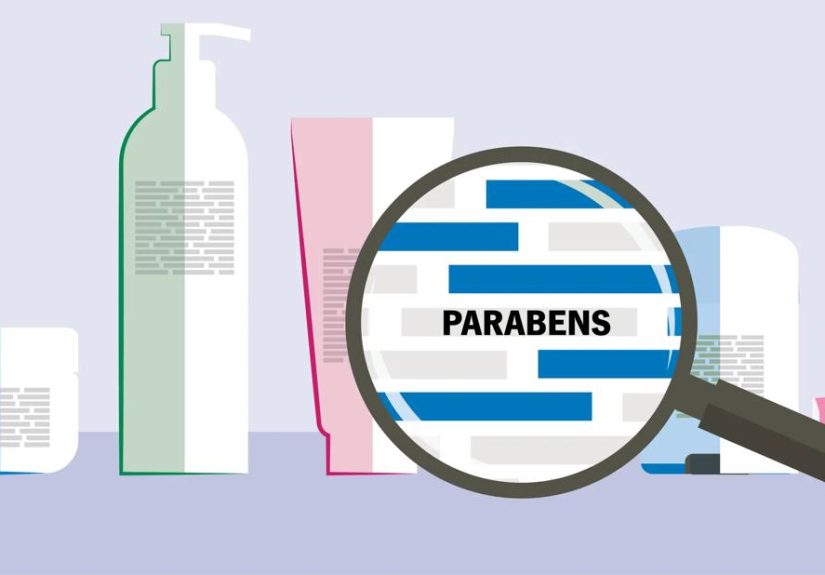
Reading labels helps, but it can feel like you are decoding an alien grocery list. The shortcut is to look for ingredients ending in -paraben. The most common ones are:
- Methylparaben
- Propylparaben
- Butylparaben
- Ethylparaben
- Isobutylparaben
- Isopropylparaben
If you want to reduce exposure without overhauling your life, start with products that stay on your skin for hours, such as lotions, face creams, foundation, deodorant, or leave-in hair products. That is usually a more realistic strategy than trying to audit every single item in your bathroom like you are conducting a federal raid on your shower shelf.
How to Reduce Exposure Without Becoming Exhausted
If you want a lower-paraben routine, keep it practical:
Choose fewer products overall
A shorter routine can reduce exposure to many ingredients, not just parabens. This also saves money and counter space, which is the kind of wellness tip your wallet can get behind.
Prioritize leave-on products
If you are making swaps, start with products that remain on the skin rather than rinse off quickly.
Read ingredient lists, not just front-label claims
“Natural,” “clean,” and “green” are marketing words, not guarantees of safety, gentleness, or evidence-based superiority.
Be careful with DIY or poorly preserved products
A product without effective preservatives is not automatically better. It may spoil faster or become contaminated, especially if it contains water or is used with fingers over and over again.
Don’t ignore fragrance and other irritants
Some people focus so hard on avoiding parabens that they accidentally buy products loaded with fragrance, essential oils, or other ingredients their skin hates with passion. Ingredient awareness should be broad, not one-note.
Paraben-Free Does Not Automatically Mean Problem-Free
This is one of the most important points in the whole conversation. “Free from” marketing can make shoppers feel as if removing one ingredient automatically creates a healthier product. But formulas are trade-offs. If parabens are removed, something else usually takes on the job of preservation. That replacement may be fine, or it may be more irritating, less effective, or simply more expensive.
Also, U.S. cosmetics are not generally preapproved by the FDA before hitting the market, aside from certain color additives. Manufacturers are responsible for ensuring safety. That makes label literacy useful, but it also means the best strategy is often to choose products from reputable brands, pay attention to how your skin responds, and avoid assuming that trendy claims are the same thing as superior science.
So, Are Parabens Safe?
The most accurate answer is that typical use in cosmetics has not been proven harmful, but the ingredient class remains under scientific scrutiny because of possible endocrine effects and the reality of repeated exposure. If that feels unsatisfying, welcome to modern health science, where the truth is often “we know some things, we are still studying other things, and shouting rarely improves the data.”
For most people, parabens are not a reason to panic. For some people, especially those who prefer to take a precautionary approach, reducing exposure is a reasonable personal choice. The key is to avoid two extremes: blind fear and blind dismissal. A balanced approach wins here.
Everyday Experiences Related to Parabens
When people start paying attention to parabens, the first experience is usually not a dramatic health revelation. It is label confusion. Someone picks up a lotion, flips it over, spots a long ingredient list, and suddenly feels like they need a chemistry degree and a flashlight. That moment is incredibly common. The ingredient names sound intimidating, and once you notice them, you start seeing them everywhere.
Another common experience happens when a person decides to switch to only paraben-free products and expects their skin to immediately send a thank-you card. Sometimes that happens. Sometimes it absolutely does not. A lot of people discover that their real trigger was fragrance, essential oils, or a harsh cleanser, not parabens. They remove one ingredient, keep five other irritating ones, and then wonder why their face still feels personally offended. That experience often teaches a valuable lesson: skin care is about the whole formula, not one villain on a label.
Some makeup users have the opposite experience. They try “preservative-light” or trendy products and notice they separate faster, smell odd sooner, or just do not inspire trust around the eyes. That can make people appreciate why preservatives exist in the first place. Nobody wants mascara with a mysterious second life form developing in the tube. In real life, the conversation about parabens is often a balancing act between chemical caution and microbial caution.
Parents and pregnant shoppers often describe a different kind of experience: not panic, exactly, but a desire to simplify. They may not believe every scary headline, yet they still prefer to reduce unnecessary exposure where it is easy to do so. That can look like using fewer scented products, choosing a basic moisturizer, skipping optional sprays, and focusing on what feels practical rather than perfect. For many people, that approach is mentally healthier than trying to build a completely “clean” home from scratch.
Budget is part of the story too. Some shoppers quickly realize that paraben-free options can cost more, and that creates frustration. The experience then becomes less about chemistry and more about access. Not everyone can or wants to pay a premium for every body wash, shampoo, and lotion. Many people eventually land on a middle path: they swap a few items they use most often and stop there.
There is also the experience of “ingredient fatigue.” After worrying about parabens, people hear about phthalates, formaldehyde releasers, fragrance allergens, PFAS, sulfates, silicones, and enough other terms to make the average shower feel like a graduate seminar. At that point, many people sensibly step back and ask a better question: what changes are actually meaningful and sustainable for me? That question is usually more helpful than chasing ingredient perfection.
In the end, the most relatable experience may be this: people want products that are effective, affordable, gentle, and not secretly sketchy. That is a very reasonable wish. Parabens sit right in the middle of that tension. They are useful, questioned, researched, and often misunderstood. For many consumers, learning about them does not lead to fear. It leads to smarter shopping, fewer assumptions, and a little more patience with the fact that good decisions are usually made in shades of gray, not black-and-white slogans.
Conclusion
What you should know about parabens is that they are neither innocent angels nor confirmed cinematic villains. They are preservatives that serve a real purpose, especially in preventing contamination in personal care products. Research has raised legitimate questions about hormone-related effects and long-term exposure, but major U.S. health sources do not say that everyday use in cosmetics has been proven harmful. If you want to reduce exposure, that is a reasonable choice. If you use products with parabens and focus on overall skin health, that is also a reasonable choice. The smartest move is not panic. It is informed moderation.