Table of Contents >> Show >> Hide
- Who Is Alexandra Chertulova, Also Known As Rayda Ealvay?
- Why Her Surreal Self-Portraits Captured the Internet
- The Surrealism Behind the Style
- Self-Portraiture as More Than a Pretty Picture
- How These Surreal Compositions Are Likely Created
- Common Themes in Chertulova’s Work
- Why Young Digital Artists Matter
- What Artists Can Learn From These Surreal Self-Portraits
- The Role of Social Media in Surreal Photography
- Why the Work Feels So Human
- Additional Experiences and Reflections on Surreal Self-Portrait Art
- Conclusion
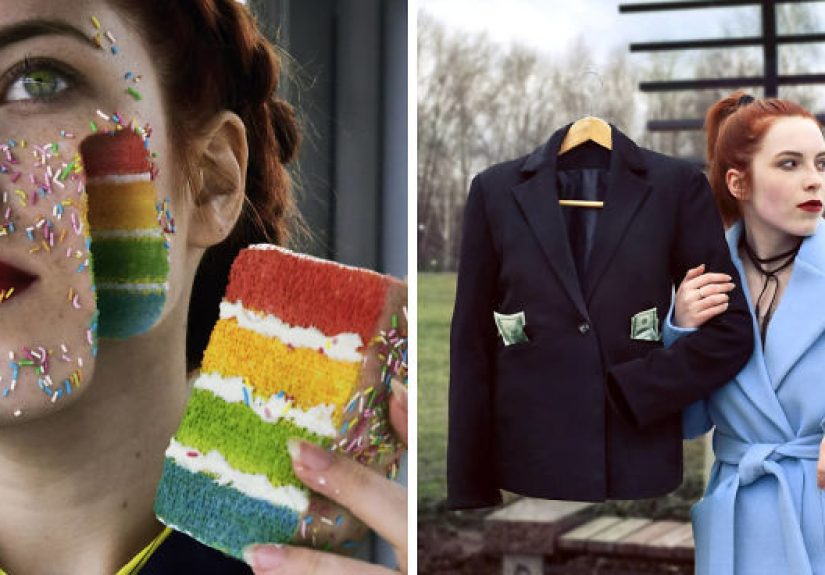
Some artists paint with brushes. Some sculpt with clay. And some, like Alexandra Chertulova, take a camera, a computer, a handful of impossible ideas, and casually turn reality into a dream that looks as if it forgot to wake up. Known online by the artist name Rayda Ealvay, Chertulova gained attention as a young self-taught photographer, retoucher, and digital artist from Perm, Russia, creating surreal self-portraits that feel emotional, mysterious, and just strange enough to make viewers stare for a few extra seconds.
The title “19-Year-Old Artist Takes Self Portraits To Create These Surreal Compositions” captures exactly why her work spread across art blogs and social media: it is personal, imaginative, and technically polished. Instead of simply photographing herself in pretty light, Chertulova transforms her face and body into visual metaphors. A cracked portrait may reveal a forest beneath the skin. A mirror may replace a face. A giant octopus tentacle may appear beside an ordinary cup of tea, because apparently regular tea time was not dramatic enough.
Her art belongs to the world of surreal photography, digital photomanipulation, and conceptual self-portraiture. But the real magic is not just Photoshop. It is the way she uses herself as both subject and symbol, turning inner thoughts into images that look like scenes from a beautifully haunted dream.
Who Is Alexandra Chertulova, Also Known As Rayda Ealvay?
Alexandra Chertulova is a self-taught visual artist best known for surreal self-portraits created through photography and digital editing. When her work first gained wide online attention, she was described as a 19-year-old artist from Perm, Russia, who used Photoshop to create dreamlike photo manipulations. Later profiles noted that she was born in 1999 in the Perm region and developed her fantasy-driven style without a formal specialized art degree.
That self-taught background matters. In the digital age, many young artists no longer need a traditional studio, gallery representation, or a dusty professor saying, “Interesting, but what does the chair symbolize?” They need curiosity, persistence, a camera, editing software, and enough patience to fix the same mask layer 47 times without yelling into a pillow.
Chertulova’s images often combine three elements: her own portrait, a surreal concept, and a carefully constructed atmosphere. She does not merely decorate photos with fantasy objects. She builds little visual worlds where identity, nature, emotion, and imagination collide.
Why Her Surreal Self-Portraits Captured the Internet
Online audiences are used to selfies. We have seen mirror selfies, car selfies, gym selfies, and the legendary “I accidentally looked perfect in this candid photo” selfie. Chertulova’s work feels different because it treats the self-portrait as a story rather than a status update.
In her compositions, the face becomes a landscape. The body becomes a portal. Hair, skin, mirrors, leaves, birds, smoke, water, insects, and urban scenery become emotional props. Her images ask viewers to pause and interpret them. Is the subject disappearing into nature? Is she protecting a hidden world inside herself? Is the mirror showing reflection, absence, or broken identity? The fun is that the answer is rarely spoon-fed.
This is one reason surreal self-portrait photography works so well online. A strong surreal image can be understood instantly at the visual level, yet still remain mysterious at the emotional level. People share it because it looks beautiful; they remember it because it feels personal.
The Surrealism Behind the Style
Surrealism has always been interested in dreams, symbols, contradictions, and the strange theater of the unconscious mind. In early surrealist photography, artists experimented with double exposure, montage, solarization, distortion, and unexpected combinations to blur the line between dream and reality. Digital artists like Chertulova inherit that spirit, but with modern tools that make the impossible more flexible.
Instead of darkroom tricks alone, today’s surreal photographers can blend dozens of images, adjust shadows, match colors, reshape bodies, erase backgrounds, and add symbolic details pixel by pixel. The technology has changed, but the artistic question is similar: How can an image show what reality cannot?
Chertulova’s self-portraits fit this tradition because they do not simply aim to shock. They create visual metaphors. A face opening into a forest may suggest inner life, memory, or emotional growth. A shattered mirror may suggest identity under pressure. A body interacting with oversized natural or fantastical elements may suggest the feeling of being small inside a huge, unpredictable world. That is the good kind of weirdthe kind with meaning hiding behind the smoke machine.
Self-Portraiture as More Than a Pretty Picture
Self-portraiture has a long history in art, from painted masters to contemporary photographers. In modern photography, using oneself as a model can be practical, but it can also become a powerful creative strategy. Artists such as Cindy Sherman famously used their own bodies to explore identity, performance, stereotypes, and visual culture. Chertulova’s work is different in tone and context, but it shares an important idea: the artist’s body can become a flexible tool for storytelling.
For young artists, self-portraiture is especially useful because it removes several barriers. You do not need to hire a model. You do not need to explain a bizarre concept to someone else and hope they do not slowly back out of the room. You can experiment alone, fail privately, and try again until the image matches the idea in your head.
In Chertulova’s case, the self-portrait becomes a stage for exploring personality, emotions, dreams, and fantasy. The “self” in these images is not always literal. Sometimes it is a character. Sometimes it is a mood. Sometimes it is a symbol wearing a human face.
How These Surreal Compositions Are Likely Created
While every artist has a personal process, surreal digital self-portraits usually follow a layered workflow. The final image may look effortless, but behind the scenes it often involves planning, shooting, cutting, masking, blending, color grading, and questioning every life choice at 2 a.m.
1. Starting With a Concept
A surreal portrait usually begins with an idea rather than a pose. The artist might imagine a girl whose face contains a forest, a person sitting calmly beside a giant tentacle, or a figure dissolving into birds. The best concepts are simple enough to read quickly but rich enough to invite interpretation.
2. Shooting the Base Self-Portrait
The artist then photographs herself with the right expression, lighting, and body position. This step is crucial because even the wildest edit needs a believable foundation. If the portrait lighting does not match the added elements, the whole image can look like a digital sticker party, and nobody invited realism.
3. Gathering Visual Elements
Surreal compositions often require additional photos: textures, landscapes, animals, mirrors, smoke, leaves, glass, water, or architectural details. These elements must work together in perspective and lighting. A forest hidden inside a face, for example, needs shadows and edges that feel physically connected to the skin.
4. Compositing in Photoshop
This is where the image becomes impossible in the best way. Through masks, layers, blending modes, shadow painting, color correction, and careful retouching, separate images are merged into one scene. Good photomanipulation follows the rules of light, perspective, and texture even when the subject is completely unreal.
5. Color Grading and Atmosphere
Chertulova’s work often has a soft, cinematic, slightly melancholic mood. Color grading helps unify all the pieces. Cool tones can make an image feel mysterious. Muted colors can make fantasy feel believable. A touch of contrast can guide the viewer’s eye toward the emotional center of the portrait.
Common Themes in Chertulova’s Work
One of the strongest qualities of Chertulova’s surreal self-portraits is that they are not random collections of odd objects. They tend to return to several emotional and visual themes.
Identity and Transformation
Many images suggest that identity is layered, fragile, or constantly changing. Faces crack, multiply, reflect, or open into hidden spaces. This makes the portrait feel less like a fixed record of appearance and more like a map of inner experience.
Nature Inside the Human Body
Forests, birds, leaves, water, and animals often appear as extensions of the self. This connection between body and nature creates a poetic effect. It suggests that the inner world is alive, wild, and not always easy to control.
Dream Logic
In dreams, strange things feel completely normal. A tentacle offering tea? Sure. A face becoming a landscape? Naturally. Chertulova’s images use this dream logic beautifully. The scenes are impossible, but the emotions feel recognizable.
Quiet Mystery
Unlike loud fantasy art packed with explosions, dragons, and heroic poses, many of Chertulova’s portraits are quiet. The subject often looks calm, distant, or thoughtful. That restraint makes the surreal elements more powerful because they feel like secrets rather than special effects.
Why Young Digital Artists Matter
Chertulova’s rise also reflects a bigger shift in contemporary art. Digital platforms have made it easier for young artists to build audiences without waiting for permission from traditional institutions. Instagram, online art magazines, and visual culture websites can turn a teenager with a camera into an internationally recognized creative voice.
Of course, internet attention is not the same as artistic depth. Viral images can disappear faster than a phone battery at 3 percent. But when the work has a clear voice, emotional consistency, and technical skill, online visibility can become more than a brief trend. It can become a portfolio, a community, and a career path.
Chertulova’s work stands out because it shows both imagination and craft. The concepts are memorable, but the execution gives them staying power. A surreal idea only works if the viewer believes in it for at least one second. Her best images earn that belief.
What Artists Can Learn From These Surreal Self-Portraits
For photographers, designers, and digital artists, Chertulova’s work offers several useful lessons.
Make the Personal Universal
Self-portraits can feel private, but strong visual symbols make them accessible. A cracked face, a hidden forest, or a mirror replacing identity can speak to viewers who know nothing about the artist’s personal life.
Use Photoshop as a Language, Not a Shortcut
Digital editing is not magic glitter sprinkled on a weak idea. In serious photomanipulation, editing is the language of the artwork. Layers, masks, shadows, and textures become the grammar of the image.
Keep the Emotion Clear
A surreal image can include many strange elements, but it still needs emotional focus. Viewers should feel something before they start analyzing the details. Wonder, loneliness, curiosity, fear, calm, nostalgiaone strong emotional signal is better than twenty random effects fighting for attention.
Let Mystery Breathe
Not every symbol needs an explanation. In fact, explaining surreal art too aggressively is like explaining a joke at a party: technically possible, socially risky. Chertulova’s work leaves enough space for viewers to bring their own meanings.
The Role of Social Media in Surreal Photography
Surreal self-portrait photography is almost perfectly built for social media. It is visual, immediate, and emotionally suggestive. A viewer can understand the impact in a second, then zoom in to study the details. This makes the format highly shareable.
However, social media also creates pressure. Artists may feel pushed to produce constantly, repeat successful formulas, or make every image more dramatic than the last. The challenge is to grow without turning imagination into an assembly line. Chertulova’s continuing appeal comes from the sense that her images are rooted in personal fantasy, not just algorithm-friendly spectacle.
Why the Work Feels So Human
The irony of digital surreal art is that the more impossible it becomes, the more human it can feel. A realistic portrait shows what someone looks like. A surreal portrait can suggest what someone feels like. That is why Chertulova’s images resonate. They turn anxiety, curiosity, imagination, vulnerability, and wonder into visible scenes.
Her work reminds us that people are not simple. Everyone carries private landscapes. Everyone has thoughts that do not fit neatly into ordinary language. Sometimes the best way to explain a feeling is not to describe it, but to show a girl with a forest under her skin or a mirror where her face should be.
Additional Experiences and Reflections on Surreal Self-Portrait Art
Looking at surreal self-portraits like Chertulova’s can change the way we think about creativity. Many beginners assume they need expensive equipment, perfect locations, or a professional team before they can make meaningful art. But this genre proves that a powerful idea can begin in a bedroom, a backyard, a city street, or a quiet corner with decent light and a tripod that only wobbles a little.
One practical experience many self-portrait artists share is the awkwardness of being both photographer and model. You set the timer, run into position, try to look mysterious, miss the focus, and repeat the process until your camera roll looks like a documentary about confusion. Yet this awkward process can become liberating. When you are alone, you can experiment with strange gestures, unusual expressions, and dramatic concepts without worrying about another person judging the rough drafts.
Another important experience is learning to think in layers. In ordinary photography, the artist often captures what is already there. In surreal compositing, the artist must imagine what could be there. A blank wall might become a portal. A simple portrait might become the base for a cracked porcelain face. A cloudy sky might become a texture inside someone’s chest. This habit trains the creative mind to see ordinary objects as raw material for symbolic storytelling.
Surreal self-portraiture also teaches patience. A finished image may look clean and effortless, but the process can involve hours of tiny decisions. Should the shadow be softer? Is the bird too large? Does the forest edge look natural? Is the color too green, too blue, or too “accidental swamp creature”? These details matter because viewers may not consciously notice perfect blending, but they will feel when something is off.
For young artists, the biggest lesson is that style develops through repetition. Chertulova’s work feels recognizable because she returns to certain moods, symbols, and visual rhythms. She does not need to write her name across every image; the atmosphere speaks for her. That is what many artists hope for: a visual voice strong enough that people recognize the work before reading the caption.
Finally, surreal self-portrait art offers emotional freedom. It gives artists permission to represent confusion, growth, fear, imagination, and identity without being literal. You do not have to say, “I feel divided between two versions of myself.” You can create a portrait where the face fractures into multiple reflections. You do not have to say, “I feel connected to nature.” You can reveal moss, trees, and birds beneath the skin. In that sense, surreal photography becomes a private diary written in symbols, colors, and impossible scenes.
That is why the story of a 19-year-old artist creating surreal compositions from self-portraits remains compelling. It is not just about technical editing. It is about turning the self into a world and inviting viewers to step inside.
Conclusion
Alexandra Chertulova, also known as Rayda Ealvay, shows how powerful self-portrait photography can become when imagination leads the process. Her surreal compositions combine personal emotion, digital craftsmanship, and dreamlike symbolism to create images that feel both strange and sincere. At only 19, she captured attention not because she followed the standard selfie formula, but because she broke it open and filled it with forests, mirrors, mysteries, and impossible stories.
Her work is a reminder that great digital art is not about software alone. Photoshop can blend the pieces, but the artist must supply the vision. Chertulova’s portraits succeed because they transform personal identity into visual poetry. They are beautiful, unsettling, and memorableexactly the kind of art that makes the internet stop scrolling for a moment and say, “Wait, I need to look at that again.”
Note: This article is based on publicly available information about Alexandra Chertulova/Rayda Ealvay, surreal photography, self-portraiture, and digital photomanipulation practices. It is written as original editorial content for web publication.