Table of Contents >> Show >> Hide
- Why This Type of Viral Content Works So Well
- The Gendered Shortcut Hiding Inside the Joke
- What These “41 Women” Headlines Usually Contain
- Why Audiences Keep Coming Back for More
- The Problem With Treating Humiliation Like Entertainment
- So What Should Readers Take From a Headline Like This?
- Conclusion: The Real Delusion Might Be Ours
- Reader Experience: What It Actually Feels Like to Live Inside This Kind of Internet
- SEO Tags
That headline is pure internet catnip. It promises screenshots, chaos, side-eyes, and a front-row seat to somebody else’s mess. It also reveals something bigger than the mess itself: the web’s long-running obsession with turning women into caricatures and then packaging that caricature as entertainment.
On the surface, list-style call-out content looks harmless. It is framed as comedy, gossip, or “just the internet being the internet.” But underneath the memes and snark is a familiar formula: grab a moment of conflict, strip away context, crank up the humiliation, and invite a crowd to become judge, jury, and comment section gremlin. In that environment, “crazy” becomes a shortcut label, “delusional” becomes a content hook, and a real person becomes a thumbnail.
This article is not here to defend bad behavior. Plenty of people, online and offline, act selfish, rude, manipulative, entitled, or wildly out of pocket. The problem is that viral internet culture rarely stops at behavior. It turns behavior into identity. And when the target is a woman, the framing often picks the oldest, laziest script in the book: she is dramatic, unstable, impossible, attention-starved, or not living on the same planet as the rest of civilization.
That script performs well because it is easy to understand, easy to mock, and easy to share. It lets readers feel smart without having to think very hard. And that, in the digital attention economy, is basically premium fuel.
Why This Type of Viral Content Works So Well
The internet loves extremes. Not nuance. Not patience. Not “maybe there is more to this story.” Extremes get the clicks. Extremes get the comments. Extremes get the all-important “I cannot believe this person is real” reaction. A headline like this one works because it combines three things audiences are trained to engage with: conflict, identity, and shame.
1. Conflict is the oldest clickbait in the book
A post about two people having a calm disagreement is not going anywhere. A post about a public meltdown in a restaurant, a bizarre DM exchange, a wedding guestzilla moment, or a luxury-level entitlement spiral? That thing is boarding a rocket. Conflict gives readers a built-in plot. There is a villain, a victim, and a comment section full of amateur detectives who are somehow all suddenly licensed therapists.
2. Shame is social media’s favorite seasoning
Online call-outs feel good in the moment because they offer instant moral clarity. Readers get to say, “I would never do that,” and enjoy a tiny burst of superiority. The platform gets engagement. The audience gets entertainment. The target gets flattened into a lesson, a meme, or a cautionary tale. Everybody wins except the person whose face, text messages, or worst moment became a shareable product.
3. Labels travel faster than context
Calling someone “unreasonable” requires explanation. Calling someone “crazy” requires almost none. That is why these labels survive online. They are short, dramatic, emotionally loaded, and culturally familiar. They save time. They also destroy precision.
And once a label lands, context is basically escorted out of the building. Maybe the person in the viral clip was rude. Maybe she was exhausted. Maybe the screenshot was cropped. Maybe the story was edited for maximum outrage. Too late. The algorithm heard “delusional” and said, “Now we’re cooking.”
The Gendered Shortcut Hiding Inside the Joke
Let’s be honest: the internet does not distribute ridicule evenly. Men can go viral for bad behavior, sure. But women are often framed through a particularly stale vocabulary. They are “crazy exes,” “bridezillas,” “pick-me girls,” “divas,” “gold diggers,” “attention seekers,” “Karens,” or “mean girls.” Some of those labels describe real patterns of behavior. But online, they often become lazy containers that erase individuality and reward stereotyping.
That is part of why headlines like this spread so quickly. They are not just selling chaos. They are selling a familiar social script. Readers already know the character type before they click. The internet is not asking, “What happened here?” It is asking, “Would you like another episode of Woman Behaving Badly: The Extended Universe?”
That framing matters because it shapes how audiences respond. A rude act becomes evidence of a whole personality. A selfish decision becomes proof of pathology. A cringey public moment becomes a referendum on womanhood, relationships, status, beauty, or class. Suddenly, one clip is carrying the weight of ten cultural anxieties and wearing false eyelashes while it does it.
What These “41 Women” Headlines Usually Contain
Even when these roundups pretend to show 41 different stories, they often recycle the same handful of situations. The outfits change. The captions change. The platform changes. The structure stays the same.
The wedding meltdown
Nobody feeds the internet like wedding drama. Brides demanding impossible dress codes, guests making the day about themselves, family members arguing over budgets, gifts, seating charts, or who gets center stage in the photos. The wedding story works because it mixes emotion, money, tradition, ego, and an audience that already believes weddings can turn normal people into event-planning dragons.
The dating app disaster
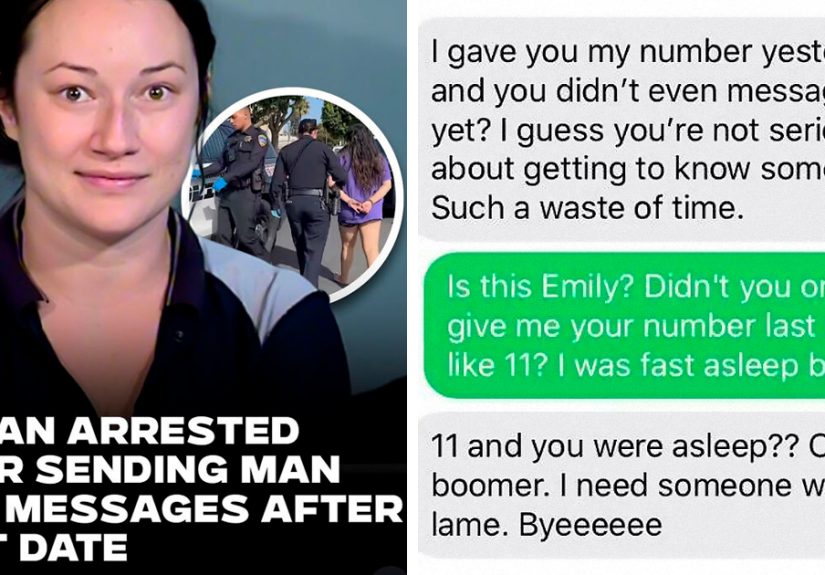
These posts usually involve impossible standards, absurd bio lists, manipulative texting, jealous spirals, or expectations so unrealistic they deserve their own zip code. The internet eats this up because modern dating is already a shared stress dream. One outrageous exchange lets everyone project their own bad dates onto the screen and join the mob with a flashlight and a grudge.
The influencer entitlement episode
There is a special category of viral outrage reserved for public figures or micro-creators who appear disconnected from reality. Free-stuff demands, tone-deaf apology videos, sponsored sympathy, performative vulnerability, or rich-person complaints served over a backdrop of excellent lighting. These moments travel fast because they look like proof that social media has finally boiled somebody’s brain to al dente.
The public confrontation clip
Parking lots. Airplanes. Grocery stores. Gyms. Coffee counters. These are the natural habitats of the smartphone camera. A tense argument becomes a viral morality play in seconds, even when nobody knows how it started. Viewers fill in the blanks, assign motives, and decide who is “crazy” based on 28 seconds of video and one caption written by a stranger with Wi-Fi.
The friend-group implosion
Text screenshots have turned private conflict into spectator sport. Someone overreacts. Someone lies. Someone manipulates. Someone sends a message that sounds like it was written by a soap opera villain who just discovered voice notes. Audiences love these because they feel intimate, and intimacy online is currency.
Why Audiences Keep Coming Back for More
At this point, we should probably admit a slightly embarrassing truth: people do not just watch this stuff because they disapprove of it. They watch because it is fun. Or at least fun-adjacent. It offers the thrill of gossip without the inconvenience of knowing the people involved. It creates a temporary community of shared judgment. It lets strangers perform outrage together, which is one of the internet’s most common team sports.
There is also a psychological reward. Mocking “delusional” behavior creates distance. It reassures viewers that they are normal, rational, grounded, and definitely not one weird Tuesday away from posting something equally humiliating. In other words, call-out content is often less about the target and more about the audience’s need to feel safely above the chaos.
That is why the comments under these posts are so repetitive. “Main character syndrome.” “She needs therapy.” “Imagine acting like this in public.” “I’m embarrassed for her.” Different usernames, same emotional choreography. The crowd is not processing. The crowd is performing.
The Problem With Treating Humiliation Like Entertainment
Now for the part where the confetti cannon stops. Viral humiliation has consequences. Public shaming online can spread far beyond the original post, drawing in people who have no idea what happened but are eager to join the pile-on anyway. Once a clip or screenshot takes off, the target can lose control of the story completely.
Maybe the behavior deserved criticism. Criticism is not the issue. The issue is scale. Online outrage does not do “proportion.” It does megaphones, screenshots, remix videos, quote-posts, reaction threads, and weirdly intense strangers announcing that they have solved the human soul from one bad clip taken next to a frozen food aisle.
That kind of attention can become its own form of punishment. It invites harassment, identity-based insults, speculation about mental health, and sometimes doxxing or threats. Even people who clearly behaved badly can end up receiving a wave of abuse that has little to do with accountability and everything to do with spectacle.
And because women are often judged through appearance, age, tone, class markers, and perceived likability, the shaming tends to expand. Suddenly the discussion is not just about what she did. It is about her face, her body, her voice, her parenting, her relationship, her clothes, and whether she “looks like the type.” That is not accountability. That is public disassembly.
So What Should Readers Take From a Headline Like This?
The smart response is not to pretend bad behavior does not exist. It clearly does. The smarter response is to notice how the packaging works. A headline about “41 women” doing allegedly “crazy” things is not simply documenting reality. It is building a machine for attention. It invites readers to treat women as a category, shame as a game, and context as optional.
That is why these articles and threads keep coming back. They are cheap to understand, easy to circulate, and perfectly built for outrage-driven feeds. They flatter the audience. They simplify the world. They offer the illusion that chaos belongs to other people.
But the truth is messier. Sometimes the viral villain really was rude, manipulative, entitled, or astonishingly self-centered. Sometimes she was misrepresented. Sometimes the clip was incomplete. Sometimes the comments became crueler than the original offense. The internet does not care which version is true as much as it cares whether the post keeps moving.
Conclusion: The Real Delusion Might Be Ours
Maybe the strangest thing about content like this is how normal it now feels. We have gotten used to watching strangers get dragged for entertainment. We have accepted a world where a woman can become a meme, a warning, a punchline, and a personality diagnosis before lunch. Then we scroll on like none of that is strange.
So yes, headlines about women being “called out online” will continue to perform well. They are built for the internet we made: fast, emotional, tribal, and constantly hungry for a villain. But readers should not confuse performance with truth. A viral post may reveal bad behavior. It may also reveal our appetite for humiliation, our comfort with stereotypes, and our willingness to turn a human being into content because the caption was spicy enough.
And that may be the most delusional behavior in the room.
Reader Experience: What It Actually Feels Like to Live Inside This Kind of Internet
If you spend enough time online, you start to recognize the rhythm of a digital pile-on before you even finish reading the post. First comes the screenshot or the clip. Then comes the caption, usually written with the confidence of a prosecutor who definitely did not interview any witnesses. Then the comments arrive in waves: jokes, insults, armchair diagnoses, moral speeches, and a few people declaring that this stranger represents everything wrong with modern society. It is weirdly predictable, and that predictability is part of the problem.
For the average reader, the experience can feel oddly addictive. You tell yourself you are only looking for a second. Then you are twelve comments deep, watching complete strangers compete to produce the funniest or harshest take. There is a social pull to it. You laugh, you judge, you send it to a friend, and suddenly you are participating in the very thing you would probably criticize if it happened to someone you know. The internet makes that contradiction feel normal.
For women in particular, there is another layer to the experience. Even when you are not the target, you can feel the warning hidden inside the spectacle. Be too loud, and they will call you hysterical. Be too demanding, and they will call you entitled. Be emotional, and they will call you unstable. Be ambitious, and they will call you unbearable. Be messy in public for even one minute, and there is always a chance the crowd will decide your worst moment is now public property.
That is what makes this genre more than simple entertainment. It teaches people what kinds of behavior will be mocked, but it also teaches them which identities are easiest to flatten. A man having a meltdown may be “a jerk.” A woman having one is often framed as a whole type of woman. That difference lands. People notice it even when nobody says it out loud.
There is also the quieter side of the experience: the aftertaste. After reading too much call-out content, everything starts to feel meaner. You become more suspicious, more eager to assume the worst, more ready to treat a cropped screenshot like a complete biography. You begin to see people less as complicated humans and more as potential content. That shift is subtle, but it matters. It changes how we read, how we react, and how quickly we confuse mockery with insight.
And for anyone who has ever been publicly embarrassed online, even on a much smaller scale, these viral stories hit differently. You know how quickly misunderstanding can spread. You know how helpless it feels when strangers decide who you are based on one awkward exchange, one bad photo, one joke that landed badly, or one moment you wish had stayed private. That experience has a way of making these “funny” roundups look a lot less harmless.
So the next time a headline like this flashes across your feed, it is worth pausing for half a second longer than the algorithm would prefer. Ask what exactly is being sold. Ask why the language is so loaded. Ask why the crowd seems so eager. Sometimes the answer really is bad behavior. But sometimes the bigger story is that outrage has become entertainment, and humiliation has become one of the internet’s most reliable business models.