Table of Contents >> Show >> Hide
- Why Wholesome Illustrations Matter in a Tired News Cycle
- The Heart of “A Year Of Good News”
- How Handmade Texture Changes the Story
- 30 Illustrations, 30 Reasons to Keep Looking for Hope
- Why Positive News Is Not the Same as Ignoring Problems
- The Visual Language of Hope
- What Creators Can Learn From This Project
- How This Kind of Content Performs Online
- Why Recycled Materials Make the Message Stronger
- Personal Experiences: Living With a Year of Good News
- Conclusion
Sometimes the internet feels like a smoke alarm that never stops beeping. Open a news app before breakfast and you may find yourself emotionally exhausted before the coffee machine has even finished making heroic bubbling noises. That is why a project like “A Year Of Good News”: My 30 Wholesome And Uplifting Illustrations feels so refreshing. It is not an escape from reality. It is a reminder that reality also contains kindness, courage, rescue dogs, brave neighbors, creative problem-solvers, and tiny miracles wearing very comfortable sweaters.
This collection celebrates the simple idea that good news deserves just as much color, texture, and attention as bad news. Inspired by the growing popularity of constructive journalism, positive storytelling, and handmade visual art, these wholesome illustrations turn uplifting stories into something people can pause with. Instead of doom-scrolling, the viewer gets to slow-scroll: one good thing, one warm image, one little spark of faith in humanity at a time.
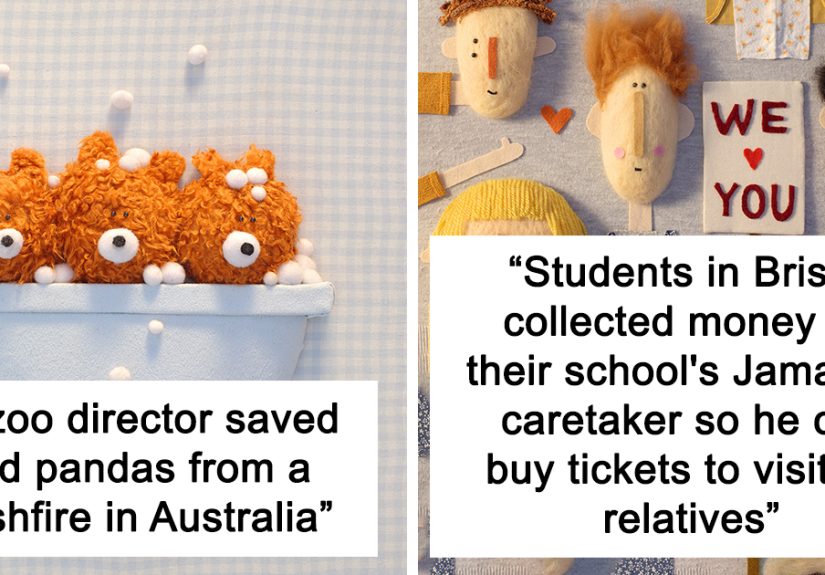
The original spirit behind A Year of Good News is especially charming because it connects two gentle forms of repair: repairing the mood of the viewer and reusing discarded materials. Public descriptions of Martin Smatana’s project explain that the good-news illustrations were made from old secondhand clothes and discarded textiles, transforming fabric that might have been thrown away into soft, tactile visual stories. That detail matters. The medium itself becomes part of the message: what looks worn out can still become wonderful.
Why Wholesome Illustrations Matter in a Tired News Cycle
Bad news is not new, but the speed of modern media makes it feel endless. Social platforms, push notifications, breaking-news banners, and group chats can make every crisis feel like it is sitting at the kitchen table asking for a snack. Psychologists have warned that media overload and constant exposure to distressing news can increase stress and leave people feeling overwhelmed. That does not mean people should ignore serious issues. It means readers need a healthier media diet, one that includes both awareness and emotional oxygen.
That is where uplifting illustrations can do something special. A written good-news headline may brighten your day for a few seconds, but an illustration gives the story a second life. It invites you to look closely. A rescued animal, a community garden, a child receiving help, a stranger showing generosity, or a scientist solving a real-world problem becomes easier to remember when it has a face, a shape, and a little visual tenderness.
In this sense, wholesome art is not “soft” because it is simple. It is soft because it knows people are carrying heavy things. The softness is the point.
The Heart of “A Year Of Good News”
At the center of this project is a beautiful creative rule: take one piece of good news and turn it into an illustration. That sounds easy until you realize good news often hides in plain sight. It may not shout. It may not trend. It may not arrive wearing a dramatic cape, although honestly, it would be nice if kindness came with better branding.
The 30 wholesome and uplifting illustrations can be understood as a curated emotional calendar. Each image works like a postcard from a better version of the week. Some stories may focus on animals being rescued, forests being restored, communities helping vulnerable people, medical breakthroughs, environmental wins, or ordinary citizens doing something quietly extraordinary. Together, they create a rhythm: not every day is good, but good things happen every day.
How Handmade Texture Changes the Story
One of the most powerful elements of textile illustration is texture. Digital art can be stunning, but fabric carries memory. A piece of blue cloth might once have been a shirt. A strip of yellow fabric might have been part of a curtain. A tiny button might have lived on a jacket that survived several winters and one suspicious soup stain. When these pieces are arranged into a new scene, the artwork feels personal before the viewer even knows the full story.
That handmade quality supports the emotional tone of good-news storytelling. The viewer can almost feel the patience behind each composition. Cutting, layering, stitching, folding, lighting, and photographing fabric are slow acts. In a fast media environment, slowness becomes meaningful. It says: this good thing is worth your time.
30 Illustrations, 30 Reasons to Keep Looking for Hope
A collection of 30 uplifting illustrations does not need to pretend the world is perfect. In fact, its power comes from admitting the opposite. Good news is meaningful because life is often complicated. A rescued animal matters because abandonment exists. A community food project matters because hunger exists. A medical breakthrough matters because illness exists. A climate restoration story matters because damage exists.
Here are the kinds of themes that make a project like this so emotionally effective:
1. Small Acts With Big Echoes
Some of the most moving positive stories are not huge global events. They are small acts that ripple outward: a neighbor repairing bicycles for children, a teacher creating a safe classroom, a group of volunteers cleaning a beach, or a stranger returning a lost wallet with the cash still inside. These stories remind readers that goodness is not always dramatic. Sometimes it is practical, local, and wearing comfortable shoes.
2. Animals Getting a Second Chance
Animal rescue stories are practically emotional cheat codes, but they work because they reveal compassion in action. Whether the story involves shelter pets finding homes, wildlife being rehabilitated, or communities protecting endangered species, these illustrations can capture the relationship between human responsibility and animal trust.
3. Environmental Wins That Feel Possible
Environmental news often arrives with understandable urgency, but positive environmental stories are important too. Reforestation, cleaner rivers, renewable energy progress, wildlife corridors, and plastic-reduction efforts show that repair is not just a fantasy. When illustrated with recycled textiles, these themes become even stronger because the artwork itself practices the values it celebrates.
4. Community Kindness
Good news becomes especially powerful when it shows people helping people. A food pantry, a neighborhood fundraiser, a free library, a school donation drive, or a group supporting older residents can be visually simple but emotionally rich. These stories say: we are not as alone as the comment section sometimes suggests.
5. Science, Health, and Human Ingenuity
Uplifting illustrations can also make complex progress easier to understand. A medical innovation, accessibility improvement, conservation tool, or educational breakthrough becomes more relatable when translated into visual storytelling. Illustration can turn abstract progress into something human-sized.
Why Positive News Is Not the Same as Ignoring Problems
One common misunderstanding about good-news projects is the idea that they are naïve. But positive storytelling and constructive journalism are not about pretending problems do not exist. They are about asking a better second question. After “What went wrong?” comes “Who is trying to fix it?” After “What is broken?” comes “What is being repaired?”
This difference is important for readers and publishers. A steady diet of crisis-only content can leave people feeling powerless. Constructive stories can restore a sense of agency by showing responses, solutions, and human effort. That does not make the news less serious. It may actually make readers more willing to stay engaged because the story offers a path forward instead of a locked door.
For SEO and web publishing, this also matters. Readers increasingly search for content that feels useful, hopeful, and emotionally balanced. Topics such as “uplifting illustrations,” “wholesome art,” “good news stories,” “positive news,” and “feel-good content” attract audiences who want inspiration without empty sweetness. The best version of this content is warm, specific, and grounded in real human experience.
The Visual Language of Hope
Hope has a visual language. It often uses rounded shapes, warm colors, open space, gentle contrast, and clear emotional cues. In textile art, hope may look like a patch of green fabric becoming a hill, a soft blue scrap becoming the sky, or a tiny figure made from patterned cloth standing bravely in the middle of a big scene.
Wholesome illustrations work best when they avoid becoming too polished. A little imperfection makes them feel alive. Slightly uneven edges, visible seams, and layered textures remind the viewer that a human hand made the image. In a digital world full of glossy perfection, handmade art has the confidence to say, “Yes, I have edges. So do you. We are both doing fine.”
What Creators Can Learn From This Project
Artists, bloggers, teachers, and social media creators can take several lessons from A Year Of Good News. First, consistency creates meaning. One illustration is charming; 30 illustrations become a body of work. Second, constraints can make creativity stronger. Choosing one good-news story, one visual style, and one sustainable material approach gives the project a memorable identity. Third, emotional clarity matters. The viewer should understand not only what happened, but why it feels good.
For creators who want to make similar content, the best starting point is not perfection. It is attention. Look for stories of repair, generosity, resilience, and progress. Then ask: what is the simplest image that captures the heart of this story? A hand reaching out? A rescued bird? A tree being planted? A child reading? A doctor smiling behind a mask? A dog looking dramatically noble for absolutely no reason? Excellent. Put that dog in the composition immediately.
How This Kind of Content Performs Online
Wholesome visual storytelling is naturally shareable because it gives people a reason to send something kind. A reader may not forward a 4,000-word policy analysis to a friend before lunch, but they might share a bright illustration about a community garden, an animal rescue, or a happy scientific discovery. Positive images travel because they offer emotional value quickly.
That does not mean the content should be shallow. The best uplifting articles combine visual appeal with substance. They explain the story, highlight the human stakes, and give readers a reason to care. Search engines reward helpful, original content, and readers reward sincerity. The winning formula is not “be cute.” It is “be meaningful, clear, and memorablewith bonus points for tiny textile animals.”
Why Recycled Materials Make the Message Stronger
The use of recycled fabric adds a second layer of storytelling. Good news is often about transformation: a problem becomes a solution, a lost animal finds a home, an abandoned space becomes a garden, a difficult year becomes a lesson. Recycled textile art mirrors that transformation. Something discarded becomes something beautiful.
This is why the material choice feels more than decorative. It turns sustainability into a creative method. Instead of simply illustrating good news about the world, the artwork participates in a hopeful practice: reuse, reduce waste, and reimagine what already exists. That is a quiet but powerful message for readers who care about eco-friendly art, sustainable creativity, and handmade design.
Personal Experiences: Living With a Year of Good News
Spending time with a theme like “A Year Of Good News”: My 30 Wholesome And Uplifting Illustrations changes the way you notice the world. At first, good news may seem rare because negative stories are louder. But once you start looking for uplifting moments, they begin appearing everywhere. They are in the neighbor who waters someone else’s plants, the student who helps a classmate understand homework, the tired cashier who still smiles, and the friend who sends a message at the exact moment you need it.
Creating or collecting good-news illustrations can become a gentle daily practice. Imagine ending each week by choosing one positive story and turning it into a sketch, collage, painting, or short written reflection. The practice trains attention. Instead of asking, “What terrible thing happened today?” you also ask, “What good thing should not be forgotten?” That second question is surprisingly powerful.
There is also something comforting about making art with imperfect materials. Old fabric, scraps of paper, mismatched buttons, and leftover thread do not demand perfection. They invite play. A sleeve can become a mountain. A sock can become a cloud. A button can become the moon, which is wonderful because the moon has probably wanted to be a button for centuries. This kind of creativity lowers the pressure. You are not trying to make a museum masterpiece. You are trying to honor a moment of goodness.
For families, classrooms, and community groups, the idea can become a meaningful project. Children can search for good news in their school or neighborhood and illustrate it with recycled materials. A class bulletin board could become a “good news wall.” A library could host a monthly display of uplifting local stories. A workplace could invite employees to share small wins and turn them into visual notes. These activities are simple, but they help people practice noticing progress instead of only problems.
On a personal level, the biggest lesson is balance. Good news does not erase hard news. It does not fix every worry or solve every crisis. But it gives the mind a place to rest. It reminds us that people are not only capable of harm; they are capable of repair. They rescue, build, plant, teach, forgive, invent, protect, and try again. Sometimes they even do it while wearing a sweater made of fabric scraps, which frankly should be considered peak civilization.
After spending a year with good news, the world may not look perfect, but it can look more complete. The difficult stories are still there, yet they are no longer the only stories. A collection of 30 wholesome and uplifting illustrations becomes more than art. It becomes a habit of attention, a small archive of hope, and a reminder that the human story is still being stitched togetherone kind act, one rescued creature, one brave idea, and one soft piece of fabric at a time.
Conclusion
“A Year Of Good News”: My 30 Wholesome And Uplifting Illustrations is the kind of project the internet needs more often: thoughtful, warm, visually memorable, and rooted in real optimism. It shows that positive news can be serious without being heavy, sweet without being shallow, and artistic without losing its human message. By turning uplifting stories into handmade illustrations, the project encourages readers to slow down, pay attention, and remember that hope is not a mood. It is a practice.
In a media world that often rewards outrage, wholesome illustration offers a quieter kind of power. It does not shout over the noise. It gives people a reason to listen differently. And sometimes, that is enough to make the day feel a little more repairable.
Note: This original web article is written in standard American English, based on real publicly known themes around good-news illustration, constructive storytelling, recycled textile art, and wholesome visual content. It contains no unnecessary source-code references or citation placeholders.