Table of Contents >> Show >> Hide
- The 5 AM Wrong-Number Call That Started Everything
- How He Turned a Wrong Number Into Workplace Chaos
- Why the Internet Loved the Story
- The Bigger Issue: Managers Calling at Unreasonable Hours
- Why Unknown Calls Make People Defensive
- What the Man Did Rightand What Was Risky
- Lessons for Employees: Protect Your Time Without Burning the Bridge
- Lessons for Managers: Confirm Before You Confront
- Why Pay Transparency Became the Funniest Part
- The Role of Sleep: Why 5 AM Feels Personal
- What To Do If a Wrong Number Keeps Calling You
- Why This Story Still Matters
- Personal Experiences and Real-Life Situations Related to 5 AM Work Calls
- Conclusion
A 5 AM phone call is rarely good news. At that hour, the human brain is still loading like an old computer with too many browser tabs open. So when one man was jolted awake by a stranger demanding he show up for a weekend shift at a store where he did not even work, he did what many sleep-deprived people only dream of doing: he refused to let the caller off easy.
The viral story, shared online and later discussed widely across social media-style workplace communities, had everything the internet loves: a wrong number, an aggressive manager, a confused household, accidental workplace chaos, and one very bold negotiation for overtime pay. But underneath the comedy is a serious point about workplace boundaries, bad communication, and why managers should not treat employeesor complete strangersas if they are on-call furniture.
This story is funny because it is absurd. It is also relatable because most people have had a phone ring at the worst possible time. Whether it is a spam call, a wrong number, or a manager who thinks “urgent” means “I forgot to plan,” unwanted calls can turn a quiet morning into a tiny disaster with a ringtone.
The 5 AM Wrong-Number Call That Started Everything
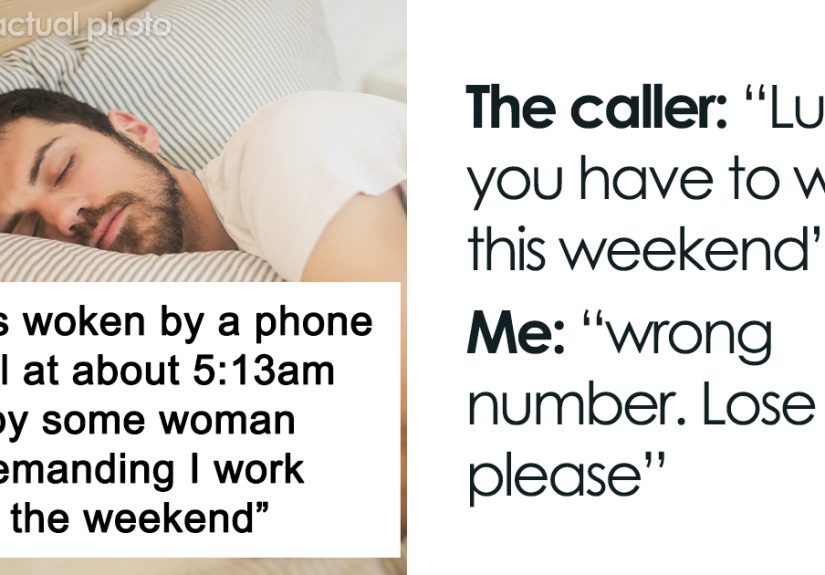
According to the viral account, the man was awakened around 5:13 AM by a woman who believed she was calling an employee named Lucy. The caller, identified in the story as a store manager or supervisor figure, demanded that “Lucy” come in to work during the weekend. There was only one small problem: the person on the phone was not Lucy. He did not work for that store. He did not work in retail. He was simply a guy trying to sleep, which at 5 AM is a perfectly reasonable career choice.
At first, he tried to correct the mistake. He told the caller she had the wrong number and hung up. That should have been the end of it. A normal person might double-check the employee contact list, apologize, or at least pause and ask, “Wait, why does Lucy sound like a man who has just been dragged out of a dream by a lawn mower?”
Instead, the caller rang again and escalated. She threatened consequences, insisted he work the shift, and acted as if the refusal was insubordination rather than basic reality. That was the moment the man decided to stop being helpful and start being educational.
How He Turned a Wrong Number Into Workplace Chaos
Rather than keep repeating “wrong number” to someone who refused to listen, the man leaned into the misunderstanding. He pretended to negotiate as if he were the employee she thought she had reached. If she wanted weekend work, he said, she would have to pay overtime. Saturday would cost more. Sunday would cost even more. Then, after being awakened more than once, he raised the price again.
The comedic explosion came when he mentioned a higher hourly rate. The caller apparently reacted loudly enough for others at the store to hear. Suddenly, the issue was no longer just “Lucy will not come in.” It became “Why is Lucy supposedly making more money than everyone else?” That is how one wrong number allegedly triggered a mini workplace uprising before sunrise.
Eventually, another manager got on the phone and seemed to realize something was off. The voice did not sound like Lucy. The conversation ended abruptly, leaving behind a beautiful mess: one confused stranger, one irritated caller, several potentially suspicious coworkers, and a cat who, according to the storyteller, was peacefully involved in the morning drama in the way only cats can be.
Why the Internet Loved the Story
The internet loves stories where arrogance meets a banana peel. In this case, the caller’s main mistake was not dialing the wrong number. Everyone makes mistakes. The real problem was refusing to accept correction. The man did not create the chaos alone; he simply gave the caller enough rope to knit a sweater of embarrassment.
Readers responded strongly because the story taps into a familiar frustration: some managers communicate like they are swinging a hammer at every problem. Instead of listening, they assume. Instead of asking, they accuse. Instead of checking the facts, they double down. That behavior is irritating when aimed at an employee. It becomes comedy gold when aimed at a stranger who owes the company absolutely nothing, not even a polite yawn.
The story also became a conversation about the real employee, Lucy. Some readers worried that she might face unfair consequences for a call she never received. Others argued that call logs would easily show the manager dialed the wrong number. Either way, the concern was valid: poor management decisions often create problems for people who were not involved in making them.
The Bigger Issue: Managers Calling at Unreasonable Hours
A 5 AM call may be justified in certain emergencies. If a building is flooding, a hospital unit needs coverage, or a critical system is down, early calls can be part of the job. But for ordinary scheduling, a surprise pre-dawn demand is a red flag. It suggests poor planning, weak staffing systems, or a workplace culture where employees are expected to be available whenever management remembers they exist.
In the United States, wage-and-hour rules can become relevant when non-exempt employees are asked to work, respond, or remain available outside scheduled hours. Not every call automatically becomes paid work, but when employees are required to perform tasks or are restricted in how they use their time, employers may have compensation obligations. The practical lesson for managers is simple: if you need workers to be reachable, create a clear policy, track time properly, and do not treat off-hours communication like a free vending machine.
Good Management Requires Better Systems
The manager in the story did not just make a phone mistake. She revealed a system mistake. Why was the number wrong? Why was the call urgent enough to make before sunrise? Why was the tone hostile before any facts were confirmed? Why did coworkers seem shocked by the mention of higher pay? Each question points to a larger workplace issue.
Good management is not about barking orders faster. It is about building systems that reduce emergencies. That includes accurate employee contact records, fair scheduling practices, written availability expectations, and a culture where employees can say, “I am unavailable,” without being treated like they have committed treason against the cash register.
Why Unknown Calls Make People Defensive
There is another modern layer to this story: most people do not trust unknown numbers anymore. Spam calls, spoofed numbers, robocalls, and scam attempts have trained people to treat random phone calls like raccoons in the atticpossibly harmless, but not something you invite in for coffee.
Many Americans ignore calls from unknown numbers, and for good reason. Phone scams and unwanted calls remain a major nuisance. Caller ID can be spoofed, numbers can be reused, and innocent people can receive calls intended for someone else. When a legitimate business calls from a random number with no context, it enters that same trust problem.
That is why professional phone etiquette matters. If a manager must call an employee, especially outside normal hours, the first words should establish identity, context, and respect. A simple “Hi, this is Terry from the store. Am I speaking with Lucy?” would have prevented the entire circus. Instead, the caller allegedly skipped straight to demands, which is how you turn a wrong number into a workplace campfire story.
What the Man Did Rightand What Was Risky
From a comedy perspective, the man handled the situation like a sleep-deprived improv champion. He tried to correct the caller first. When she refused to listen, he used her own assumptions against her. He did not seek out the conflict; it rang him twice before sunrise.
Still, there is a practical caution. Playing along with a wrong-number workplace call can accidentally affect someone else. If the real Lucy was later blamed, she might have had to prove she never received the call. In most cases, the safest response to a persistent wrong-number caller is to state clearly that they have the wrong number, block the caller if needed, and avoid giving information that could create confusion.
But it is also easy to understand why the man snapped into mischief mode. Being awakened once is annoying. Being awakened again by someone threatening your imaginary job is a special kind of nonsense. At that point, politeness has left the building, and it did not clock out properly.
Lessons for Employees: Protect Your Time Without Burning the Bridge
Employees can learn from the story too. If your real manager calls at an unreasonable hour, it is wise to document the call, note the time, and clarify expectations in writing later. For example: “I received your call at 5:13 AM about weekend coverage. Please confirm whether I am required to be on call outside scheduled hours and how that time should be recorded.”
That kind of response does three things. First, it stays professional. Second, it creates a record. Third, it forces the employer to clarify whether off-hours availability is actually part of the job. If a workplace expects constant availability but does not pay, schedule, or communicate accordingly, the problem is not the employee’s attitude. It is the company’s operating model wearing a fake mustache.
Set Boundaries Before the Crisis
The best time to set communication boundaries is before a crisis. Employees should understand whether they are expected to answer calls outside work, what counts as an emergency, and whether missed calls can lead to discipline. Managers should understand that “I have your number” does not mean “I own your morning.”
Healthy workplaces make expectations boringly clear. Boring is good. Boring prevents 5 AM chaos. Boring lets people sleep.
Lessons for Managers: Confirm Before You Confront
Managers should treat this story as a training video that accidentally became entertainment. Before confronting an employee, confirm you have the right person. Before demanding extra work, confirm availability. Before threatening discipline, confirm the facts. And before calling anyone at 5 AM, confirm that the issue cannot wait until a civilized hour, also known as “after coffee exists.”
Professional communication is not complicated, but it does require humility. A manager who begins with curiosity can fix a mistake quickly. A manager who begins with accusation may create three new problems before breakfast.
A Better Version of the Call
Here is how the call should have gone:
“Hi, this is Terry from Bmart. Am I speaking with Lucy?”
“No, you have the wrong number.”
“I’m sorry for waking you. I’ll update our records. Have a good morning.”
End scene. No chaos. No accidental pay transparency scandal. No general manager grabbing the phone. No internet fame. No cat forced to supervise human foolishness.
Why Pay Transparency Became the Funniest Part
The most chaotic part of the story was not the wrong number. It was the moment coworkers allegedly overheard the man claiming a higher hourly rate. Suddenly, the caller’s workplace had a different problem: employees comparing wages.
That reaction says a lot. When workers are shocked by the idea that someone might make more, it often points to low trust, poor pay communication, or inconsistent compensation practices. Even if the man invented the number as a joke, the response sounded like a workplace where people already felt underpaid.
Employers sometimes fear pay conversations because they reveal uncomfortable gaps. But silence does not create fairness. It only creates confusion. If a fake Lucy can accidentally start a compensation debate before sunrise, the workplace probably had unresolved tension long before the phone rang.
The Role of Sleep: Why 5 AM Feels Personal
Sleep disruption is not a minor inconvenience. Poor sleep affects mood, focus, patience, and decision-making. A phone call at 5 AM can yank a person out of deep rest, leaving them groggy and irritated. That is exactly the wrong state for a calm conversation about weekend staffing.
Managers who contact employees during rest hours should understand the cost. Even a short call can interrupt sleep cycles and make it harder to fall back asleep. If the issue is not urgent, the respectful choice is to wait. If it is urgent, the respectful choice is to explain why, apologize for the timing, and keep the call as brief as possible.
In other words, do not wake someone up and then act offended that they are not thrilled to hear from you. That is not leadership. That is an alarm clock with payroll access.
What To Do If a Wrong Number Keeps Calling You
If you receive a persistent wrong-number call, start calmly. Say, “You have the wrong number. Please remove this number from your records.” If the caller argues, repeat the statement once. After that, blocking the number is reasonable. If the calls become harassing or suspicious, save the call history and report the issue through the appropriate phone provider, consumer protection channel, or company contact page.
Do not share personal information. Do not confirm details about yourself beyond what is necessary. And if the caller claims to represent a business, look up the business through official channels rather than relying on the number that called you. In a world of spoofed caller ID, caution is not paranoia. It is basic phone hygiene.
Why This Story Still Matters
The headline sounds like pure internet comedy: man refuses to let random manager off easy after calling him at 5 AM, causes chaos. But the reason it keeps circulating is that it captures a real workplace truth. People are tired of being treated as instantly available. They are tired of bad planning becoming their emergency. They are tired of communication that starts with blame instead of facts.
The man’s response was funny because it inverted the power dynamic. The caller thought she was speaking to an employee she could pressure. Instead, she reached someone outside her authority entirely. For once, the person being ordered around had nothing to lose except sleep, and that had already been stolen.
Personal Experiences and Real-Life Situations Related to 5 AM Work Calls
Many people have their own version of this story, even if it does not involve a fake weekend overtime negotiation. One common experience is inheriting a recycled phone number. A person gets a new number and suddenly receives appointment reminders, debt collection calls, school alerts, pharmacy messages, or work calls for someone they have never met. At first, it feels like a simple mistake. After the tenth call, it starts to feel like being drafted into a stranger’s life without benefits.
Imagine waking up early on a Saturday because a bakery thinks you are “Megan” and wants to know why you missed the opening shift. You say you are not Megan. They call again. You say it louder. They text. By the end of the morning, you know Megan’s schedule better than your own, and you are emotionally invested in whether she still works there. That is how wrong-number fatigue happens.
Another relatable experience is the manager who treats every scheduling issue as an emergency. Maybe someone calls out sick. Maybe the weekly roster was posted late. Maybe the store is short-staffed because management keeps running the team like a game of musical chairs with name tags. Instead of fixing the system, the manager starts calling everyone, hoping guilt will do what planning did not.
Employees in hourly jobs often feel pressure to answer because they fear retaliation, fewer shifts, or being labeled “not a team player.” That pressure can be especially strong in retail, restaurants, warehouses, call centers, and service jobs where schedules change frequently. The problem is not occasional flexibility. The problem is when flexibility only bends one wayusually toward the employee’s personal time.
There are also remote-work versions of the same issue. Instead of a 5 AM phone call, it is a late-night message: “Quick question.” The question is never quick. It opens a portal. Suddenly, the employee is checking files, answering follow-ups, and mentally returning to work after dinner. Even if it takes only ten minutes, the brain does not always clock out again so easily. The evening has been interrupted, and the employee may feel like they are never fully away from the job.
The healthiest workplaces avoid these situations with clear norms. They define emergencies. They use scheduling software correctly. They keep contact records updated. They compensate work time. They train managers to speak respectfully, especially when asking for extra help. Most importantly, they remember that employees are human beings with sleep, families, second jobs, school, health needs, and lives that do not pause just because a shift needs covering.
The funniest part of the viral story is the man demanding premium pay from a company that did not employ him. The most serious part is that real employees often do not feel empowered to make the same demand. They may simply answer, apologize, and rearrange their lives because a manager failed to plan. That is why the story feels satisfying. It gives readers a fantasy version of boundary-setting: bold, sarcastic, and consequence-free.
Of course, real life usually requires more tact. Most employees cannot respond to a supervisor by inventing triple-time rates while half the store listens. But they can ask for written confirmation. They can track time. They can clarify availability. They can save call logs. They can say, “I am not available outside my scheduled hours unless I am officially on call.” Boundaries do not have to be dramatic to be effective.
As for managers, the lesson is even simpler: check the number, check the tone, and check the clock. If you wake a stranger at 5 AM and then refuse to believe he is a stranger, do not be surprised when the stranger becomes the author of your worst morning meeting.
Conclusion
The story of the man who refused to let a random manager off easy after a 5 AM call is more than a funny wrong-number tale. It is a sharp reminder that communication matters, workplace boundaries matter, and sleep-deprived strangers are not always interested in solving a company’s scheduling crisis for free.
A simple apology could have ended the situation in seconds. Instead, the caller’s refusal to listen turned a mistake into chaos. For employees, the story highlights the importance of documenting off-hours contact and protecting personal time. For managers, it is a flashing neon sign that says: verify first, demand laterpreferably after sunrise.
In the end, the man did not create the chaos so much as reveal it. The wrong number exposed poor communication, possible pay tension, weak scheduling habits, and a manager who needed a lesson in humility. That is why the story works. It is funny, yes, but it also says what many workers have thought at least once: your emergency is not automatically my alarm clock.