Table of Contents >> Show >> Hide
- What Is Solderdoodle, Exactly?
- Why the Open-Source Angle Matters
- Why USB Rechargeable Was a Big Deal
- What Made Solderdoodle Attractive to Makers
- The Real-World Strengths of a Tool Like This
- Where Solderdoodle Has Limits
- How Solderdoodle Fits Into the Modern Portable Iron Landscape
- Who Should Care About Solderdoodle Today?
- Experience: What Living With a Tool Like Solderdoodle Feels Like
- Conclusion
- SEO Tags
If you have ever tried to solder something in a garage, classroom, makerspace, car trunk, or at a kitchen table already crowded with coffee mugs and mystery screws, you know the usual routine: find an outlet, untangle the cord, clear space, wait for the iron to heat, and then pretend you are not one accidental elbow away from disaster. That is exactly why the idea behind Solderdoodle still feels clever years later. It was not just trying to make a soldering iron smaller. It was trying to make soldering more flexible, more approachable, and a lot less tied to the wall.
Solderdoodle became notable because it combined three ideas makers love: portability, open-source hardware, and USB charging. In plain English, that meant you could carry it around, understand how it was built, modify it if you wanted, and recharge it from a common USB power source instead of feeding it disposable batteries like a hungry remote control from 2006. For hobbyists, repair tinkerers, students, and people who think “I can fix that” before they think “Where is the manual?”, that was a pretty charming proposition.
What Is Solderdoodle, Exactly?
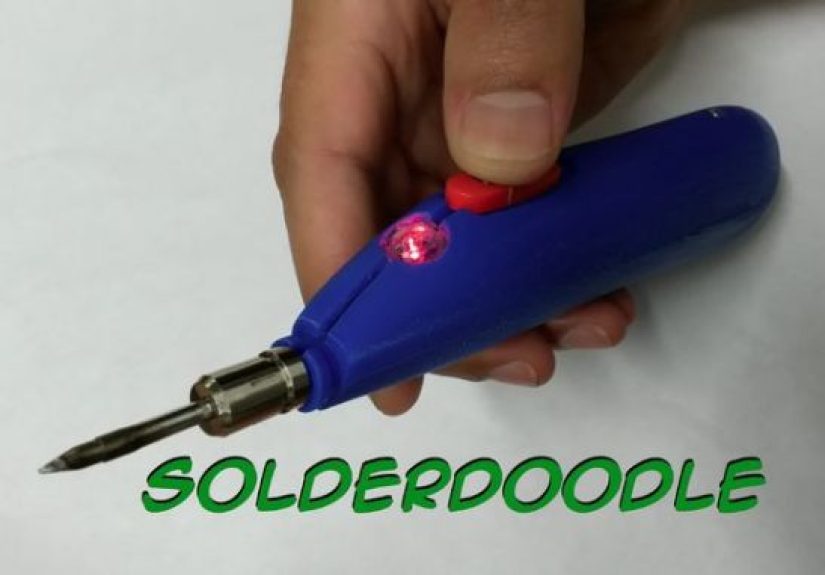
Solderdoodle is a cordless soldering iron project built around the idea that a portable iron does not have to be disposable, sealed shut, or annoyingly limited. Early versions were based on the heating element from a Weller BP645 soldering iron, which was transplanted into a custom 3D-printed enclosure. Instead of leaning on large disposable batteries, the design used a lithium-ion battery pack and added its own supporting electronics, including charging and protection circuitry. The project’s creator also shared design files, schematics, and build documentation, which is where the “open source” part stops being a buzzword and starts becoming the whole personality of the product.
That matters because there is a huge difference between a gadget that is merely cool and a gadget that invites people to learn from it. Solderdoodle was built in a way that encouraged curiosity. You were not just buying a hot stick that melts solder. You were buying into a design philosophy that said, “Here is how this thing works. Improve it, rebuild it, remix it, or make your own.” In maker culture, that sort of openness is basically catnip.
Why the Open-Source Angle Matters
Open-source hardware is not just about posting a glamour shot of a PCB online and calling it a day. A real open-hardware mindset makes the design available in forms that other people can study, modify, distribute, build, and even sell under the proper licensing terms. That approach lowers the barrier for experimentation and raises the ceiling for community-driven improvement.
In the case of Solderdoodle, the open nature of the project made it more than a tool. It became a platform for learning. A student could study the battery-management approach. A 3D-printing enthusiast could tweak the case. A hardware hacker could adapt the circuitry. A teacher could use it as a conversation starter about power electronics, charging safety, thermal behavior, and product design. Plenty of consumer tools want your money. Open hardware tools also want your curiosity.
That is one reason Solderdoodle stood out. It arrived with the kind of transparency that many polished commercial products avoid. If a traditional closed gadget says, “Trust us,” an open project says, “Come look under the hood.” And for makers, “under the hood” is where the fun usually lives.
Why USB Rechargeable Was a Big Deal
Today, rechargeable everything feels normal. Rechargeable lights, rechargeable screwdrivers, rechargeable bike pumps, rechargeable coffee frothers that make you feel oddly professional for 14 seconds. But when Solderdoodle first appeared, a USB-rechargeable soldering iron still felt unusually practical and slightly futuristic. The appeal was simple: USB power was everywhere. Laptops had it. Wall adapters had it. Battery packs had it. Solar chargers had it. If your iron could refill from the same ecosystem as the rest of your gear, it instantly became easier to live with.
That convenience changes the tool’s personality. A corded bench iron is something you use when you have decided to sit down and work. A USB-rechargeable iron is something you can keep nearby for when work sneaks up on you. It is the difference between planning a soldering session and simply solving a problem when it appears.
For field repairs, quick cable fixes, light electronics work, and classroom demonstrations, that mobility is a real advantage. You do not need to monopolize an outlet or drag an extension cord across the floor like you are preparing to host a very small, very nerdy rock concert.
What Made Solderdoodle Attractive to Makers
1. It was portable without being disposable
Many small battery-powered tools feel like toys pretending to be tools. Solderdoodle aimed higher. It was meant to be usable, rechargeable, and adaptable rather than a one-season gadget destined for the junk drawer. That positioned it well with hobbyists who hate waste and love gear that earns its spot in the bag.
2. It invited modification
The 3D-printed case and open design files made Solderdoodle more approachable than many commercial alternatives. A maker could reprint a damaged shell, change ergonomics, or use the published design as inspiration for a custom variant. That makes the project feel less like a product and more like a living workshop conversation.
3. It was friendly to DIY culture
Solderdoodle fits naturally into the same world as open-source controllers, printable enclosures, breadboard-friendly modules, and homebrew repair rigs. If you already enjoy building the things you use, the idea of building or modifying your soldering iron is weirdly appealing. Not sensible to everyone, but deeply appealing. That is classic maker logic.
4. It helped normalize mobile soldering
Portable soldering used to feel like compromise by default. Solderdoodle helped push the conversation toward something better: maybe mobility and usefulness could coexist. That idea has only become more common as newer portable irons have gained faster heat-up times, smarter controls, and better power options.
The Real-World Strengths of a Tool Like This
A USB-rechargeable iron shines when you need flexibility more than brute force. Imagine replacing a broken connector at a robotics event, repairing a drone wire at a park table, touching up a loose joint in a classroom lab, or doing a quick fix in an apartment where outlets are never where you want them. In those moments, portability is not a luxury. It is the whole reason the repair happens at all.
Tools like Solderdoodle also make soldering feel less intimidating to beginners. A huge station with a heavy base, thick cord, and industrial vibe can scare people into thinking soldering is only for experts. A smaller rechargeable tool feels more personal and less like you are about to perform surgery on a spaceship. That psychological difference matters, especially in education.
And then there is the simple convenience factor: fewer cords, less setup, faster grab-and-go use. In a hobby full of tiny parts and disappearing screws, reducing friction is a beautiful thing.
Where Solderdoodle Has Limits
Now for the honest part: portable irons are wonderful, but physics remains rude. A rechargeable iron is not automatically a replacement for a full bench station in every scenario. Thick wires, large connectors, heavy ground planes, and long production sessions can still favor more powerful, mains-powered equipment with stronger thermal recovery and continuous energy on tap.
Battery-powered designs also bring their own considerations. Heat, charging, runtime, cable quality, and power-delivery behavior all matter. Modern USB-powered irons have made huge strides, especially those designed around USB-C Power Delivery, but they still reward users who pay attention to charger quality and cable ratings. A bargain-bin cable is not a heroic underdog. It is a future inconvenience.
Another factor is grounding and ESD awareness. Some portable irons work beautifully, but users doing sensitive electronics work should still think about proper grounding, safe power sources, and general bench discipline. “Portable” does not mean “immune to electrical reality.” It just means you get to visit electrical reality in more locations.
How Solderdoodle Fits Into the Modern Portable Iron Landscape
In hindsight, Solderdoodle looks a little like an early signal flare for a category that later got much more crowded. Portable soldering irons are now a serious segment. Modern models such as the Pinecil and newer USB-C-powered tools have made fast heat-up times, better temperature control, higher wattage, and compact designs much more common. Some even approach bench-level performance for a wide range of electronics work.
That does not make Solderdoodle irrelevant. If anything, it makes the project more interesting historically. It shows how makers were already thinking in the right direction: rechargeable power, compact form factor, repair-minded design, openness, and real usability outside the workbench. Later products refined the formula, but Solderdoodle helped demonstrate why the formula was worth refining in the first place.
There is also a philosophical difference worth noticing. Many modern portable irons are polished products first and hackable devices second. Solderdoodle always wore its DIY roots proudly. It did not hide the fact that it came from experimentation. That gives it a certain charm that slicker tools cannot always reproduce.
Who Should Care About Solderdoodle Today?
Makers and tinkerers
If you love open hardware and enjoy seeing how devices are built, Solderdoodle is still a fascinating project. Even if you do not plan to build one, it is a useful case study in accessible product design.
Educators and students
It is a strong example of how one project can teach mechanical design, electronics, charging systems, thermal tools, and open-source licensing all at once. That is a lot of educational mileage from one very hot object.
Repair-minded hobbyists
If your work involves occasional fixes in different places, the core idea remains compelling. The dream of a capable iron that lives in your bag instead of on your desk is not going away anytime soon.
People shopping for modern portable irons
Even if you end up buying a newer device, understanding Solderdoodle gives useful context for what features matter: real portability, smart power management, comfortable ergonomics, replaceable parts, and a design that does not punish curiosity.
Experience: What Living With a Tool Like Solderdoodle Feels Like
Using a tool inspired by Solderdoodle changes your workflow in small ways that add up quickly. The first thing you notice is not raw power or technical elegance. It is freedom. You stop thinking, “Can I solder here?” and start thinking, “Do I have enough light and a safe surface?” That is a different kind of decision. It makes soldering feel less like a formal event and more like a practical skill you can use whenever a small repair shows up.
Imagine you are helping a friend fix a detached wire inside a battery-powered toy, a loose connection in a keyboard, or a broken lead on a DIY LED sign. With a traditional station, you bring the project to the bench. With a rechargeable iron, the bench comes to the project. That sounds dramatic, but it is true. You grab the iron, solder, flux, and maybe a stand or silicone mat, and you are suddenly the person in the room who looks suspiciously competent.
There is also a quiet satisfaction in using a tool that reflects maker values. When you hold an open-hardware device, you know somebody intended it to be understood, not merely consumed. That creates a different emotional relationship with the object. You are less afraid of it. More curious about it. More willing to fix it if something goes wrong. It becomes equipment, not an appliance.
For beginners, that matters a lot. A new soldering user can feel overwhelmed by temperature charts, tip shapes, flux choices, and the universal fear of melting something expensive. A portable iron with a friendlier form factor lowers the intimidation level. It says, “Start small. Learn a joint. Fix a wire. You do not need a full electronics lab to begin.” That encouragement is often more valuable than people realize.
At the same time, experience teaches balance. A rechargeable iron is delightful for quick work, but it also teaches you when portability is enough and when you want more thermal mass, stronger recovery, or a full station. In that sense, tools like Solderdoodle help users become smarter about soldering overall. You start noticing joint size, material thickness, heat transfer, tip condition, and cable quality. You become less romantic about gadgets and more attentive to process. That is actually a good sign.
And then there is the simple pleasure of solving a problem without hunting for an outlet. It sounds almost silly until you have done it a few times. Repair a headphone cable on a porch. Touch up a loose wire at a school club meeting. Finish a tiny electronics build on a dining table without colonizing the room with extension cords. Suddenly the idea of a USB-rechargeable soldering iron no longer feels quirky. It feels obvious.
That, in the end, is the real legacy of Solderdoodle. It helped make portable soldering feel normal, useful, and worth taking seriously. Not because it tried to replace every bench station on Earth, but because it proved there was room for a smarter, more flexible kind of soldering tool. For makers, that is often how progress starts: one good idea, a shared design, and a community willing to heat things up and see what happens.
Conclusion
Solderdoodle is more than a clever gadget name and more than a portable soldering iron with a rechargeable battery. It represents an important moment in maker culture, when portability, open hardware, and everyday usability were starting to merge into tools that felt both practical and hackable. Its design showed that a soldering iron could be cordless, rechargeable, customizable, and transparent enough for people to study and improve.
Even though the portable soldering market has evolved with smarter controllers, USB-C power delivery, faster heat-up times, and more polished products, the original appeal of Solderdoodle still holds up. People want tools that travel well, work reliably, and do not treat the user like an untrusted guest. Solderdoodle did that with a refreshingly open attitude. For hobbyists, repair enthusiasts, educators, and curious builders, it still stands as a fun and meaningful example of how open-source hardware can make even a humble soldering iron more interesting.