Table of Contents >> Show >> Hide
- Why Fans Love Unrequited Love Anime
- The 20 Best Unrequited Love Anime By Fans
- 1. Toradora!
- 2. Orange
- 3. Your Lie in April
- 4. After the Rain
- 5. Tomo-chan Is a Girl!
- 6. More Than a Married Couple, But Not Lovers
- 7. Scum’s Wish
- 8. Makeine: Too Many Losing Heroines!
- 9. Honey and Clover
- 10. 5 Centimeters per Second
- 11. Anohana: The Flower We Saw That Day
- 12. Kids on the Slope
- 13. Chihayafuru
- 14. Monthly Girls’ Nozaki-kun
- 15. The Girl Who Leapt Through Time
- 16. Cherry Magic! Thirty Years of Virginity Can Make You a Wizard?!
- 17. The Anthem of the Heart
- 18. A Lull in the Sea
- 19. Millennium Actress
- 20. School Rumble
- What These Anime Teach About One-Sided Love
- Viewing Experience: Why These Stories Stay With Fans
- Conclusion
Unrequited love anime hits differently. A confession gets swallowed, a childhood friend smiles through heartbreak, someone chooses silence over honesty, and suddenly viewers are staring at the ceiling at 2 a.m. wondering why animated teenagers have better emotional range than most adults at a family reunion.
The best unrequited love anime by fans are not just sad for the sake of drama. They explore timing, courage, rejection, self-worth, grief, friendship, and the painful art of wanting someone who may never look back the same way. Some shows turn one-sided affection into comedy. Others turn it into a full emotional demolition project with violin music, cherry blossoms, and absolutely no regard for your weekend plans.
This fan-focused list highlights 20 beloved anime where one-sided love, missed chances, complicated crushes, or emotionally impossible relationships play a major role. Some titles are pure romance anime. Others are coming-of-age dramas, fantasy stories, or bittersweet films where love becomes the spark for growth instead of the prize at the end.
Why Fans Love Unrequited Love Anime
Unrequited love is one of anime’s most flexible emotional tools. It can make viewers laugh, cry, scream at the screen, or politely ask a fictional character to develop basic communication skills. The appeal comes from recognition. Almost everyone knows what it feels like to like someone from a distance, misread a signal, wait too long, or realize the person they wanted was never really theirs to begin with.
In great anime about unrequited love, the rejected character is not always a loser. Sometimes they are the emotional heart of the story. Their feelings reveal loyalty, maturity, selfishness, fear, or hidden strength. A one-sided crush can push a character into music, sports, art, friendship, healing, or self-discovery. The romance may fail, but the character does not have to.
The 20 Best Unrequited Love Anime By Fans
1. Toradora!
Toradora! is a classic high school romance anime about Ryuuji Takasu and Taiga Aisaka, two students who agree to help each other win over their respective crushes. Naturally, because anime loves emotional chaos served with school uniforms, the plan becomes far more complicated than expected.
The unrequited love works because nearly every character is chasing someone who is looking somewhere else. Ryuuji, Taiga, Minori, Kitamura, and Ami create a romantic web that feels messy but sincere. Fans love how the series turns awkward crushes into a story about emotional honesty, growing up, and realizing that the person beside you may understand you better than the person you were chasing.
2. Orange
Orange blends romance, regret, friendship, and time-travel drama. Naho receives letters from her future self warning her to make different choices involving Kakeru, a transfer student carrying deep emotional pain.
The unrequited love element shines through Suwa, whose feelings for Naho are handled with remarkable maturity. Instead of treating love like a prize to be won, Orange asks whether loving someone can mean helping them choose happiness with someone else. That is not just romantic tragedy; that is emotional weightlifting.
3. Your Lie in April
Your Lie in April follows Kousei Arima, a young pianist who loses his ability to hear the sound of his own playing after trauma. His world changes when he meets Kaori Miyazono, a free-spirited violinist who drags color, music, and chaos back into his life.
This anime is a heavyweight in sad romance anime because several characters love people who cannot fully return those feelings. Tsubaki’s quiet love for Kousei is especially painful because she stands beside him while he looks toward Kaori. The series turns unrequited love into music: beautiful, imperfect, and gone too soon.
4. After the Rain
After the Rain tells the story of Akira Tachibana, a teenage track athlete recovering from injury who develops feelings for Masami Kondo, her much older restaurant manager. The premise could have gone wrong in about twelve different ways, but the show treats the situation with restraint.
The brilliance of After the Rain is that Kondo does not romanticize Akira’s crush. Instead, he recognizes her youth, loneliness, and interrupted dreams. Her one-sided affection becomes a mirror for both characters: she must rediscover her future, and he must remember the ambitions he abandoned.
5. Tomo-chan Is a Girl!
Tomo-chan Is a Girl! gives unrequited love a comic uppercut. Tomo Aizawa is bold, athletic, loud, loyal, and completely in love with her childhood friend Jun. Unfortunately, Jun sees her as “one of the guys,” which is adorable for about five minutes and emotionally exhausting for the next several episodes.
Fans enjoy this anime because Tomo’s frustration is funny but also relatable. She does not want to become someone else just to be loved. She wants Jun to recognize the person already standing in front of him. The result is a sweet romantic comedy about identity, friendship, and spectacular emotional blindness.
6. More Than a Married Couple, But Not Lovers
This romantic comedy begins with a bizarre school assignment: students are paired as pretend married couples for practical training. Jiro and Akari both want to switch partners because they each have someone else in mind.
The unrequited love grows from shifting priorities. Akari starts with a crush on someone else, while Jiro is attached to Shiori. But fake domestic life, awkward proximity, and accidental tenderness begin to scramble everyone’s feelings. Fans who enjoy love triangles, slow-burn romance, and emotional confusion with extra sparkle will find plenty to chew on here.
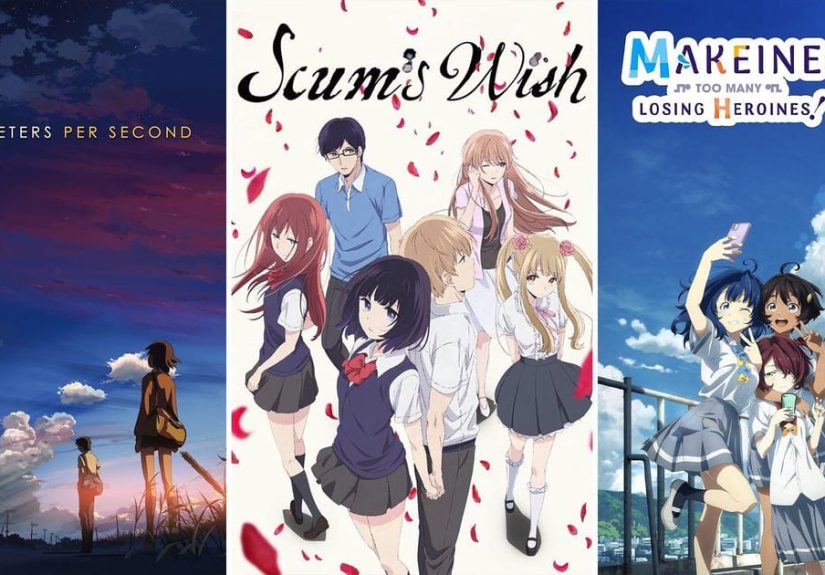
7. Scum’s Wish
Scum’s Wish is not the fluffy cotton-candy side of romance anime. It follows Hanabi and Mugi, two teenagers who pretend to date because they are both in love with people they cannot have.
This series is intense, messy, and often uncomfortable, but that is exactly why fans remember it. It explores what happens when unrequited love turns into obsession, avoidance, jealousy, and self-destructive intimacy. Nobody here needs a cute confession scene. They need therapy, boundaries, and possibly a long walk without dramatic background music.
8. Makeine: Too Many Losing Heroines!
Makeine: Too Many Losing Heroines! is a modern favorite because it flips the usual romance formula. Instead of focusing only on the couple who gets together, it follows the girls who get rejected, overlooked, or left behind after someone else’s happy ending.
The show’s charm comes from humor and empathy. The “losing heroines” are not treated like disposable side characters. Their heartbreaks are funny, embarrassing, and human. Fans appreciate how the anime gives dignity to characters who usually exist only to make the main couple look more dramatic.
9. Honey and Clover
Honey and Clover is a beloved slice-of-life romance anime set around art students trying to understand love, work, talent, and adulthood. In other words, it is about being young and confused, but with better background art.
Unrequited love runs through almost every major relationship. Characters love friends who love someone else, admire people they cannot reach, and struggle to separate romantic longing from personal insecurity. Fans value the series because it treats one-sided love as part of growing up, not as a melodramatic failure.
10. 5 Centimeters per Second
Makoto Shinkai’s 5 Centimeters per Second is one of the most famous anime films about distance, memory, and emotional drift. Takaki and Akari care for each other, but geography, time, and life keep pulling them apart.
This is not traditional unrequited love where one person clearly rejects another. Instead, it is love that becomes unreachable. Fans often describe the film as devastating because it captures the slow pain of holding onto a feeling long after life has moved forward without asking permission.
11. Anohana: The Flower We Saw That Day
Anohana is a grief-centered drama about childhood friends haunted by the death of Menma, a girl whose presence continues to shape their lives. Jinta, Anaru, and the rest of the group are trapped in emotions they never properly expressed.
The unrequited love here is tangled with guilt and mourning. Some feelings cannot be returned because the person is gone. Others cannot be spoken because everyone is still hurting. Fans love Anohana because it shows how grief can freeze love in place, turning childhood affection into a wound that refuses to close.
12. Kids on the Slope
Kids on the Slope mixes jazz, friendship, and romance in 1960s Japan. Kaoru, Sentaro, and Ritsuko form a deeply emotional trio where music says what the characters often cannot.
Ritsuko’s feelings for Sentaro and Kaoru’s evolving feelings create a quiet but powerful unrequited love story. The series understands that friendship and romance do not always move at the same rhythm. Sometimes one person is playing a love song while the other hears only jazz practice.
13. Chihayafuru
Chihayafuru is technically a sports and competition anime about karuta, a Japanese card game based on classical poetry. But fans know the emotional triangle between Chihaya, Taichi, and Arata is one of the show’s biggest hooks.
Taichi’s long, painful love for Chihaya stands out because he supports her passion even when it points her toward Arata. His arc is not just about romance; it is about self-worth, effort, jealousy, and learning whether love should define a person’s entire identity.
14. Monthly Girls’ Nozaki-kun
Monthly Girls’ Nozaki-kun turns unrequited love into comedy gold. Chiyo Sakura confesses to Nozaki, only for him to completely misunderstand and recruit her as an assistant for his shojo manga.
The joke is simple but endlessly funny: Nozaki writes romance professionally yet cannot recognize real romantic interest when it is waving both arms directly in front of him. Fans adore the show because Chiyo’s one-sided crush is sweet, silly, and refreshingly low-stakes compared with the emotional wrecking balls elsewhere on this list.
15. The Girl Who Leapt Through Time
The Girl Who Leapt Through Time follows Makoto, a high school girl who discovers she can literally jump through time. Like any reasonable teenager, she uses this power for snacks, convenience, and avoiding awkward romantic moments.
The unrequited love comes from delayed realization. Makoto avoids emotional discomfort until she understands her own feelings too late. Fans connect with the film because it captures a painful truth: sometimes the hardest confession is the one a person has to make to themselves.
16. Cherry Magic! Thirty Years of Virginity Can Make You a Wizard?!
Cherry Magic! begins with a supernatural rom-com setup: Adachi gains the ability to read minds through touch and discovers that his charming coworker Kurosawa is secretly in love with him.
This is a hopeful unrequited love anime because Kurosawa’s feelings do not stay one-sided forever. The series explores uncertainty, attraction, identity, and emotional safety with warmth. Fans appreciate that the romance develops through respect rather than pressure, proving that unrequited love can sometimes become mutual when handled with care.
17. The Anthem of the Heart
The Anthem of the Heart is a moving anime film about Jun, a girl who loses her ability to speak after childhood trauma. When she joins a musical project, she begins to express emotions she has buried for years.
Jun’s feelings for Takumi become part of her healing, even though he does not return them romantically. The film is powerful because it refuses to treat rejection as meaningless. Her love helps her speak, connect, and grow, even if it does not become the fairy-tale ending she imagined.
18. A Lull in the Sea
A Lull in the Sea combines fantasy, romance, and social conflict in a world where some people live under the ocean while others live on land. The setting is beautiful, but emotionally, everyone needs a map and maybe a group counseling session.
The series is packed with mismatched feelings. Hikari, Manaka, Chisaki, Kaname, Tsumugu, Miuna, and others form a complicated emotional chain where affection rarely lands neatly. Fans love it because the fantasy premise makes the longing feel larger, while the characters’ insecurities remain painfully human.
19. Millennium Actress
Satoshi Kon’s Millennium Actress is not a conventional romance anime, but its portrait of lifelong longing makes it unforgettable. The film follows Chiyoko Fujiwara, a legendary actress whose memories blur with the roles she played across her career.
Her pursuit of a mysterious man from her youth becomes both a romantic obsession and a metaphor for chasing meaning. Fans admire the film because its unrequited love is less about whether she “gets the guy” and more about how longing can shape an entire life story.
20. School Rumble
School Rumble is a chaotic romantic comedy powered by misunderstandings, failed confessions, and characters who could solve most problems with one honest conversation but heroically refuse to do so.
Tenma loves Karasuma. Harima loves Tenma. Other crushes pile up like emotional laundry. The result is ridiculous, fast-paced, and surprisingly heartfelt. Fans enjoy School Rumble because unrequited love becomes fuel for comedy, creativity, and character growth rather than endless suffering.
What These Anime Teach About One-Sided Love
The best anime about unrequited love do not all deliver the same message. Toradora! suggests that a wrong crush can lead to the right person. Orange shows that love can be selfless. Scum’s Wish warns that longing without honesty can become toxic. Honey and Clover argues that feelings still matter even when they do not become relationships.
That variety is why fans continue ranking and discussing these titles. Unrequited love anime is not one genre mood. It can be funny, tragic, gentle, uncomfortable, poetic, or healing. Sometimes the best ending is a couple finally getting together. Sometimes the best ending is a character finally letting go.
Viewing Experience: Why These Stories Stay With Fans
Watching unrequited love anime is a very specific emotional experience. At first, viewers usually arrive for romance. They expect soft lighting, nervous confessions, maybe a festival scene, and at least one character staring dramatically at fireworks. Then the anime quietly locks the door and says, “Excellent. Now let’s discuss regret.”
The strongest viewing experience comes from recognizing small emotional details. In Your Lie in April, a glance can hurt more than a speech. In Chihayafuru, Taichi’s silence often says more than a confession. In Monthly Girls’ Nozaki-kun, Chiyo’s persistence is funny because it is exaggerated, but it also reflects a real feeling: the strange hope that maybe, somehow, the other person will finally understand.
These anime are also surprisingly good at making viewers choose sides, then question themselves. Should Suwa step aside in Orange? Should Akira’s crush in After the Rain be seen as love, grief, or a search for direction? Is Takaki in 5 Centimeters per Second romantic, or is he trapped by memory? The best titles do not hand viewers easy answers. They leave room for debate, which is why fan rankings keep changing and comment sections keep overheating like old laptops.
Another part of the experience is emotional pacing. Some shows, like School Rumble and Tomo-chan Is a Girl!, make one-sided love playful. They let viewers laugh at the awkwardness of missed signals. Others, like Anohana and Millennium Actress, treat longing as something almost spiritual. These stories ask what happens when love cannot be returned because of death, distance, time, or the simple fact that another person’s heart is not a vending machine.
For new viewers, the best way to approach these anime is to match the title to the mood. Want comedy? Start with Monthly Girls’ Nozaki-kun, School Rumble, or Tomo-chan Is a Girl!. Want emotional damage with artistic lighting? Try Your Lie in April, 5 Centimeters per Second, or Anohana. Want complicated romance that makes everyone look suspiciously in need of a journal? Watch Scum’s Wish, Honey and Clover, or A Lull in the Sea.
The most memorable experience is not simply crying over rejection. It is watching characters survive the feeling. They learn to confess, step aside, move forward, forgive, or rebuild themselves. That is why unrequited love anime remains so powerful. It understands that not every love story ends with two people holding hands. Some end with a person finally choosing themselves, and honestly, that can be even more satisfying than the perfect kiss under the perfect cherry tree.
Conclusion
The 20 best unrequited love anime by fans prove that romance does not need a perfect couple to be unforgettable. A one-sided crush can reveal courage. A rejected confession can become a turning point. A missed chance can shape an entire life. From the emotional elegance of 5 Centimeters per Second to the comic chaos of School Rumble, these anime show every shade of wanting someone who may not want you back.
For viewers who enjoy romance anime with depth, these titles offer more than heartbreak. They offer character growth, beautiful storytelling, memorable friendships, and the occasional reminder that fictional teenagers should not be trusted with emotional timing. Whether you want tears, laughs, drama, or quiet reflection, unrequited love anime has a story ready to gently ruin your evening in the best possible way.
Note: This article is written as original, publication-ready entertainment content. It synthesizes fan-ranking patterns and real anime information while avoiding copied source text, source-code clutter, and unnecessary citation placeholders.