Table of Contents >> Show >> Hide
- Why Tankless Water Heaters Were Already a Big Deal
- The Problem Nobody Loves Talking About: Scale
- The Innovative Tech That Makes This Heater Stand Out
- The Other Features That Help the Heater Feel Premium
- Where This Technology Really Shines
- Why This Innovation Feels Like the Right Kind of Progress
- Experience: What It Feels Like to Live With This Kind of Tankless Technology
- Conclusion
- SEO Tags
If tankless water heaters had a dating profile, they would absolutely lead with “endless hot water” and “space-saving wallflower.” Fair enough. Those are attractive qualities. But if you have ever researched one long enough to fall into the plumbing side of the internet, you know the real plot twist: hard water scale. That crusty mineral buildup is the uninvited guest that turns a sleek, efficient machine into a high-maintenance diva.
That is why the most interesting innovation in this corner of home comfort is not just another app, another shiny panel, or another “now with more buttons” upgrade. It is technology aimed squarely at the biggest weakness of tankless systems: scale buildup inside the heat exchanger. In the case of A. O. Smith’s tankless models with X3 Scale Prevention Technology, the unique selling point is refreshingly practical. Instead of simply making hot water fast, it is designed to help the heater stay efficient, reduce regular descaling maintenance, and keep performing more like it did on day one.
In other words, this is not just a smarter tankless water heater. It is a tankless water heater trying very hard not to become a future headache. For homeowners, that is the kind of innovation that deserves more than a shrug and a brochure glance.
Why Tankless Water Heaters Were Already a Big Deal
Before we get to the unique technology, it helps to understand why tankless units became such a big deal in the first place. Traditional tank water heaters store a large batch of hot water and keep reheating it so it stays ready. That means energy is spent even when no one is showering, washing dishes, or performing the noble household ritual of running the washing machine twice because someone forgot the socks.
Tankless water heaters work differently. When you turn on a hot-water tap, a flow sensor detects water movement and activates the heating process. In gas models, that usually means an igniter fires a burner that heats a heat exchanger; cold water passing through that exchanger is heated on demand. No stored tank of hot water. No standing heat loss. Just hot water made as needed.
That on-demand design is a big reason the U.S. Department of Energy says tankless models can be significantly more energy efficient than conventional storage-tank water heaters, especially in homes with lower daily hot-water demand. They also typically last longer, take up less space, and can be a strong fit for remodels or homeowners who want more continuous hot water without dedicating floor space to a bulky tank.
There is also the lifestyle factor. A properly sized tankless unit can keep delivering hot water as long as fuel and water are available. That does not mean infinite flow for every fixture in a mansion during peak chaos hour, but it does mean no “the fourth shower lost the gamble” scenario caused by an emptied storage tank. For many households, that alone is enough to make tankless feel like a technological glow-up.
Why Modern Buyers Care About More Than Efficiency
Today’s buyers are not just shopping for efficiency. They want comfort, reliability, easier installation, and fewer maintenance surprises. That is why modern tankless innovation has moved beyond simple heat-on-demand performance. Brands now compete on recirculation systems, smart scheduling, leak detection, adaptive controls, and more stable temperature delivery.
Rinnai, for example, pushes smart recirculation that learns household patterns. Navien emphasizes buffer-tank-assisted recirculation to reduce the cold-water sandwich effect. Rheem leans into built-in Wi-Fi, leak protection, and faster hot-water delivery features. Stiebel Eltron highlights advanced flow control to maintain temperature consistency in electric models. All of that matters. But the problem that keeps haunting tankless ownership, especially in hard-water regions, is still scale.
The Problem Nobody Loves Talking About: Scale
Scale is the villain of the story, and unfortunately it is not a fictional one. Hard water contains dissolved minerals such as calcium and magnesium. When water is heated, those minerals can precipitate out and stick to internal components, especially inside the heat exchanger. Over time, that buildup can reduce heat transfer, hurt efficiency, restrict flow, increase operating costs, and shorten the unit’s usable life.
In plain English, the heater has to work harder to do the same job. That is the home-equipment equivalent of jogging with a backpack full of bricks.
Traditional advice for hard-water areas is regular descaling. That means flushing the unit with a cleaning solution on a routine basis, often annually, and usually with professional help unless the homeowner is comfortable with the process. It is not glamorous. It is not free. And it is definitely not the sort of thing most people dream about when they spend good money on a supposedly advanced appliance.
This is where a lot of tankless marketing used to hit a wall. The pitch sounded great right up until the maintenance conversation started. Endless hot water? Nice. Better efficiency? Excellent. A yearly descaling appointment because your local water behaves like it is seasoning a cast-iron skillet? Less exciting.
The Innovative Tech That Makes This Heater Stand Out
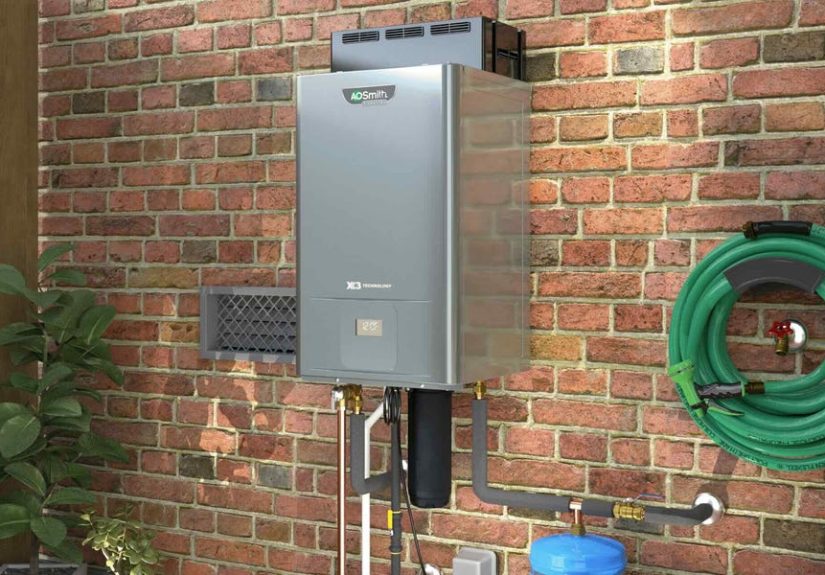
A. O. Smith’s answer to that problem is X3 Scale Prevention Technology, and this is the feature that genuinely makes the heater feel different from a lot of look-alike competitors. The idea is simple but important: instead of waiting for scale to build up and then dealing with the mess later, the system is designed to interrupt the scale-forming process before it can cling to the heat exchanger.
According to the company, incoming water passes through an X3 cartridge before reaching the heat exchanger. That cartridge prevents sediment particles from bonding to each other in the way that leads to stubborn buildup. The minerals are still there, but the goal is to keep them moving through the system instead of baking themselves onto the heater’s internal surfaces like they have signed a lease.
That matters because the heat exchanger is the business end of a tankless heater. Protecting it protects performance. A. O. Smith says its testing showed models with X3 maintained like-new efficiency after 15 simulated years, while comparable units without the technology showed efficiency loss much earlier. The company also says the technology can extend unit life by up to 300 percent and eliminate the need for regular scale-related descaling maintenance.
Now, any brand claim should be read with a homeowner’s healthy dose of realism. Installation quality, water chemistry, system sizing, and maintenance habits still matter. But even with that common-sense disclaimer, the concept is compelling because it addresses the biggest pain point of tankless ownership with built-in engineering rather than with a chore list.
Why This Is More Than a Marketing Trick
Some home-product “innovation” is basically a new sticker and a fresh adjective. This is different. X3 does not just add convenience around the edges; it targets the core failure mode that has frustrated homeowners and service technicians for years. That is a more meaningful kind of upgrade.
It also changes the ownership conversation. Instead of asking, “How often do I need to descale this thing?” a buyer can start asking, “How much maintenance am I actually avoiding?” That is a better question, and frankly a more modern one. Smart home products should not just notify you about problems; the best ones should help prevent them.
The Other Features That Help the Heater Feel Premium
X3 is the headline act, but it is not the only reason this style of tankless water heater stands out. The best premium models are also leaning into condensing efficiency, built-in recirculation options, and smarter controls. That broader context matters because uniqueness today is not just about one feature. It is about how several technologies work together to improve the real-life experience of hot water.
For instance, high-efficiency condensing tankless models can reach strong Uniform Energy Factor numbers, often around 0.95 in top-tier gas offerings. That helps explain why ENERGY STAR certified gas tankless models remain attractive for homeowners trying to lower water-heating costs without giving up comfort.
Recirculation is another piece of the puzzle. One of the classic complaints about tankless systems is that “endless hot water” does not necessarily mean “instant hot water.” If the heater is far from the fixture, you can still wait while hot water travels through the piping. That is why many brands have invested in built-in recirculation pumps or intelligent scheduling systems. Some learn usage patterns. Some use buffer tanks. Some reduce cold-water bursts between short uses. The whole point is to cut the awkward faucet purgatory where you stare at the sink like it personally offended you.
This is also where tankless design is getting smarter overall. Temperature consistency, leak detection, Wi-Fi monitoring, and diagnostic tools are becoming part of the premium feature set. That does not make every smart feature essential, but it does reflect a real shift: water heaters are no longer being sold as dumb metal boxes that only matter when they fail. They are increasingly positioned as active parts of a home’s comfort and efficiency system.
Where This Technology Really Shines
The households most likely to appreciate this kind of scale-prevention technology are the ones that have hard water, busy daily hot-water demand, or both. In those homes, a tankless unit without scale protection can slowly drift away from its original promise. The water may still get hot, but efficiency can slip, maintenance becomes more important, and performance may not stay as sharp as it looked in the brochure.
With a built-in approach to preventing scale buildup, the value proposition gets much stronger. It is especially appealing for homeowners who plan to stay put for years, because long-term maintenance and performance matter more when you are not treating the appliance like a short-term placeholder. It is also attractive in remodels where space is limited and the appeal of a wall-hung, high-efficiency system is already strong.
There is a quieter advantage here, too: peace of mind. People do not usually brag about their water heater at parties, and honestly that is probably for the best. But they do care about whether it is dependable, whether it will quietly do its job, and whether it will surprise them with service costs. Technology that reduces one of the most common reasons for tankless trouble is the sort of thing homeowners appreciate more with each year that passes uneventfully.
Where You Still Need to Be Realistic
No tankless water heater, no matter how clever, gets a free pass from basic plumbing reality. Proper sizing still matters. Gas supply still matters. Venting still matters. Flow rate still matters. A scale-prevention cartridge will not magically turn an undersized unit into a superhero that can run every shower, faucet, and appliance in a large home at once.
And while technology can reduce maintenance, it does not eliminate the need for professional installation or sensible monitoring. Water quality varies. Household demand varies. Local codes vary. The “best” heater is still the one that matches the house and the way people actually live in it.
Why This Innovation Feels Like the Right Kind of Progress
The smartest innovations in home equipment are rarely the flashiest. They solve friction. They remove chores. They protect performance. They make the machine less needy, not more theatrical. That is why scale-prevention technology feels so relevant. It improves the part of tankless ownership that used to feel like a catch.
In that sense, what makes this tankless water heater unique is not just that it produces hot water on demand. Plenty of units do that. It is that it directly tackles the mineral buildup issue that has long made some homeowners hesitate. By addressing the enemy inside the heat exchanger, the technology turns a good category into a smarter one.
That is the kind of innovation worth paying attention to. Not because it is flashy, but because it is useful. And in the world of plumbing, useful is basically glamorous.
Experience: What It Feels Like to Live With This Kind of Tankless Technology
Living with a tankless water heater that actively fights scale is less dramatic than most home upgrades, and that is exactly the point. The best experience is usually the least eventful one. Homeowners are not standing in the laundry room applauding a heat exchanger. What they notice instead is the absence of familiar annoyances. The shower stays hot. The kitchen sink gets warm faster when the recirculation setup is right. The utility closet feels less cluttered. And, perhaps most satisfying of all, the heater does not slowly turn into a maintenance project disguised as an appliance.
For people in hard-water regions, this difference can feel surprisingly personal. Anyone who has scrubbed white crust off a faucet, replaced scale-choked showerheads, or watched an appliance lose performance over time understands the quiet dread that hard water brings. So when a tankless unit is built to reduce scale-related buildup before it can take hold, the ownership experience changes from “I hope this thing holds up” to “This was designed for the water I actually have.” That is a big psychological upgrade, not just a technical one.
There is also the daily rhythm of the house. Morning routines are where water-heater promises either earn their keep or get exposed. In a busy household, hot water demand comes in bursts: one shower starts, another faucet opens, the dishwasher gets loaded, and somebody decides this is the perfect moment to run a load of towels. A well-sized tankless system with modern controls handles that kind of staggered demand far better than many people expect. Add scale prevention to the equation, and the bigger benefit is that the performance has a better chance of staying consistent over the years instead of fading gradually while nobody notices until something feels “off.”
Installers and service pros would probably tell you the experience matters on their side, too. Products that reduce common service headaches tend to earn respect fast. If a heater is engineered to avoid a major cause of efficiency loss and premature wear, that is not just good for the homeowner; it is good for the long-term reputation of the product. Fewer scale-related complaints, fewer performance drops, and fewer awkward conversations about why a “high-efficiency” upgrade now needs another maintenance visit can make a real difference.
And then there is the homeowner satisfaction factor that never makes it into technical charts: confidence. People like knowing their major systems are working in the background instead of plotting their next inconvenience. A water heater with built-in scale prevention feels more aligned with what modern home technology should be doing. It should adapt to real-world conditions, protect itself where possible, and ask for less babysitting. No one wants a “smart” appliance that is only smart enough to text you when it is unhappy.
Of course, the experience is best when expectations stay grounded. This technology is not magic, and it does not replace smart sizing, proper installation, or good plumbing design. But when all of those pieces come together, the result is easy to appreciate: a tankless water heater that gives you the familiar benefits people already want, while also solving one of the biggest reasons they used to hesitate. That is not just a better feature list. That is a better ownership story.
Conclusion
The most impressive thing about this tankless water heater is not that it joins the modern parade of efficient, compact, on-demand systems. It is that it goes after the weakness that has followed tankless technology for years. By focusing on scale prevention at the source, the design becomes more than a comfort upgrade. It becomes a durability and maintenance upgrade, too.
For homeowners comparing premium options, that distinction matters. Lots of water heaters can promise hot water. Fewer can make a credible case that they will keep delivering that performance with less hassle in hard-water conditions. That is why this technology stands out. It is not innovation for the sake of marketing sparkle. It is innovation aimed at the exact problem that needed solving most.