Table of Contents >> Show >> Hide
Note: Body-only HTML, ready for web publishing and copy/paste use.
In the West, the history of personal computing usually gets told like a tidy family tree: IBM PC, clones, Microsoft, Windows, boom, done. But Japan took a gloriously weird detour. For more than a decade, one machine family created what felt like a parallel universe of computing: NEC’s PC-98 line. It looked like a PC, used x86 processors like a PC, and ran DOS like a PC. And yet it was very much not the same PC the rest of the world knew.
That is what makes the PC-98 ecosystem so fascinating. It was not just a computer platform. It was a self-contained world of hardware standards, software habits, business tools, game genres, visual styles, magazines, retailers, sound boards, and user expectations that developed largely on its own terms. If American PCs were the main road, the PC-98 was a thriving city built just off the highway, complete with its own rules, its own architecture, and its own local legends.
And yes, it was strange. Wonderfully strange. The kind of strange that gives you sharp text screens, gorgeous anime-style pixel art, famously stubborn compatibility issues, and games that feel like messages from an alternate timeline. To understand why the PC-98 still captivates retro computing fans today, you have to look at how NEC built it, why Japan embraced it, and how it managed to shape a culture far bigger than the beige boxes themselves.
How the PC-98 Became Japan’s Parallel PC Universe
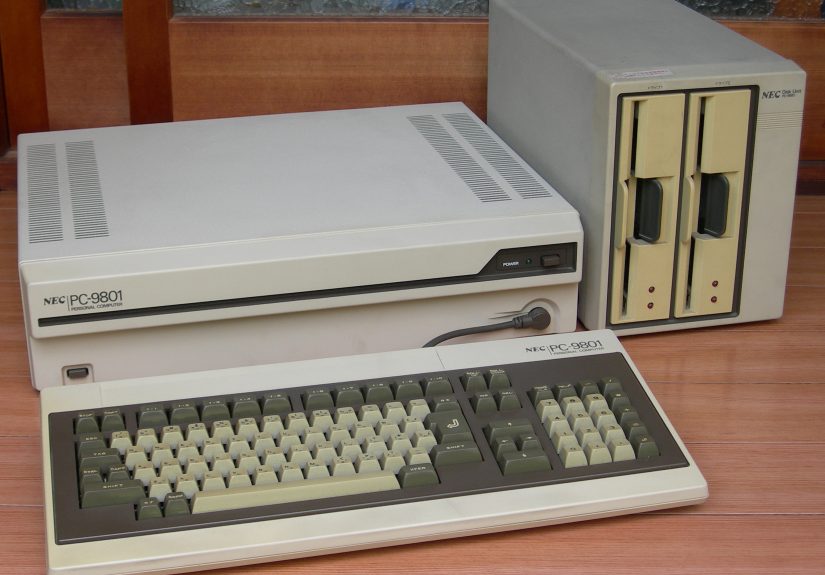
NEC launched the original PC-9801 in 1982, and it was designed first and foremost as a serious business machine. That mattered. In the early 1980s, Japanese-language computing was not a small feature request. It was the whole ballgame. Handling Japanese text efficiently was much harder than handling plain English text, and many Western personal computers simply were not built for that job. NEC saw the gap and sprinted straight into it.
The PC-98 line offered strong Japanese-language support, respectable graphics, and a design philosophy that preserved software and hardware assets from NEC’s earlier machines. That last point sounds boring, but boring is where empires are built. Businesses love continuity. Developers love install bases. Resellers love products that already have momentum. NEC understood that compatibility, support, and local needs could be more powerful than global elegance.
So while the IBM PC became the center of gravity in the United States and much of Europe, NEC became the giant of Japan’s domestic market. The company cultivated relationships with independent software makers, hardware vendors, and retailers, creating a powerful ecosystem effect. Once enough applications, peripherals, and service networks formed around the platform, buying a PC-98 started to feel less like choosing a computer and more like joining the default reality.
Japanese language support was the killer feature
The secret sauce was not mystery. It was practicality. The PC-98 made Japanese office work more comfortable at a time when many foreign systems did not. That gave NEC a real advantage in word processing, business software, and enterprise adoption. In other words, the PC-98 did not conquer Japan by being exotic. It conquered Japan by being useful.
One of the best examples of this was Ichitaro, the Japanese word processor that became a major software success on the platform. For many users, the PC-98 was not a “gaming machine” first. It was the machine that helped people write documents, manage business tasks, and bring office computing into daily life. The games came later, or at least they came second in the sales pitch.
NEC built a standard without following the global standard
Here is where the story gets deliciously odd: the PC-98 used familiar Intel-compatible processors, but the platform itself was not IBM PC compatible in the way Western users expected. That meant software had to be built specifically for PC-98 hardware. Developers targeting Japan often made PC-98 versions, not just “PC versions.” It was a local standard that became powerful precisely because it was local.
This is one reason the platform feels so alien to modern retro fans. You look at the machine and think, “Ah yes, a DOS computer.” Then you try to treat it like a normal DOS computer and it basically replies, “That’s adorable.”
Why the PC-98 Looked and Felt So Different
The PC-98’s reputation today is tied heavily to its aesthetic, and for good reason. Even people who have never touched the hardware can often spot “PC-98 vibes” from a mile away: dense pixel detail, crisp anime portraits, carefully dithered backgrounds, and a mood somewhere between office software and dream journal.
Part of that came from the hardware. Part came from the artists. And part came from the happy friction between the two. The displays were text-friendly and sharp, while the graphics limitations pushed developers and illustrators toward inventive solutions. Instead of brute-force spectacle, PC-98 visuals often relied on careful composition, strong line work, color discipline, and hand-crafted gradients. The result was a style that now feels instantly nostalgic even to people who were not there for the original ride.
It was a business machine that accidentally became an art machine
That is one of the great ironies of the PC-98. It was built for business, yet it helped produce some of the most recognizable visual language in Japanese computer gaming. Its worlds looked different from Western DOS games and different from arcade games too. Screens often felt more intimate, more illustrated, and more text-aware. There was room for menus, character portraits, dialogue boxes, maps, mood, and atmosphere.
This made the platform especially fertile for adventure games, role-playing games, simulations, and early visual novels. Action games existed too, of course, but the machine’s cultural identity leaned heavily toward genres where storytelling, presentation, and mood could do some heavy lifting.
The sound mattered too
Ask anyone deep into PC-98 history and they will eventually start talking about music with the intensity of a conspiracy theorist and the tenderness of a poet. FM synthesis sound boards gave many PC-98 games a distinctive audio identity: bright, metallic, emotional, and just dramatic enough to make even a menu screen feel like the start of an epic. The machine’s strange charm was never only visual. It was audiovisual all the way down.
The Software Library Was Bigger and Stranger Than Many Western Fans Realize
One of the biggest misconceptions about the PC-98 is that it was basically a niche gaming oddity. Not true. The platform had a huge business side. Office tools, development software, utilities, educational programs, and professional applications all played major roles in its success. In Japan, the PC-98 was serious infrastructure long before it became foreign retro-computing treasure.
But yes, the games are a huge reason people still care. And what a library it built. Nihon Falcom released influential computer titles in that broader Japanese PC scene, and the PC-98 became an important home for RPGs, adventure games, simulations, shooters, and visual novels. Some of these titles later spread to consoles or Windows. Many did not. A surprising number remained locked inside the PC-98 universe for years, or forever.
That isolation is part of the platform’s mystique. Western players did not simply “miss a few imports.” They missed an entire software ecology. Whole franchises, art styles, interface conventions, and storytelling rhythms developed with little regard for what American PC users were doing at the same time. The PC-98 was not a side quest. It was its own campaign.
The platform also helped incubate works that later became legendary in different forms. Early Touhou Project titles began on PC-98 hardware before the series moved to Windows and exploded into a much bigger cultural phenomenon. That kind of migration is one of the best clues to the platform’s historical importance. The PC-98 was often where creative ideas first took root before they escaped into broader gaming culture.
It also became associated with fan communities, collectors, and later preservationists who understood that these disks and boxes contained more than software. They contained evidence of a computing culture that had grown in parallel with the more familiar Western one.
What Finally Broke the Spell
Every ecosystem looks permanent until it suddenly does not. NEC’s dominance lasted a long time, but not forever. The forces that weakened the PC-98 were not dramatic in the Hollywood sense. There was no one fatal mistake, no evil rival twirling a mustache over a beige tower. Instead, the platform was worn down by standardization, price pressure, and the changing layers of software itself.
DOS/V changed the rules
One of the key turning points came when IBM Japan introduced DOS/V in 1990. This allowed IBM PC/AT compatibles to handle Japanese text through software rather than relying on the same hardware assumptions that had helped NEC earlier. In plain English: one of NEC’s biggest advantages stopped being such a moat.
Once Japanese-language capability became easier to achieve on global-style PC compatibles, the market started to open. Then came price competition. Then came Windows. Then came the slow, brutal realization that a locally dominant architecture could still lose once a higher-level software standard made hardware differences less important.
Windows turned the battlefield upside down
Academic analyses of the PC-98’s decline point to Windows 3.1 and Windows 95 as major unifying forces. When developers could target Windows APIs across multiple Japanese Intel-based systems, NEC’s big DOS-era software library lost some of its defensive power. The old ecosystem advantage weakened. The walls got lower. The global PC world finally found a way in.
NEC responded, but the era had changed. The company eventually shifted toward more globally aligned machines, and the PC-98 ceased to be the center of Japan’s computer universe. What had once felt like an untouchable local standard became, in hindsight, one of the most fascinating examples of how a dominant platform can be overturned when the layer above it changes.
Why the PC-98 Still Matters
The PC-98 matters because it proves computer history was never as universal as we like to pretend. For years, Japan had a thriving mainstream PC culture that followed different assumptions, different hardware priorities, and different aesthetic outcomes. If you only study American and European microcomputers, you miss one of the richest alternate paths in the story.
It also matters because its influence never fully disappeared. Modern indie developers still borrow from the “PC-98 look.” Retro artists recreate its palettes and dithering tricks. Preservation communities keep its software alive through original hardware, archived disks, fan translations, and emulators like Neko Project II and DOSBox-X. What was once hidden behind language barriers and hardware incompatibility is now being rediscovered by players who feel like they have opened a door into a lost room of digital history.
And that, really, is the magic of the PC-98. It is not just old technology. It is a reminder that computing could have looked different, sounded different, and evolved differently. In Japan, for quite a long time, it actually did.
What Exploring the PC-98 Feels Like Today
Getting into the PC-98 today feels a bit like wandering into a bookstore where every shelf is organized according to rules you almost understand. The covers look familiar enough to lure you in. The interface elements resemble DOS just enough to make you overconfident. Then the machine politely smacks that confidence out of your hands.
For modern retro fans, the experience usually begins with curiosity and ends with obsession. You see a screenshot online: a dramatic character portrait, a moody skyline, a wall of Japanese text, maybe a user interface with that unmistakable late-1980s precision. You think you are looking at some obscure console game. Then you find out it ran on a Japanese personal computer originally sold for business use, and suddenly the rabbit hole opens beneath your feet.
Running PC-98 software can feel surprisingly ceremonial. There are disk images, boot screens, keyboard quirks, font issues, and the occasional moment where you realize the machine expects you to know things nobody born after the dial-up era was ever formally taught. Even through emulation, it has texture. You are not just launching software. You are negotiating with a tiny historical system that still has opinions.
Then the audio kicks in. Maybe it is a title screen melody with FM synth brass trying its heroic best. Maybe it is a soft menu tune that sounds like a keyboard player trapped inside a neon detective novel. Either way, you stop clicking for a second and just listen. PC-98 music has that effect. It can make a file manager feel emotional.
The visual experience is equally strange in the best possible way. Backgrounds often feel handcrafted rather than rendered. Character art has a sharpness that comes from limitation rather than abundance. Dithered gradients, careful shadowing, and elegant UI framing give many games an atmosphere that is hard to fake with modern tools. It is retro, yes, but not in the chunky toy-like way many people expect. It is more precise than that. More deliberate. More haunted by ambition.
There is also a thrill in realizing how much of this world stayed local for so long. Exploring PC-98 software today can feel like reading a chapter of computer history that your standard textbooks forgot to assign. You start recognizing developer names, recurring art styles, and genre patterns. You notice that the machine was not weird in a random way. It was weird in a deeply cultural, structurally coherent way. It made sense to the people living inside that ecosystem.
That is probably the most rewarding part of the experience. The PC-98 stops being “that strange Japanese computer” and becomes legible as a real living platform with its own logic. What first seemed alien starts to feel beautifully specific. And once that happens, the charm becomes difficult to shake. You are no longer just browsing retro software. You are visiting a parallel civilization of personal computing, one boot disk at a time.
Conclusion
The strange world of Japan’s PC-98 computer ecosystem was never just about unusual hardware. It was about how local needs, smart strategy, software partnerships, and creative communities combined to build a full-scale alternative to the Western PC story. NEC won Japan by solving Japanese problems, then lost its lead when software layers and market economics changed the rules. In the process, the PC-98 left behind a body of work that still feels singular today.
For historians, it is a case study in standards, ecosystems, and market disruption. For gamers, it is a treasure chest of forgotten classics and untranslated oddities. For artists, it is a lasting visual language. And for anyone who loves computers, it is a comforting reminder that technological history is much stranger, richer, and more regional than the usual timelines suggest.