Table of Contents >> Show >> Hide
- Why Concrete Starts Looking Rough
- Repair or Replace? The Big Concrete Question
- The Secret to Concrete Repair: Preparation
- How to Repair Small Cracks in Concrete
- How to Repair Spalling, Pitting, and Chipped Concrete
- Concrete Resurfacing: The Makeover Move
- Do Not Fill Expansion Joints
- Choosing the Right Concrete Repair Product
- Safety Tips Before You Start
- When to Call a Professional
- How to Keep Repaired Concrete Looking Good
- Design Ideas: Give Old Concrete a New Look
- Real-World Experience: What Concrete Repair Teaches You
- Conclusion
Concrete is the strong, silent type of the home-improvement world. It holds up cars, patio furniture, delivery boxes, basketball games, summer grills, muddy boots, and the occasional “I definitely meant to park like that” tire mark. But even concrete has feelingsor at least surface damage. Over time, driveways, patios, walkways, steps, garage floors, and pool decks can crack, pit, spall, discolor, or look like they survived a very dramatic weather documentary.
The good news? Not every tired concrete slab needs to be torn out and replaced. In many cases, smart concrete repair, careful patching, and concrete resurfacing can give worn concrete a fresh, clean, almost-new appearance without the cost, mess, and neighborhood spectacle of demolition. The trick is knowing what type of damage you have, what product fits the job, and when a simple DIY repair is enoughor when the slab is politely begging for a professional.
This guide walks through how to repair concrete, refresh old surfaces, prevent future damage, and make your driveway or patio look less “abandoned warehouse” and more “well-maintained home.”
Why Concrete Starts Looking Rough
Concrete is durable, but it is not magic. It expands and contracts with temperature changes, absorbs moisture if unsealed, carries heavy loads, and reacts to soil movement beneath it. Add freeze-thaw cycles, deicing salts, poor drainage, tree roots, and years of foot or vehicle traffic, and even a once-smooth slab can start showing cracks and surface wear.
Common concrete problems homeowners notice
Hairline cracks are thin surface cracks that often look worse than they are. They may come from shrinkage as concrete cures, temperature changes, or minor movement. Wider cracks, especially those that keep spreading, may point to deeper movement below the slab.
Spalling concrete is when the surface flakes, chips, or breaks away. It often appears as rough patches or shallow craters. Scaling is similar and commonly happens when concrete is exposed to moisture, freezing, thawing, or harsh surface conditions. Pitting creates small holes or divots, while discoloration can come from stains, weathering, previous coatings, rust, oil, or uneven curing.
Then there is the classic old-driveway look: cracks, stains, worn texture, and enough personality to qualify as abstract art. Fortunately, many of these issues can be repaired or improved with the right preparation.
Repair or Replace? The Big Concrete Question
Before buying a bag of concrete repair mix and declaring yourself the mayor of DIY Town, inspect the slab honestly. Some concrete can be restored beautifully. Some concrete is too damaged to save with surface products alone.
Concrete repair makes sense when:
- The slab is mostly level and structurally sound.
- Cracks are narrow or moderate and not rapidly widening.
- Damage is mainly cosmetic, such as pitting, light scaling, stains, or shallow spalling.
- The concrete surface is worn but not deeply broken apart.
- You want to improve appearance and reduce moisture entry.
Replacement may be better when:
- Large sections are sinking, heaving, or severely uneven.
- Cracks are wide, deep, and actively moving.
- The slab has major drainage problems.
- Rebar is exposed or rusting.
- The concrete is crumbling throughout, not just at the surface.
A good rule of thumb: resurfacing can make sound concrete look new, but it cannot turn a failing slab into a superhero. If the base is unstable, a pretty topcoat is just makeup on a wobbling foundation.
The Secret to Concrete Repair: Preparation
Concrete repair products can be impressively strong, but they are not fans of dirt, oil, loose chips, paint flakes, algae, old sealer, or mystery garage goo. Surface preparation is the difference between a repair that lasts and one that flakes off like a bad sunburn.
Start by sweeping the area thoroughly. Remove loose concrete with a hammer and chisel, scraper, grinder, or wire brush. If the surface has oil stains, use a concrete cleaner or degreaser. For driveways, patios, and walkways, pressure washing is often one of the best ways to remove embedded grime and create a clean bonding surface.
After washing, allow the concrete to dry as directed by the product you are using. Some resurfacing products are applied to damp concrete, while certain sealants require a clean, dry surface. Always read the label. Yes, it is boring. Yes, it matters. The tiny print is where the concrete gremlins hide.
How to Repair Small Cracks in Concrete
Small cracks are common in driveways, sidewalks, garage floors, patios, and steps. Repairing them early helps reduce water intrusion, prevents debris from collecting in the crack, and improves the overall appearance of the surface.
Step 1: Clean the crack
Use a wire brush, shop vacuum, compressed air, or stiff broom to remove dirt, dust, and loose particles. The filler needs clean edges to bond properly.
Step 2: Choose the right filler
For narrow cracks, a liquid concrete crack filler or polymer-based crack repair product may work well. For wider cracks, a flexible polyurethane sealant, concrete repair caulk, or patching compound may be better. Horizontal cracks in driveways often benefit from self-leveling sealants, while vertical surfaces need products that will not slump.
Step 3: Fill slowly and avoid overfilling
Apply the filler according to the manufacturer’s instructions. For deeper cracks, a foam backer rod can reduce the amount of sealant needed and help the repair perform better. Smooth the surface with a putty knife, margin trowel, or caulk tool before the material skins over.
Step 4: Let it cure
Curing time matters. Some products are ready for foot traffic in hours, while others need several days before they can handle vehicles, moisture, paint, or sealer. Rushing the process is like taking cookies out of the oven after three minutes and calling them “soft-style.” Technically possible, emotionally disappointing.
How to Repair Spalling, Pitting, and Chipped Concrete
Spalling and pitting usually require more than a simple crack filler. You need to remove loose material, rebuild the damaged area, and blend the patch into the surrounding concrete.
Remove weak concrete
Chip away any soft, loose, flaking, or delaminated concrete. The remaining surface should feel solid. If you patch over weak material, the repair may detach later along with the old damaged layer.
Clean and dampen the area
Many cement-based repair mortars bond best to a clean, slightly damp surface with no standing water. This helps prevent the old concrete from pulling moisture too quickly from the patching material.
Apply repair mortar or patching compound
For shallow damage, use a resurfacer or patching compound mixed to a trowelable consistency. For deeper chips, broken edges, or step repairs, choose a repair mortar designed for thicker applications. Press the material firmly into the damaged area, shape it with a trowel, and feather the edges so the patch blends naturally.
On steps, corners, and edges, forms may be needed to hold the patch in place while it sets. A board clamped or braced against the edge can create a crisp line. Once the repair firms up, remove the form and finish the surface to match the surrounding concrete.
Concrete Resurfacing: The Makeover Move
If your concrete is structurally sound but ugly enough to scare the garden hose, concrete resurfacing may be the answer. A concrete resurfacer is a thin cement-based coating designed to bond to existing concrete and create a fresh wearing surface. It can cover discoloration, minor surface defects, shallow pitting, and general wear.
Resurfacing is popular for driveways, patios, sidewalks, pool decks, basement floors, and garage slabs. It is not the same as pouring a brand-new slab. Instead, it is more like giving the old slab a tailored suitsame bones, better presentation.
Basic concrete resurfacing process
- Clean the slab thoroughly and remove loose material.
- Repair cracks, holes, and spalled areas before resurfacing.
- Protect expansion joints so they remain open and functional.
- Dampen the surface if required by the resurfacer instructions.
- Mix the resurfacer with the recommended amount of clean water.
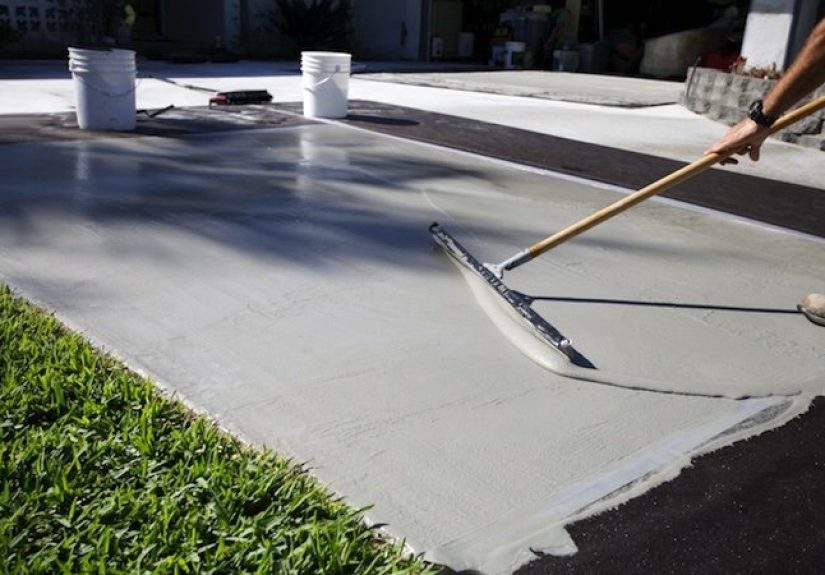
- Pour and spread it with a long-handled squeegee or trowel.
- Add a broom finish for slip resistance.
- Allow proper curing before foot or vehicle traffic.
The broom finish is especially important outdoors. Smooth concrete may look sleek, but when wet it can become a backyard slip-and-slide with legal paperwork. A light broom texture improves traction and gives the surface a professional look.
Do Not Fill Expansion Joints
Expansion joints and control joints exist for a reason. Concrete moves as temperatures change, and joints help manage that movement. When resurfacing, avoid filling active joints with rigid resurfacer. Instead, tape them off or protect them, then use a suitable flexible joint sealant if they need to be sealed later.
Filling every line because it looks cleaner may seem tempting, but concrete needs room to move. Block that movement, and cracks may show up elsewhere like an annoyed guest finding another door.
Choosing the Right Concrete Repair Product
The best concrete repair product depends on the damage, location, depth, width, movement, and exposure to weather or traffic.
Concrete crack filler
Best for small cracks in driveways, patios, sidewalks, and garage floors. Some are pourable, some come in caulk tubes, and some remain flexible after curing.
Concrete resurfacer
Best for refreshing large, worn, sound slabs with shallow imperfections. It creates a thin new surface and can dramatically improve appearance.
Repair mortar
Best for chips, broken corners, step edges, and deeper surface damage. It can often be built up thicker than resurfacer.
Self-leveling sealant
Best for horizontal cracks and joints where a flexible, weather-resistant seal is needed. It flows into the crack and levels itself, but it is usually not suitable for steep slopes or vertical surfaces.
Epoxy repair products
Best for strong bonding in certain cracks and structural or semi-structural repairs. However, epoxies can be less forgiving where movement is expected, so product selection matters.
Safety Tips Before You Start
Concrete repair is manageable for many homeowners, but it still deserves respect. Wear safety glasses when chiseling, brushing, grinding, or pressure washing. Use gloves when handling cement-based materials because wet cement can irritate skin. If cutting, grinding, or disturbing concrete dust, use appropriate dust control and respiratory protection. Concrete dust can contain respirable crystalline silica, which is a serious health hazard when inhaled.
Also, be careful with pressure washers. They clean concrete beautifully, but they can damage skin, strip wood, or carve lines into softer surfaces. Keep children and pets away from the work area, and do not aim the spray at people, plants, or your favorite sneakers unless you want them exfoliated into retirement.
When to Call a Professional
DIY concrete repair is great for cosmetic cracks, light spalling, small chips, shallow pitting, and worn but stable slabs. Call a professional if you see major sinking, large uneven sections, exposed reinforcing steel, foundation cracks, recurring water problems, deep structural cracks, or damage near load-bearing areas.
Professional contractors can evaluate whether the issue is surface-level or related to soil movement, drainage, reinforcement corrosion, or structural failure. Sometimes the best repair is not more patch materialit is fixing the cause beneath the damage.
How to Keep Repaired Concrete Looking Good
After concrete repair or resurfacing, maintenance helps protect your hard work. Sweep regularly to remove grit and organic debris. Clean oil stains quickly before they soak in. Improve drainage so water does not sit on the slab. Avoid harsh deicers when possible, especially on newer concrete. Seal exterior concrete as recommended for your climate and surface type.
Inspect the surface once or twice a year. Small cracks are much easier to fix than big cracks, and a little maintenance now can save a larger repair later. Concrete may be tough, but it appreciates attentionkind of like a pickup truck, a cast-iron skillet, or that one houseplant that refuses to die but still judges your watering schedule.
Design Ideas: Give Old Concrete a New Look
Concrete repair is not only about fixing damage. It is also a chance to improve curb appeal. A resurfaced driveway can make the front of a home look cleaner and more finished. A repaired patio can feel like an outdoor room again instead of a place where lawn chairs go to question their life choices.
Consider a broom finish for a classic, slip-resistant look. For patios and walkways, some resurfacing systems allow color additives or decorative finishes. Concrete stains, sealers, and textured coatings can also create a more polished appearance. Just be sure any decorative product is compatible with the repair material and intended for the traffic and weather exposure of the area.
For the best visual result, repair all cracks and chips before resurfacing. Work in manageable sections, keep edges neat, and maintain a consistent texture. Concrete rewards patience. It does not reward panic-squeegeeing at sunset while the mix sets faster than your confidence.
Real-World Experience: What Concrete Repair Teaches You
One of the biggest lessons from concrete repair is that the job is won or lost before the new material touches the slab. Homeowners often want to jump straight to the satisfying part: spreading the resurfacer, smoothing the patch, or watching a gray crack disappear. But the boring prep work is the real hero. Cleaning, scraping, chiseling, rinsing, taping joints, and waiting for the surface to be ready may not look exciting, but it gives the repair a fighting chance.
A common experience with old driveways is discovering that the first visible crack is only the beginning. Once the surface is pressure washed, more small cracks, shallow pits, and worn spots appear. This can feel discouraging, but it is actually helpful. You want to find the problems before applying resurfacer, not after. Think of it as concrete telling the truth under bright lighting.
Another practical lesson is to mix small batches until you understand the working time. Concrete repair materials often set faster than beginners expect, especially in warm weather. A bucket that seems perfectly workable at minute one may become stubborn at minute ten. Starting with smaller sections helps you maintain control, create a better finish, and avoid the dreaded “lumpy pancake driveway” look.
Temperature matters too. Hot sun can dry repair materials too quickly, while cold weather can slow curing or interfere with bonding. Many experienced DIYers work in the morning, shade the area when possible, and read the temperature range on the bag before mixing. Concrete is not especially dramatic, but it does have preferences.
Texture matching is another skill learned by doing. A patch that is perfectly smooth may stand out on older broom-finished concrete. A broomed patch may look too rough on a garage floor. Before the repair fully sets, use a brush, sponge, trowel, or broom to mimic the surrounding surface. The goal is not invisibility in every case; it is a clean, intentional repair that does not scream, “Hello, I was fixed on Saturday afternoon.”
Patience after the repair is just as important. Walking, driving, sealing, or placing furniture too soon can damage the new surface. It is tempting to test the patch with a toe, a chair leg, or a suspiciously heavy flowerpot, but curing time is not a suggestion. Let the material develop strength as directed.
Finally, concrete repair teaches that maintenance is cheaper than rescue. Sealing cracks early, keeping water away from the slab, cleaning stains, and refreshing sealer when needed can extend the life of a driveway, patio, or walkway. A repaired concrete surface may not be brand-new, but with good care, it can look sharp, perform well, and stop embarrassing the rest of the yard.
Conclusion
Concrete repair is one of the most satisfying home-improvement projects because the before-and-after difference can be huge. A cracked, stained, pitted slab can often be cleaned, patched, resurfaced, sealed, and brought back to life without full replacement. The key is to diagnose the damage, prepare the surface thoroughly, choose the right repair product, protect joints, work in the right weather, and allow proper curing.
Whether you are fixing a driveway, refreshing a patio, repairing steps, or giving a tired walkway a cleaner look, concrete repair can improve curb appeal, reduce trip hazards, slow moisture damage, and make your home feel better maintained. In other words, your concrete does not need to look like it has been through three winters, two oil leaks, and a neighborhood scooter parade. With the right approach, it can look fresh, functional, and ready for many more years of service.